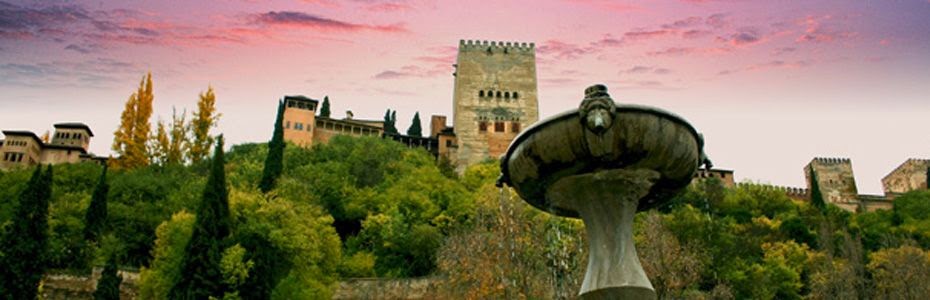

Must see places in Andalusia, Spain

If you are a muslim traveller or an islamic architecture lover those are the 7 things you must see in Granada

Top 10 foods to try in Morocco

One of the great cuisines of the world, Moroccan cooking abounds with subtle spices and intriguing flavour combinations.

Top Five Must See Things in Cordoba, Spain

Cordoba قرطبة in the Andalucia province of southern Spain is a city with more than 2,500 years of developed history.

ChefChaouen, the blue city in Morocco

Located just a few hours by bus from Tangier and far enough off the beaten track to dissuade many tourists, Chefchaouen is quiet enough for those visitors overwhelmed by the busy medinas of Fez and Marrakech, and has just enough of what is quintessentially Moroccan to be of interest to other travelers looking for something a bit more authentic.

Fes, Morocco

The most mystical of Morocco's imperial cities, Fez. Capital and spiritual center of Morocco, this city is situated in a narrow valley against the backdrop of the Middle Atlas

martes, 27 de enero de 2015

Travel the halal way and discover Spain & Morocco in this 9 days tour


Here you have an example tour! You can make your tailor made trip fill in a request trip in our web

Day 1 ARRIVAL TO BARCELONA (L, D)
The group will be received at the airport by a local Muslim Guide. Transfer for Barcelona city tour: starting at Las Ramblas, famous for its shops, restaurants and theatres, continue to Montjuic for a Panoramic view of Barcelona. After lunch, visit Parc Güell and Barcelona Olympic Park.
After dinner at la Bacerloneta neighborhood, transfer to hotel for overnight stay.

Day 2 BARCELONA-MADRID (B, L, D)
After breakfast, we will visit the beautiful work of world famous architect Antonio Gaudi: La Sagrada Familia Cathedral, Casa Batllo and Casa Mila.
After lunch, proceed for transfer to Madrid, the capital of Spain.
Dinner and overnight stay in Madrid. 

Day 3 MADRID (B, L, D)
After breakfast, we will spend a full day visiting Madrid. We’ll introduce you
to the city’s highlights: Gran Via, Puerta del Sol, Real Madrid Santiago Bernabeu Stadium, Cibeles, Palacio Real, etc. Afterwards, we will enter some of the most iconic monuments of the city: Palacio Real and Prado Museum. Lunch and dinner will be served at local restaurants.
Overnight stay in Madrid.

Day 4 MADRID-CORDOBA (B, L, D)
After breakfast, proceed for transfer to Cordoba, the capital of the Caliphate, where you will visit the Great Mosque of Cordoba, the third largest mosque in the world.
You will also visit the old Arab and Jewish quarters where the group will have dinner.
Overnight stay in Cordoba.

Day 5 CORDOBA-GRANADA (B, L, D)
After breakfast, check out from the hotel and proceed for transfer to Madinat az-
Zahra, an enigmatic complex built for Abd Ar-Rahman III. Afterwards, continue our trip to Granada, the last kingdom of Al-Andalus.
After lunch, the group will enjoy a nice walk around the Albayzín, a neighborhood of Al-Andalus origin, ideal for taking pictures. Dinner and Overnight stay in Granada.

Day 6 GRANADA  (B, L, D)
After breakfast, we will enjoy a full day in Granada. The day will start with a visit to the amazing Alhambra palaces, which include the Akasar, the Nazari Palaces and finally the Generalife gardens and summer palace.
After lunch, enjoy some free time for shopping in the city center and the old Arab quarters of el Albayzin.
Dinner and overnight stay in Granada.

Day 7 GRANADA-MARBELLA(COSTA DEL SOL) (B, L, D)
After breakfast, check out from the hotel and head towards Marbella, famous spot in Costa del Sol.
We will visit Malaga´s highlights: Gibralfaro´s Castle, The Alkasar, the Roman Theater and the Cathedral.
After a nice lunch at Torremolinos, continue to Marbella where the group will enjoy some free time for walking around the beach and watch sunset.
Dinner and overnight stay in Marbella.

Day 8 MARBELLA-GIBRALTAR-RABAT (B, L, D)
Early in the morning, we will head towards Gibraltar. We will cross the strait of Gibraltar from Tarifa to Tangier, the city where Tariq Ibn Ziyad served as governor before starting the conquest of the IberianPeninsula. We will continue traveling until we reach

After lunch, proceed for transfer to Casablanca, the economical capital of Morocco. Dinner and overnight stay in Casablanca. the capital of Morocco, Rabat.

Enjoy a quick tour of Rabat. Check-in at the hotel and enjoy a relaxing dinner. Overnight stay in Rabat.

Day 9 RABAT-FES-CASABLANCA (B, L, D)
After breakfast, proceed for transfer to Fes, where after the group will enjoy a walking tour of the old medina with a local guide. The old medina is a beautiful labyrinth of intrinsic narrow streets. We will visit several mosques and madrasas, as well as the world famous leather tanneries.
       
Day 10 CASABLANCA DEPATURE (B)
After breakfast, check out from the hotel. If time permits, we will visit Hassan II Mosque, one of the largest mosques in the World and the group will enjoy some final shopping at Morocco´s mall, the largest of its kind in Africa.

Proceed for transfer to Casablanca airport for departure.

viernes, 23 de enero de 2015

Travel the Halal Way & Discover Italy in this 6 days/5 nights Tour


1ST DAY – ARRIVAL TO MILAN

Arrival to Milan Fiumicino Airport. Transfer to the hote for early check-in. Breakfast provided. Evening free and easy Dinner at the hotel. Overnight in Milan.


2ND DAY – MILAN

Full day visiting Milan. The visit includes Victor Manuel II gallery, Piazza della Scala, the Cathedral, etc.

Lunch at a halal local restaurant.Dinner at local halal restaurant.

Overnight in Milan


3RD DAY – MILAN TO ROME (3 HOURS)

Full morning at Fidenza Village for your shopping. Then transfer to Milan's train station for your fast train to Rome.

Check-in at the hotel upon arrival and free evening.

Dinner at the hotel and overnight in Rome.


4TH DAY – ROME

Full day visiting Rome. The visit includes Coliseum, St Peters Basilica, Spanish Steps and the Grand Mosque of Rome. Lunch will be conducted in a halal local restaurant.

Dinner at local restaurant and overnight in Rome.


5TH DAY – ROME

Morning free and easy at your own leisure. Car disposal and guide with you.

In the afternoon, transfer to Castel Romano Shopping Village for your shopping experience.

Dinner at local restaurant and overnight in Rome.

6TH DAY – DEPARTURE FROM ROME

Morning free and easy before your transfer to the airport. Early lunch provided.

End of the services.
 

jueves, 22 de enero de 2015

Travel the halal way and discover Holland France & Italy in this 12 days tour

Day 1 ARRIVAL TO AMSTERDAM (D)
Arrival to Amsterdam's airport. Pick up from the airport and transfer to the hotel and group meeting to describe the program. Then, transfer for a city sightseeing tour of Amsterdam and transfer for dinner at a local restaurant. Overnight in Amsterdam.

Day 2 AMSTERDAM (B, L, D)
All day free and easy for your own leisure! Enjoy the city discovering it yourself. Overnight in Amsterdam.

Day 3 AMSTERDAM (B, L, D)
After breakfast, we will start the day visiting Volendam, Marken and the windmills for the best pictures of Holland! Then, we will go to Gassan’s diamonds factory for a guided tour inside. In the afternoon, and after lunch, canal cruise in a typical “Amsterdamer Boat”.
Dinner at a local restaurant and overnight in Amsterdam.

Day 4 AMSTERDAM-BRUSSELS-PARIS (B,
L, D)
After breakfast, and early in the morning, we will depart to the south towards Paris. But before getting to “la ville de l’amour”, a must see city awaits us on the way: Brussels.

We will have a panoramic view of the city with the coach and lunch in a local restaurant. Also we will have Jumu'a prayer at Great Mosque of Brussels. Once we reach Paris, check-in at the hotel and some rest before transfer for dinner. Overnight in Paris.

Day 5 PARIS (B, L, D)
In the morning, we will start with a panoramic view of the city with the coach.

Day 10 PISA-ROMA (B, L, D)
Today, after a quick visit of Pisa, we will reach our final destination: Roma. The capital of the greatest empire ever. Feel amazed by the evidences of such a great civilization: the Coliseum, The Roman Forum and by the vestiges of the Renaissance like the Trevi Fountain. Lunch and dinner at a local restaurant. Overnight in Roma.

Day 11 ROMA (B, L, D)
Today in the morning we will continue the visit St. Peter Basilica and the Spanish Steph and perform Jumu'a prayer at The Grand Mosque of Rome. After lunch, free afternoon, giving you time enjoy the streets of this ancient city. Overnight in Rome.

Day 12 DEPARTURE FROM ROMA (B)
After breakfast, transfer to the airport.

viernes, 16 de enero de 2015

Sacromonte, the Flamenco&Gipsy Quarter in Granada

Sacromonte, meaning "sacred hill" is at the very top of the valley at the edge of the Albayzin, called Valparaiso outside the old city. With stunning views of the Alhambra on the left and the Albayzin on the right, Sacromonte forms the Gitano (Gypsy) quarters of Granada. During the day it is a pleasant stroll to explore the architecture comprised of small, whitewashed buildings and "caves" built into the hillside.


At night Sacromonte awakens with multiple, hole-in-the-wall Flamenco bars that truly come alive only when most of the city begins its nightly slumber. To experience Gitano culture in its most raw form, the Flamenco music, song and dance found in these clubs are often completely impromptu as various Flamenco singers, dancers and musicians put together a mosaic of sound and movement to the delight of their onlookers.


The history of the Sacromonte is significant in that its name is derived from the Sacromonte Abbey, which in many respects is central to Granada's transition from Moorish stronghold to its current Catholic identity.  The abbey is said to be built over the catacombs of the bones of Saint Cecilio, the patron saint of Granada, and has been key in the propagation, whether fabricated or re-discovered, of the city's pious origins.


The legend states that the catacombs are the site of Saint Caecilius's martyrdom, and the abbey preserves Lead Books of Sacromonte.

The supposed relics of Caecilius and eleven other saints' bones, ashes and the oven in which they were believed to have been burned. It also possesses the inscribed lead plaques and books that were found with the supposed relics, but which were subsequently officially dismissed as forgeries.

The Morisco population of Granada had been expelled to other parts of Spain following the Morisco Revolt of 1568 (except for those few trusted Moriscos who had served in the royal forces, and who were permitted to remain in the old Moorish quarter of Albaicin adjacent to Valparaiso). By the 19th century, the area had become home to a substantial Gitano community, who built their homes in caves excavated from the soft rock of the hillside. The area became famous for Flamenco music and dancing, but major floods and forced evacuations in the 1960s left the neighborhood population dramatically reduced. Since the early 1990s, however, the area has slowly become developed as a tourist attraction, and as a centre of Gitano culture.

miércoles, 14 de enero de 2015

Alcázar of the Christian Monarchs, Cordoba (Spain)

The Alcázar de los Reyes Cristianos (Spanish for "Alcázar of the Christian Monarchs"), also known as the Alcázar of Córdoba, is a medieval Alcázar located in the historic centre of Córdoba, Spain next to the Guadalquivir River and near the Grand Mosque. The Alcázar takes its name from the Arabic word القصر (Al-Qasr, meaning "the Palace"). The fortress served as one of the primary residences of Isabella I of Castile and Ferdinand II of Aragon.

History

In early medieval times, the site was occupied by a Visigoth fortress. When the Visigoths fell to the Umayyad conquest of Hispania, the emirs of the Umayyad Caliphate in Damascus rebuilt the structure. The Umayyads fell to the Abbasid Caliphate and the surviving member of the Umayyad Dynasty, Abd ar-Rahman I, fled to Córdoba. Abd ar-Rahman I's successors established the independent Caliphate of Córdoba and used the Alcázar as their palace. 

The city subsequently flourished as an important political and cultural center, and the Alcázar was expanded to a very large compound with baths, gardens, and the largest library in the West. Watermills on the nearby Guadalquivir powered water lifting to irrigate the extensive gardens.
In 1236, Christian forces took Córdoba during the Reconquista. In 1328, Alfonso XI of Castile began building the present day structure on part of the site for the old fortress. Other parts of the Moorish Alcázar had been given as spoils to the bishop, nobles, and the Order of Calatrava. Alfonso's structure retained only part of the Moorish ruins but the structure appears Islamic since Alfonso used the Mudéjar style.
The Alcázar was involved in the civil war where Henry IV of Castile faced a rebellion that backed his teenage, half-brother Alfonso. During the war, the Alcázar's defenses were upgraded to deal with the advent of gunpowder. At the same time, the Alcázar's main tower, now known as the "Inquisition Tower" was constructed.

Henry's successor, Isabella and her husband Ferdinand used the Alcázar for one of the first permanent tribunals of the Spanish Inquisition and as a headquarters for their campaign against the Nasrid dynasty in Granada, the last remaining Moorish kingdom in the Iberian Peninsula. The Inquisition began using the Alcázar as one of its headquarters in 1482, converting much of it, including the Arab baths, into torture and interrogation chambers. The Inquisition maintained a tribunal here for three centuries. Boabdil was held prisoner here in 1483 until he promised to make Granada a tributary state. When Boabdil refused to surrender his kingdom in 1489, the Christians launched an attack. Isabella and Ferdinand's campaign against Granada succeeded in 1492. The same year, the monarchs met Cristóbal Colón in the Alcázar as he prepared to take his first voyage to the Americas.
The Alcázar served as a garrison for Napoleon Bonaparte's troops in 1810. In 1821, the Alcázar became a prison. Finally, the Spanish government made the Alcázar a tourist attraction and national monument in the 1950s.

Description

The Alcázar centers on the Patio Morisco ("Courtyard of the Moriscos"), another popular feature. There are two towers: the Torre de los Leones ("Tower of the Lions) and the Torre de Homenaje ("Tower of Homage"). The latter has Gothic features including an ogival ceiling.
A series of Roman mosaics and a Roman sarcophagus are displayed in the Inquisition Tower.

More about Córdoba in our blog:

lunes, 22 de diciembre de 2014

De l'Espagne au Portugal l'héritage d'Al Andalus

Pendant près de sept siècles, Al-Andalus a formé un foyer culturel incontournable de l'Europe médiévale. Nourries des traditions chrétiennes, juives et musulmanes, ces terres portent une histoire riche, que Patrick de Carolis invite à découvrir. De Cordoue à Grenade, en passant par Evora, Mértola, Tolède, Jerez de la Frontera, ou encore Séville, ce voyage permet de plonger au coeur de l'histoire de la péninsule ibérique. 


jueves, 18 de diciembre de 2014

Top Islamic 7 Must See Things in Granada

If you are a muslim traveller or an islamic architecture lover those are the 7 things you must see in Granada

The Alhambra
The Alhambra was a palace, citadel, fortress, and the home of the Nasrid sultans, high government Palace of Charles V, which houses the Alhambra Museum (with historical artifacts from the site) and the Fine Art Museum. 

The Alhambra reflects the splendor of Moorish civilization in Andalusia and offers the visitor splendid ornamental architecture, spectacular and lush gardens, cascading and dripping water features, and breathtaking views of the city.


The Albaizín is the old Arabic quarter 

Albaycin is the old Arab Quarter. It comprises approximately the area between the hill of the Alhambra, the hill of San Cristobal, the Sacromonte and Elvira.  It was declared a world heritage site in 1984, along with the more famous Alhambra.

The Albaycin is a wonderful neighborhood to explore on foot. While strolling along the whitewashed streets, visitors can admire old Moorish homes, beautiful fountains, and attractive plazas. Among the more renowned plazas is the Plaza de San Nicolas. It is at this plaza that the Mirador de San Nicolas can be found. This "mirador," or lookout point, offers amazing views of the Alhambra, especially at sunset.
The

Next to the Mirador de San Nicolas you can visit the Mosque of Granada wich signals, after a hiatus of 500 years, the restoration of a missing link with a rich and fecund Islamic contribution to all spheres of human enterprise and activity.

The Mosque of Granada is composed of three main, contrasting elements. These are the prayer hall (which is properly speaking the mosque itself), the Centre for Islamic Studies, and the garden wich looks out over the valley of the River Darro towards a vista of the Alhambra standing on the Mount of Sabika, etched against the peaks of the Sierra Nevada


Along Calderia Vieja and Calderia Nueva, twisting antique lanes climb the hill into the heart of the old Muslim district of the Albaizín, where Arab shops offer handmade crafts from Morocco, sweets from Jerusalem, and pungent Arabian spices. Softly lit tea houses promise mint tea and water pipes, evoking the hospitality of ancient Persia.


The Banuelo baths, the old arab baths in Granada

Arab baths, the Banuelo, also known as Aammim Alyawza (Banos del Nogal) are located at the bottom of a private house in the Carrera del Darro, at the foot of the Alhambra, and show how skilled the Spanish Arabs were a thousand years ago. In 1918, The Banuelo was declared a National Monument and was restored by the architect Balbas. Surprises to be found in The Banuelo are their large size and good level of conservation. Beautiful porticos are based on the Arab style.

Corral del Carbon, one of the oldest arab monuments in Granada

Located in Calle Mariana Pineda, in the heart of Granada, Corral del Carbon is the oldest monument left us by the Arabs. 

The "Corral del Carbón", formerly called "Alhóndiga Gigida" was constructed in the early 14th century 
by Yusuf I and was used as a type of warehouse for merchandise and also as a shelter for merchants.

It is of special interest because it is the only remaining Moorish caravansara or fundak that still remains as it was in Spain.


Madrasa ﻣﺩﺭﺴة of the Nasrid monarch Yusuf I in Granada

It is located on the street now known as Calle Oficios. The madrasa was built at the heart of the city, near the main mosque (now the site of the Granada Cathedral) and the Alcaicería, then the elite bazaar where silk, gold, linen and other cloth were traded. Ibn al-Khatib was an early student there; among his teachers were Ibn al-Fajjar, Ibn Marzuq, and Ibn al-Hayy (language and law); Ibn al-Hakam and the poet Ibn al-Yayyab (rhetoric); and Sheik Yahya ibn Hudayl (medicine and philosophy). As was typical of the works of Yusuf I, the building was splendid, with a white marble entrance.
The building was originally organized around a pool in the center. The only surviving part of the school is the prayer room. It is a square-shaped room oriented by its mihrab.

 ALCAICERÍA, the old silk market in muslim times in GRANADA

The Alpujarra mountain range, was important for the production of silk, where silkworms feasted on the leaves of the Mulberry trees. The raw material was then transported by mules, to Granada,where the silk threads were woven, then sold, either in bales, or made into clothing etc. In the centre of Granadas' city, a bazaar was built , consisting of a grid like network of streets, with merchants shops, and inns, for the merchants to sleep, eat and conduct business. (The Corral del Carbon was originally a merchants inn - see my tip for further info).


martes, 16 de diciembre de 2014

Top Five Must See Things in Cordoba, Spain

Cordoba قرطبة in the Andalucia province of southern Spain is a city with more than 2,500 years of developed history. Established around the 8th century BC, Cordoba at one point was probably the world’s most populous city. Today, with only around 325,000 inhabitants, it’s actually one of the smaller cities in Spain but that doesn’t stop it being one of Spain’s most visited cities.
Cordoba is not only historic and beautiful, there are also so many things to see and do it’s often difficult to choose. If you are planning a first trip to Cordoba, or even a second or third one and haven’t seen every must see place on previous trips, there are five must see things everyone who visits Cordoba should see.

You can visit Cordoba in our Spain & Morocco Tour and Andalusia Routes

1. Great Mosque of Cordoba/Mezquita-Catedral 
 One of the most beautiful mosques in Spain, the Great Mosque of Cordova, or Mezquita-Catedral (Mosque Catheddral) is a World Heritage Site known for its stunning architecture. It is the world’s third largest mosque, although today it is used as a Roman Catholic church. Muslims in Spain have been lobbying the Spanish government since the year 2,000 to be allowed to pray in the mosque, but so far have been denied permission.
Construction on the mosque began in the year 785.

2. Alcazar
 The big attraction here are the gardens, laid out in descending terraces with typical Islamic rectangular pools - some of the most beautiful in Andalucia - perfect for a cooling waterside break on a hot spring day.


3. The Jewish Quarter "La Juderia"
The Jewish quarter of Cordoba goes back to the time of the Romans and consists of a network of narrow streets full of shops, restaurants and cafes, synagogues and museums. A must see is the Bullfight Museum and don’t miss the Zoco, where in the summer you can see flamenco dancers performing. You can visit too the 14th century synagogue and a restored Sefardi house. 


4. The Calahorra Tower and its "Al-Andalus living museum"
 The Al-Andalus living museum is located in an old Moorish fortress, and recreates the time of maximum splendour in this Andalusian city. The museum is in the Calahorra Tower, opposite the Great Mosque, at the end of the Roman Bridge. Its aim is to provide a recreation of the Cordoba of the period between the 9th-13th centuries.

5. ‎ Madīnat az-Zahrā  مدينة الزهراء 
 Medina Azahara (Arabic: مدينة الزهراءMadīnat az-Zahrā: literal meaning "city of the flower") is the ruins of a vast, fortified Arab Muslim medieval palace-city built by Abd-ar-Rahman III al-Nasir, (912–961) Umayyad Caliph of Córdoba, and located on the western outskirts of Córdoba, Spain. It was an Arab Muslim medieval town and the de facto capital of al-Andalus, or Muslim Spain, as the heart of the administration and government was within its walls. Built beginning in 936-940, the city included ceremonial reception halls, mosques, administrative and government offices, gardens, a mint, workshops, barracks, residences, and baths.

"Al-Andalus living museum" in the Calahorra Tower in Cordoba

The Al-Andalus living museum is located in an old Moorish fortress, and recreates the time of maximum splendour in this Andalusian city.

The museum is in the Calahorra Tower, opposite the Great Mosque, at the end of the Roman Bridge. Its aim is to provide a recreation of the Cordoba of the period between the 9th-13th centuries, at a time of brilliant cultural, artistic and scientific achievement. Its modern facilities include a system of headphones and infrared data transfer that guide you through the eight themed rooms with dioramas.

The Calahorra Tower was built by order of Enrique II de Trastamara to defend the city when under attack from his brother Pedro I 'the Cruel'. It was used as a prison in the 18th century, a girls' school in the 19th, and today houses the Roger Garaudy Museum of the Three Cultures. The interactive guided tour illustrates the many ways in which Jewish, Christian and Moslem cultures thrived side by side in Medieval Cordoba. Visitors especially enjoy the excellent scale models of the Cordoban Mosque and other well-known Andalusian buildings and the spectacular view over Cordoba from the battlements at the end of the tour.


Room 1
The first lounge of the museum has as aim to welcome the visitors, who enter into an historical place, of dreams, where a unique language.
The visit leads us to the period which encloses the centuries IX and XIII, Cordoba was at that time the biggest city and the faith, between Occident and Orient.... here begins the real renaissance.


Room 2
On the right there is a second lounge, known as the Philosopher Lounge, in fact inside the Muslim figures such as Averroes or Ibn al Arabi, the Jewish Maimonides or the Christian Monarch Alfonso X the Wisemen.

All of them keep a special link with our city.
The ambiance and the spoken explanation are oriented to strengthen the importance of the thought of that moment, the wisdom, without being separated from the science, which are treated in the following lounges, neither the faith.


Room 3
The next lounge is the one dedicated to the Sciences and the Techniques, and in it the technological progresses are shown and they are materialized in Al andalus, such as the new techniques for the agriculture and the irrigation. There is a wonderful scale plan of the Noria mill, which was used by the Caliph Alcazar, and which is conserved by the river.

Other Cordovan figures are treated such as Abulcassis al-Zahri a surgeon and the al-Idrisi, known for his Map of the world, Tabula Rogeriana


Room 4
We go up the stairs and we arrive to the second floor, where we find the known lounge as The Summit: the palace and the mosque, referring to the city-palace of Madinat al Zahra and the Mosque Alhama of Cordoba. It stands out the reception which the caliph Abd Al–Rahman III gave to a Christian monk sent by the Byzantine Emperor

In front there is the Mihrab of the Mosque in Cordoba, carried out in Al-hakam II Period, with materials brought from the orient, thanks to the good relationships.


Room 5
In the following lounge, thanks to a wonderful scale model of the nazari palace of the Alhambra and his complete explanations and effects of light and sound, we get to entry into this marvellous place, from the sunset till the end of it, in this moment the little rooms are illuminated.
The Comares Tower, the Lounge of Dos Hermanas, the Leones Courtyard in which there is a wonderful fountain... all is studied and elaborated with details, and easily to know by the visitors. 

Room 6
It is very close to the granadine palace where the Lounge of Andalusi Music, it is a very little room very interesting. The visitor enters into the richest al-Andalus, at the same time you are under the Mihrab of the Mosque Alhama of Cordoba, one of the most beautiful and impressive places that Islam could create.

The lounge is completed with a little collection of musical instruments belonging to the Andalusi period, and witness of its
rich culture. 
 
Room 7
We arrive to the third and last floor of our tower, and in it we enter into one of the most special lounges of the museums, dedicated to the Mosque Aljama of Cordoba. An exceptional mock-up is in the room, a mock-up who looks in great detail all the outside covers and the most important points of the interior, like the Skylight of Villaviciosa or the mihrab. As in the previous case devoted to the Alhambra, the mock-up is set with phrases and high quality sound effects.

Room 8
From the lounge dedicated to the monument of our city we pass to another which shows us others that without having the artistical and historical relevance they represent the fingerprint of those who lived and shared our city.

Among the columns of the Mosque, under the red and the whiteness of their voussoirs, there are the Caliph Alcazar, the Royal Baths, the Almodovar Door, the Craft Market and the Synagogue... and the river Guadalquivir, the witness of our history. 

Room 9
We end our visit with the Live Museum of Al-Andalus, but before we have a last stop, the lounge called Multivision, where we will enjoy an audiovisual projection which is about the three cultures and it is the theme of the museum. So every hour you have this projection.

Here the visit ends, however it is better to visit it and at the same time go up to the terrace in order to enjoy the most beautiful sight of our city.

Text by: www.artencordoba.com
Photos by: www.artencordoba.com
                  www.nuriacalvodiseno.tk

The Muslim Cordoba قرطبة

However, in the 8th century, something happened in Cordoba which was to radically change the course of history in the western world. A contingent of Arabic troops landed on the Mediterranean coast, and easily took over the weakened Visigoth kingdom. Cordoba was captured by Mugit, a deputy of Tariq, and Moslems settled in Cordoba side by side with their Christian counterparts. They lived in harmony, as is proved by the fact that the Moslems actually paid the Visigoths for the rights to move the musalla (the primitive prayer area outside the city walls) to the Visigoth basilica of San Vicente, thus forming the beginnings of the Great Mosque which still survives to this day.

The first rulers of the Islamic Qurtuba made it the administrative centre of their recently conquered lands. However, the fiercely tribal nature of the Arab and Berber peoples soon produced disputes between the rival factions struggling for power.

Abd al-Rahman I, known as "the Fugitive" or "the Dispossessed", united all the disaffected groups around the figure of the future Emir. In the year 756 these factions took over Cordoba and proclaimed it capital of the independent Emirate of Al-Andalus. Abd al-Rahman I carried out the first major enlargement of the Great Mosque of Cordoba and rebuilt the city walls and the Alcazar (castle). Hisham I, his son, finished off his father's work in the Great Mosque and built the first minaret, which has not survived. When Abd al-Rahman II came to power, the mosque was enlarged further and a lot of new building went on all over the city.

However, it was in the rule of Abd al-Rahman III when Cordoba really came into the limelight. In the  Medina Azahara outside the city walls, an endless source of legends due partly to the extravagantly expensive building materials used.

The arrival of the Omeyan year 929 Cordoba was proclaimed Capital of the independent Caliphate thus creating a schism with Damascus, and converting Cordoba into the religious, political and administrative centre of the entire Islamic kingdom in the west. One of the Caliph's first acts was to build the dazzling, but short-lived, royal residence of

The rule of Alhaken II, son of Abd al-Rahman III, heralded an era of stable government and the period of greatest cultural splendour in Cordoba. The Great Mosque was extended again, this time in the same majestic style as Medina Azahara

His successor, Hixam II, was only a puppet ruler, and left the task of government to his vizier Almanzor, who was responsible for the third and last major enlargement of the mosque.

The joint rule of Almanzor and Hixam weakened the kingdom, and the end was not far in sight. The Caliphate finally collapsed in 1013, and the city became one of the interim Taifa kingdoms.

lunes, 15 de diciembre de 2014

مدينة الزهراء‎ Madīnat az-Zahrā The city of the flower

When you go to Córdoba, besides visiting the city, you must visit the archeological remains of Medina Azahara, one of the great works of Islamic art in Andalucía.


Medina Azahara (Arabic: مدينة الزهراءMadīnat az-Zahrā: literal meaning "city of the flower") is the ruins of a vast, fortified Arab Muslim medieval palace-city built by Abd-ar-Rahman III al-Nasir, (912–961) Umayyad Caliph of Córdoba, and located on the western outskirts of Córdoba, Spain. It was an Arab Muslim medieval town and the de facto capital of al-Andalus, or Muslim Spain, as the heart of the administration and government was within its walls. Built beginning in 936-940, the city included ceremonial reception halls, mosques, administrative and government offices, gardens, a mint, workshops, barracks, residences, and baths. Water was supplied through aqueducts.

10,000 men worked in its construction using the best materials: precious metals, marble, polychrome stones, etc.

Medinat-al-Zahra was organized in three big terraces surrounded by a wall. In the upper part was the royal palace, with the rooms of the caliph and his family; the middle one was the bureaucratic and administrative area, with the halls and gardens; the lower one was destined for the houses of the people, as well as for the souk and mosque.

Its location in the foothills of Sierra Morena made it possible to design an urban program in which the location and physical relationships between the various constructions were expressive of the role of each in the setting.

The palace was located at a higher level, and staggered its buildings along the side of the mountain in an expression of clear preeminence over the urban hamlets and the Aljama Mosque spread across the plains below.

Following the terraces, the first corresponds to the residential area of the caliph, next comes the official area including the houses of the viziers, the guard-room, administrative offices and gardens.

Next is the city proper, with housing, crafts, and the great mosque of the two lower terraces separated by another wall in order to isolate the upper palace complex. Archaeological research has revealed an urban morphology characterized by the existence of large areas of undeveloped land, which serves to empty the entire southern front of the fortress, ensuring privacy and maintaining an open, idyllic country landscape.

The only spaces built on the lowest level are two broad bands: the western, with an urban management orthogon, and the eastern, with less rigid planning.

Popular legend holds that the Caliph named az-Zahra, or Azahara, after his favorite concubine, and that a statue of a woman stood over the entrance. Others, imagining his demanding lover, say that he built this new city just to please her. The truth, however, has probably more to do with politics than love.

 Abd ar-Rahman III ordered the construction of this city at a time when he had just finished consolidating his political power in the Iberian Peninsula and was entering into conflict with the Fatimid dynasty for the control of North Africa.

 Zahara means 'shining, radiant or blossoming' in Arabic: the name communicates aspirations of power and status, not romantic love. Az-Zahra is the most common title for the daughter of the Prophet Muhammad Fatimah az-Zahra. As such, the Fatimid dynasty of North Africa adorned many buildings and even towns with her name.


viernes, 12 de diciembre de 2014

The Partal palace, one of the oldest areas of the Alhambra de Granada

The Partal is one of the oldest areas of the Alhambra and it was probably built by order of the Sultan Mohammad III (1302-1309). 

The name comes from an Arabic word meaning "the portico", and is the name given to the remains of the residence of Sultan Yusuf III, the northernmost of the Nasrid Palaces.

It was built following the same design as the ‘Palacio de Comares’: a rectangular court with a central ‘alberca’ and opposing edifices in the smaller sides.
The environment of the area suggests that it was the rest area of the Muslim nobility of the palace. They had a Muslim cemetery, “Rawda”, whose name was used to name the door “Rauda” that today is reduced to the foundations. 

Initially, this palace area was not attached to the Alhambra and when it passed to the control of the state, it was joined to the resort.


Although great original features have been lost, such as the residence of Yusuf III, demolished for the structural damages, the restoration is very similar to the past as the structure of the Partal, the tower de la dama or the pool.

In the 19th century, the Partal was in a very bad condition. It was restored by Torres Balbás. He followed a conservative style instead of the Romantic and decorative restorations that were usually done at that time in the Alhambra

The "Damas" Tower is the most important among the buildings of the magnates that lived around the Royal Palace in Arab times, and the decoration is the oldest of the Alhambra. This tower, in the eighteenth century, was called Torre del Principe, because here lived Fernando VI, son of Philip V, and was bought by the German Arthur Gwinner in 1886, and later it was transfered to the Spanish state in 1891, but not entirely. 

 Until the year 1924, when the tower's restoration was completed, it has gone through many alterations carried out by its inhabitants in order to live there 

Phothos by: objetivogranada.ideal.es Manu Rubio