Must see places in Andalusia, Spain

If you are a muslim traveller or an islamic architecture lover those are the 7 things you must see in Granada

Top 10 foods to try in Morocco

One of the great cuisines of the world, Moroccan cooking abounds with subtle spices and intriguing flavour combinations.

Top Five Must See Things in Cordoba, Spain

Cordoba قرطبة in the Andalucia province of southern Spain is a city with more than 2,500 years of developed history.

ChefChaouen, the blue city in Morocco

Located just a few hours by bus from Tangier and far enough off the beaten track to dissuade many tourists, Chefchaouen is quiet enough for those visitors overwhelmed by the busy medinas of Fez and Marrakech, and has just enough of what is quintessentially Moroccan to be of interest to other travelers looking for something a bit more authentic.

Fes, Morocco

The most mystical of Morocco's imperial cities, Fez. Capital and spiritual center of Morocco, this city is situated in a narrow valley against the backdrop of the Middle Atlas

Mostrando entradas con la etiqueta muslimspain. Mostrar todas las entradas

viernes, 7 de noviembre de 2014

Documentary in Arabic: The Alhambra, an Andalusi palatine city in Granada (Spain). قصر الحمراء. التراث نظري.


The Alhambra, in Granada, Spain is one of the most evocative buildings I've ever visited in my life. It's an absolute must-visit for any traveller to Andalucia - the biggest province in Southern Spain.
The Alhambra was an Arabic fortress built while the Moors (Muslims from North Africa) still laid claim to this part of Spain - back in the c13th or so.

"Alhambra" is a Spanish rendering of the Arabic words "qa'lat al-Hamra", meaning "red castle". The significance of the "red" part is easy to see, as it comes from the dusty red stone that was used to build the thick walls around the castle.

The entire site has got a magic feeling to it - a raise-the-hairs-on-the-back-of-your-neck kind of buzz that envelops you from the moment you begin the steep climb to its entrance-way.
The Alhambra rustles with incredible Arabic myths, and is filled with the whispers of ghosts from times gone by. It's staggeringly beautiful, and feels like a creation from an old story-book, miraculously brought to life.

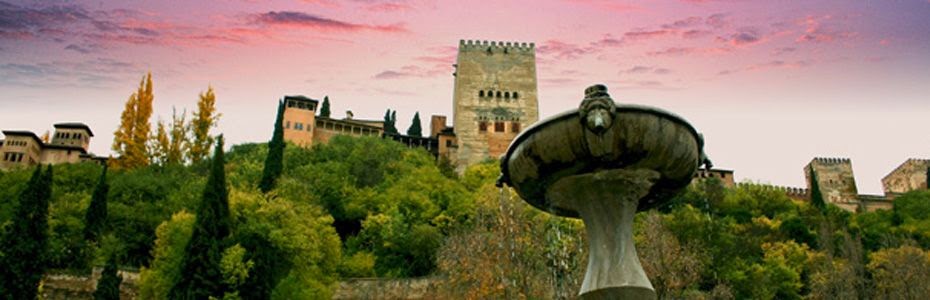
The setting is also like something from a picture postcard. The Alhambra stands proudly atop of one of the steep vantage-points of Granada - a hill called La Sabika.

The castle lurks behind blood-red boundary walls, and is framed against the snowy peaks of the Sierra Nevada mountain-range, some distance behind.


martes, 28 de octubre de 2014

jueves, 23 de octubre de 2014

Travel the halal way and discover... The Santiago Bernabeu Stadium the home of Real Madrid


The route of this visit includes the dugouts, presidential box, press room, changing rooms, player's tunnel and trophy room, and ends in the club shop. 

Add this excursion to your travel! It will be unforgetable.
For more information send us a Request Trip

Travel the halal way and discover.... Camp Nou and the F.C.BARCELONA Museum.

The tour begins at the visiting team changing room from where -and through the tunnel- you will reach the ground. Once there, you will be able to walk on the grass, seat down on the team bench and contemplate the Camp Nou magnificence. 

The tour also includes a visit to the Chapel, the TV Room, the Press Room, the Fundacio Zone and the Presidential Box. Last but not least, you will be offered the possibility to rise the European Champions Cup with your own hands.

Do not miss this fantastic opportunity! Visit the stadium of one of the most important teams in the world. Go into the locker rooms and know the Club’s history at the museum.

Add this excursion to your travel! It will be unforgetable. For more information send us a Request Trip

lunes, 20 de octubre de 2014

Travel the Halal Way and discover the Royal Alcazars of Seville

You can visit this city in our tour Spain & Morocco of  10days / nights

The Alcázar of Seville (Spanish "Reales Alcázares de Sevilla" or "Royal Alcazars of Seville",  is a royal palace in Seville, Spain, originally a Moorish fort. The palace is renown as one of the most beautiful in Spain. It is the oldest royal palace still in use in Europe, and it was registered in 1987 by UNESCO as a World Heritage Site, along with the Seville Cathedral and the General Archive of the Indies.

The construction of the fort was ordered by Abd Al Ramn III, Caliph of Al-Andalus, in the year 913, which was changed into a fortified palace during the 11th century. In the 13th century, Seville now being in the hands of Castile, King Alfonso X ´the Wise´ extended it further.

3D orientation map of the Alcazar palace, Seville - Andalusia, Spain.
 
Pedro I, "the cruel" (1350 to 1369), made significant additions to the palace which is one of the most important examples of Mudejar architecture in Seville. The numerous rooms, patios and halls vary in architectural styles from the Islamic to Neoclassical. The beautiful gardens and fountains are specially worth visiting.

Also wanting to make their mark, the Alcázar was even further ´improved´ on by later kings; for example, the 16th century Emperor Charles V added elements in Gothic and Renaissance style to the palace.

Since the Alcázar has a century´s long history of expansions and renovations, one of the coolest things about it is it´s mixture of architectural styles. But the unavoidable highlight and an absolute must-see is the Mudejar Palace of Peter I (followed closely by the Gardens).

Interesting parts of the Alcazar

Horse shoe arches at the entrance of the ambassadors
Salon de los Embajadores (The Ambassadors Room): The magnificent dome of the Ambassadors Room is decorated with gilded cedar wood sculptures.

Arcos de Herradura (Horse Shoe arches): The Ambassadors Room is decorated with tiles and complex plaster work. It shows a beautiful example of the typical horse shoe arches.


El patio del yeso (plaster)
El Patio de la Montera (The Hunting Patio): This was the meeting place of the court before the hunt took place. The faade of the palace of Pedro I is a unique example of Mudejar design.

El Patio del Yeso (The Plaster Patio): This beautiful, ornate garden full of flowers and streams maintains elements of the almohade architectural style of the Moors from the 12 century.


El patio de las doncellas (maidens)
 Patio de las Doncellas (Patio of the maidens): This patio was decorated by the best architects in Granada. Patio del Crucero is above the ancient baths.

Salones de Carlos V (Rooms of Charles V): The rooms and chapel of Charles V are decorated with tapestries and coloured tiles from 16 Century.

El Patio de las Muñecas (The Patio of the Dolls): This patio with its bedrooms and adjacent corridors was the heart of the palace. It takes its name from the two tiny faces that decorate its arches.

The Gardens of the Alcazar Palace

Gardens of the Alcazar Palace
 These gardens, adorned with fountains and pavilions, provide shelter from the hustle and bustle of Seville. 

Jardin Inglés (English gardens). These gardens are modelled on those of the British Isles from 18 Century. The door to the Alcoba is of Islamic origin. The park was built in 1909 and the main gardener of the Real Casa de Campo, Juan Gras, was put in charge of planting the flowers. However, there are doubts as to whether his radical style fits in with the surroundings.

Jardin de los Poetas (The Garden of the Poets) The design of this garden is similar to that of the Forestier thanks to the influence of Joaquin Romero Murube. It's most emblematic feature is the two ponds that were inspired by the Arabs and Romans.

The english gardens at the Alcazar palace
 Jardin de la Vega Inclan (Garden of Vega Inclan) This is a well designed garden inspired by the Damas even though it lacks the refinement that had once existed. This garden consists of 20 mostly square flower beds that are separated by paths and fountains. These gardens took their inspiration from Islamic culture and the Renaissance.


Jardin de la Alcubilla (Garden of the Reservoir): This garden existed during the time of Charles V.

Jardin de la Alcubilla
In 913 the Caliph of Al-Andalus (modern Andalusia) ordered the construction of a castle there, which was changed into a fortified palace during the 11th century. In the 13th century, Seville now being in the hands of Castile, King Alfonso X ´the Wise´ extended it further.
About a hundred years later, King Peter I ordered the construction of one more palace on the site. Nowadays, this gorgeous palace is considered to be one of the best remaining examples of mudéjar architecture – a symbiosis of Christian and Moorish techniques and architecture; the two cultures living side by side at the time.
Also wanting to make their mark, the Alcázar was even further ´improved´ on by later kings; for example, the 16th century Emperor Charles V added elements in Gothic and Renaissance style to the palace.
Since the Alcázar has a century´s long history of expansions and renovations, one of the coolest things about it is it´s mixture of architectural styles. But the unavoidable highlight and an absolute must-see is the Mudejar Palace of Peter I (followed closely by the Gardens).
- See more at: http://travelersinnseville.com/516/the-history-of-the-royal-alcazares-of-seville#sthash.RDaSRMUX.dpuf
In 913 the Caliph of Al-Andalus (modern Andalusia) ordered the construction of a castle there, which was changed into a fortified palace during the 11th century. In the 13th century, Seville now being in the hands of Castile, King Alfonso X ´the Wise´ extended it further.
About a hundred years later, King Peter I ordered the construction of one more palace on the site. Nowadays, this gorgeous palace is considered to be one of the best remaining examples of mudéjar architecture – a symbiosis of Christian and Moorish techniques and architecture; the two cultures living side by side at the time.
Also wanting to make their mark, the Alcázar was even further ´improved´ on by later kings; for example, the 16th century Emperor Charles V added elements in Gothic and Renaissance style to the palace.
Since the Alcázar has a century´s long history of expansions and renovations, one of the coolest things about it is it´s mixture of architectural styles. But the unavoidable highlight and an absolute must-see is the Mudejar Palace of Peter I (followed closely by the Gardens).
- See more at: http://travelersinnseville.com/516/the-history-of-the-royal-alcazares-of-seville#sthash.RDaSRMUX.dpuf
In 913 the Caliph of Al-Andalus (modern Andalusia) ordered the construction of a castle there, which was changed into a fortified palace during the 11th century. In the 13th century, Seville now being in the hands of Castile, King Alfonso X ´the Wise´ extended it further.
About a hundred years later, King Peter I ordered the construction of one more palace on the site. Nowadays, this gorgeous palace is considered to be one of the best remaining examples of mudéjar architecture – a symbiosis of Christian and Moorish techniques and architecture; the two cultures living side by side at the time.
Also wanting to make their mark, the Alcázar was even further ´improved´ on by later kings; for example, the 16th century Emperor Charles V added elements in Gothic and Renaissance style to the palace.
Since the Alcázar has a century´s long history of expansions and renovations, one of the coolest things about it is it´s mixture of architectural styles. But the unavoidable highlight and an absolute must-see is the Mudejar Palace of Peter I (followed closely by the Gardens).
- See more at: http://travelersinnseville.com/516/the-history-of-the-royal-alcazares-of-seville#sthash.RDaSRMUX.dpuf

viernes, 17 de octubre de 2014

Ishbiliya إشبيلية, the muslim Seville

You can visit this city in our tour Spain & Morocco of  10days / nights

The Islamic kingdoms of medieval Spain are legendary for their artistic and architectural glories. They are also famous, although perhaps at times through rose-tinted spectacles, for centuries of co-existence between Muslims, Jews and Christians, and for the flowering of a rich culture which drew on the best of the Religions of the Book.

Nowadays, the best-known (and most visited) of the cities of these medieval kingdoms are Granada, home to the Alhambra palace, and Cordoba, site of the breathtaking Mezquita mosque with its forest of red and white arches.

But Seville, now a sprawling modern city, also deserves recognition for its Islamic-influenced cultural heritage.
Torre del Oro and Guadalquivir River
Seville was founded as the Roman city of Hispalis, and was known as Ishbiliya (Arabic:إشبيلية) after the Muslim conquest in 712.

During the Muslim rule in Spain, Seville came under the jurisdiction of the Caliphate of Córdoba before becoming the independent Taifa of Seville; later it was ruled by the Muslim Almoravids and the Almohads until finally being incorporated into the Christian Kingdom of Castile under Ferdinand III in 1248

The Moorish urban influences continued and are present in contemporary Seville, for instance in the custom of decorating with herbaje and small fountains the courtyards of the houses. However, most buildings of the Moorish aesthetic actually belong to the Mudéjar style of Islamic art, developed under Christian rule and inspired by the Arabic style. Original Moorish buildings are the Patio del Yeso in the Alcázar, the city walls, and the main section of the Giralda, bell tower of the Seville Cathedral.[8]


Centuries of Islamic Architecture


The most prominent remnant of Seville's Islamic past is La Giralda, the towering minaret of a 12th century Almohad mosque, which became the city's Catholic cathedral after its conquest by Saint Ferdinand in 1248. At 320 feet high, La Giralda was once the tallest tower in the world. Modeled on the minaret of the Kutubiyya mosque in Marrakech, it has a sister in the Hassan Tower at an uncompleted mosque in Rabat.

La Giralda, the towering minaret of a 12 th century Almohad mosque
The modern-day cathedral was begun in the late 14th century, after the Great Mosque was pulled down, but it still holds the tomb of Saint Ferdinand. The tomb's inscriptions celebrate Ferdinand's achievements not only in Castilian and the monastic language of medieval Christianity, Latin, but also in Hebrew and Arabic. And Ferdinand's son, Alfonso, tried to make Seville a centre for Arabic scholarship and translation, losing out to the long-established academia of Toledo


Floodlit at Night


La Giralda's golden stone glows softly, towering over the busy nightlife of the old quarter of Seville whose narrow streets remind visitors of their original character as the city's souk. In the square around the foot of the tower are citrus trees, bearing the Seville oranges famous the world over.

Alcázar of Seville
Just seconds' walk away – close enough for first Muslim and then Christian kings to reach their place of worship through a private tunnel – is the site which has been home to several generations of royal palaces, of the Almohad dynasty and the later Christian kings.


The present occupant of the site is the spectacular Alcazar palace; its name is a corruption of the Arabic al qasr. Its ornate plasterwork – which incorporates repeated Arabic scripts, including the phrase Wa la ghalib ill Allah – "There is no victor but Allah" - is a reflection of the splendors of the Alhambra in Granada, and its tile work also draws heavily on Muslim Andalucian designs. No casual visitor, wandering the Alcazar's courtyards, would be likely to guess that it was commissioned by a Christian monarch.

But the palace – although built around structures which may date as far back as the Umayyad period of the 10th and early 11th centuries, when their Caliphate centered on Cordoba - was completed by workmen who had spent several generations building Granada's Alhambra, and who were then lured west by the Christian king Pedro the Cruel.

Ibn Khaldun, the great philosopher of history, whose distant ancestors hailed from Seville before they fled the Almoravid conquest of the city in the 11th century, visited Seville during his travels around Andalucia in 1364-5, when the ornate plasterwork of the Alcazar was only just dry. Pedro the Cruel tried to persuade him to stay, offering him his family's historical lands, as well as high office – but his interest in the one remaining Muslim kingdom in Spain, Granada, won out.

The Andalucian Melting-Pot  

The Alcazar's cultural, artistic and religious mixture epitomizes the blurring of religious and cultural lines in Andalucia, where Muslims, Christians and Jews lived and worked alongside each other and where Muslim and Christian armies often fought alongside one another against rival small kingdoms, or taifas.

One of the most famous figures of the period was El Cid (a corruption of the Arabic sayyid, 'lord'), described by writer Maria Rosa Menocal as “this Christian warrior with the Arabic name [who] was leading troops into battles between one Muslim and another,” who fought for the King of Seville in late 11th century battles against Granada. He became the hero of a great epic poem in medieval Spanish, and finally of a Hollywood movie.

Another was Samuel the Nagid, the Jewish vizier of Granada, who helped maintain his city's military strength under the Berber King Habbus al-Muzaffar in the 11th century, and who conquered Seville in 1039 for Habbus' son Badis.

For centuries this patchwork of Muslim and Christian kingdoms, with their shifting alliances, fostered a vibrant artistic life. It did not, perhaps, rival the scale of the Madinat as-Zahra in Cordoba, built by Abd ar-Rahman III at the height of the Caliphate and lost for a millennium after it was sacked in the civil war that brought down the Umayyads in Spain. But its creations do include the Alhambra in Granada, the Alcazares of Seville and of Segovia and Carmona, and the fashion for Mudejar craftsmanship lived on even after the Christian conquest of Spain was completed in 1492, with noble palaces commissioned in this style for decades to come.

According to Professor Maria Luise Fernandez, of Caracas University, the strength of Islamic artistic traditions even carried it to the Americas. Mudejar designs can, she says, be found in Spanish colonial architecture in cities such as Mexico City, Quito and Caracas, and in the 'azulejo' style of blue tilework – from al-zulaij, colloquial Arabic for ornamental tiles – which became associated with towns such as Puebla in Mexico.

Poet-Kings and Philosophers

But the glories of Seville's Muslim past are not only in its visual architecture.
In her book on the centuries of Muslim kingdoms which made up medieval Andalucia, Ornament of the World: how Muslims, Jews & Christians created a culture of tolerance in Medieval Spain, Menocal refers to 11th century Seville as “the poetry-mad Abbadid taifa of Seville.” The rivalry between Seville and the neighboring taifa of Toledo was, says Menocal, as much about the cities' cultural profile as their military strength.

“Military and cultural ambitions were purposefully intertwined and their Seville became the new haven for poetry in al-Andalus,” continues Menocal. “The Abbadid-sponsored academy of poets played all sorts of important roles in poetic history, attracting poets from inside and outside the peninsula and leaving us an important diwan, or anthology, of the poetry of the period.”
Mutamid Ibn Abbad, the last king of the Abbadid dynasty, was not only a great patron of the arts, but is considered one of the greatest Andalusian poets in his own right. Andalucian poetry spanned topics from romantic love to political satire, and al-Mutamid's own work ranged from praises of his wife:
"Invisible to my eyes, thou art ever present to my heart. Thy happiness I desire to be infinite, as are my sighs, my tears, and my sleepless nights! Impatient of the bridle when other women seek to guide me, thou makest me submissive to thy lightest wishes" [The Poems of Mu'Tamid, King of Seville, translated DL Smith, 1915]

And to celebration of his own military victories:

“I have won at the first onset The hand of the lovely C?rdoba; That brave Amazon who with sword and spear Repelled all those who sought her in marriage. And now we celebrate our nuptial in her palace, While the other monarchs, my baffled rivals, Weep tears of rage and tremble with fear.” [The Poems of Mu'Tamid, King of Seville, translated DL Smith, 1915]

A monument to Seville's “poet-king” and his “sad overthrow” by the Berber Almoravids, who he had supported against Christian rivals in the naïve belief that he could then expel them from his own lands, is still to be found in the grounds of the Alcazar.
 

viernes, 10 de octubre de 2014

Travel the halal way and discover Toledo, the city of the Three Cultures

Toledo (Tulaytulah) is located 42 miles (70 km) southwest of Madrid, on a large hill that juts up from the meseta (high plain) in the La Mancha region. It is surrounded on three sides by the Tajo river, serving as a natural fortress.

Since Roman times, Toledo served as a strategic location on the road from Emerita (modern Mérida in the southwest), to Caesar-Augusta (modern Zaragoza in the northeast). The city became the capital of the Visigoths. The conquest, without a fight, of the city by the Berbers of Tarik in the year 711, began the period of Muslim domination in which the Moors occupied Toledo for 373 years, a relatively short period, but their influence was enormous, both in the labyrinth-like layout of narrow and steep alleyways, of parapet walks that go nowhere, often with covered passageways on top, and in important architectural remains, such as the Bab-al-Mardum mosque, today known as Cristo de la Luz (the Christ of Light), built by Musa ibn Ali, among others.

Bab-al-Mardum mosque, today known as Cristo de la Luz (the Christ of Light), in Toledo


The religious tolerance of the Muslims allowed the Christians to co-exist with the Moors, and led to the appearance of the so-called Mozárabes-"Mozarabs"-who created a unique culture which would have far-reaching effects on architecture and decoration, as well as customs, vocabulary, literature and music. This situation also allowed the Jews to form a prosperous community, although their presence dated back to the Visigoth period.


In 1085, when Alfonso VI took the city walls with no bloodshed, many of the Muslim inhabitants decided to stay with the Christians and Jews. The harmony between the three cultures bore fruit as notable as the School of Translators of Toledo, renowned for having recuperated part of classical culture from various Arab documents. The Islamic legacy faded with time, and the Catholic Monarchs, Ferdinand and Isabella, expelled the Jews in the 15th century. However, the cultural mix in the city had been determined and can still be felt today.
Mazapán (from Arabic موثابان mawthābān)


Today, Toledo is known for its mazapan (marzipan), a pastry made with sugar, eggs and almonds. Persian immigrants introduced this delectable delight to Al-Andalus.


Toledo also has long been famed for its metalwork, particularly steel blades and other arms. Expert craftsmen produce these items in a style clearly reflecting Islamic origins.


Damasquinos
Jewelry and other articles of gold and black metal are called damasquinos. The term refers to the Syrian city of Damascus. The Umayyads came from Damascus to establish their rule in Iberia.

Toledo features a quaint Medieval quality, with narrow cobblestone streets and a variety of handicrafts. It has a population of about 75,000 inhabitants. In 1986, UNESCO designated the city as a World Heritage Site for its extensive cultural and monumental heritage.


miércoles, 1 de octubre de 2014

Marbella confirma su liderazgo en el sector del Turismo Halal en España

‘Halal’ es un término que aparece mencionado en el Corán y que significa ‘permitido, saludable y

El Instituto Halal es la entidad que gestiona la Marca de Garantía Halal creada por la Junta Islámica de España, con sede en Córdoba, aplicada a alimentos, productos y servicios que desde empresas y entidades se ofertan a públicos de práctica islámica, tanto en nuestro país y en el ámbito de la UE, como para la exportación a países islámicos.
beneficioso’, referido tanto a alimentación como a conductas.

Cuando un turista musulmán elige destino vacacional lo hace, en la gran mayoría de las veces, pensando en un lugar en el que tenga acceso a establecimientos que ofrezcan servicios acordes a su forma de vida y conforme a la ley islámica. El turismo ‘halal’, todavía por explotar en España es, hoy por hoy, uno de los retos para los empresarios hoteleros y hosteleros del país. Así se ha puesto de manifiesto en el primer Congreso Internacional de Turismo ‘Halal’, un foro pionero en Europa, celebrado hace solo unos días en Granada. Marbella, como tantas otras veces en su historia, se sitúa ya en cabeza de carrera y estuvo representada en este encuentro a través de Alanda Hotel, el primero del país en obtener la certificación oficial.

Desde su compra, hace un año, por parte de la corporación empresarial saudí Fawaz Al Hokair, el Alanda Hotel Marbella –antiguo NH Alanda– ubicado en plena Milla de Oro, y a apenas 60 metros de la Mezquita del Rey Fahd, ha venido trabajando en la consecución de un certificado que cumple uno de los objetivos marcados por la propiedad: convertir el establecimiento en un referente para el turista musulmán. Desde que abrió sus puertas, el hotel mantiene varias normas: no ofrece bebidas alcohólicas en ninguno de sus restaurantes, ni tampoco cerdo y derivados.

Ello, como sostiene el director del Alanda, Fernando Portal, no ha disuadido a un buen número de clientes nacionales o británicos, que siguen siendo mayoritarios.

Desde hace unos días, en la puerta de entrada luce la placa que acredita al hotel ante el turista musulmán. El trabajo para conseguir el certificado ha sido intenso, basado en varias auditorías que han analizado no solo el servicio de restaurante y economato, sino el resto de departamentos «uno a uno». «Hemos tenido que aportar una ficha técnica, emitida por nuestros proveedores, de cada uno de los productos que tenemos en el economato», señala Portal «No cabe duda de que estamos hablando de un concepto nuevo que viene a ampliar la oferta hotelera de la Costa del Sol», resume.

Espacios para el rezo

Habilitar más espacios en los que poder rezar, tener habitaciones orientadas a la Meca o señalizas, preservar un horario distinto de piscina para las mujeres y los hombres son algunos de los puntos en los que deben trabajar los hoteles que optan a la certificación del Instituto Halal de España. De momento, en el establecimiento marbellí no se planten hacer esta última distinción de horarios para el baño. Sí se ha señalizado la Meca en las habitaciones y se ha confeccionado un ‘kit’ que se entrega a los clientes y que contiene alfombrilla para el rezo. Igualmente se restringe la programación televisiva, en la que no se ofrecen programas o películas de contenido violento, erótico o pornográfico.

Del mismo modo, los restaurantes disponen de menús que se adaptan a la estricta dieta musulmana. La filosofía ‘Health’ (sano) se ha convertido en seña de identidad de un establecimiento que ha hecho de sus zumos naturales –tan perseguidos por las ‘celebrities’– en uno de sus principales reclamos durante el verano que acaba de finalizar.

Según las cifras que maneja el Instituto Halal, el turismo islámico deja en Andalucía más de 300 millones de euros año. La búsqueda de nuevos mercados para hacer que el sector turístico de la Comunidad siga creciendo llevará a nuevos hoteles a seguir la senda de Marbella.

Fuente: www.diariosur.es

miércoles, 2 de julio de 2014

Travel the halal way and discover... THE MADRID'S ROYAL PALACE

Madrid grew around the Manzanares River, which was called Mayrit by early Muslim settlers meaning 'source of water'.

Madrid was just a small provincial town, while nearby Toledo was the political and cultural capital of Medieval Castile. Still, remnants of the old walled city are waiting to be found—albeit in some pretty odd places—for those who know where to look.

The medieval town was centered around the present-day Palacio (where the Muslim Alcázar was once located). The easiest place to see remnants of the Muslim wall is on Cuesta de la Vega to the left of the architecturally mediocre Catedral de la Almudena.