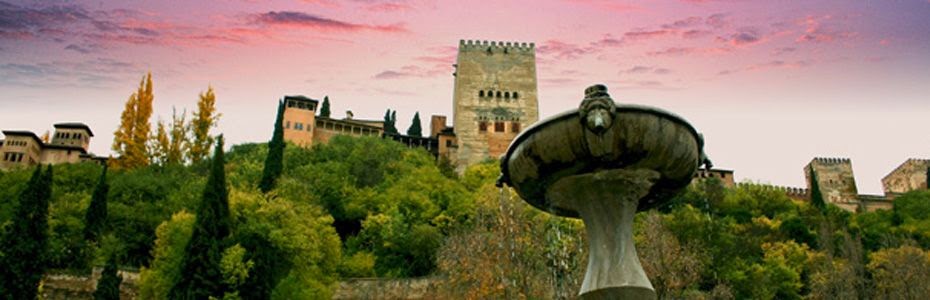

Must see places in Andalusia, Spain

If you are a muslim traveller or an islamic architecture lover those are the 7 things you must see in Granada

Top 10 foods to try in Morocco

One of the great cuisines of the world, Moroccan cooking abounds with subtle spices and intriguing flavour combinations.

Top Five Must See Things in Cordoba, Spain

Cordoba قرطبة in the Andalucia province of southern Spain is a city with more than 2,500 years of developed history.

ChefChaouen, the blue city in Morocco

Located just a few hours by bus from Tangier and far enough off the beaten track to dissuade many tourists, Chefchaouen is quiet enough for those visitors overwhelmed by the busy medinas of Fez and Marrakech, and has just enough of what is quintessentially Moroccan to be of interest to other travelers looking for something a bit more authentic.

Fes, Morocco

The most mystical of Morocco's imperial cities, Fez. Capital and spiritual center of Morocco, this city is situated in a narrow valley against the backdrop of the Middle Atlas

Mostrando entradas con la etiqueta Spain & Morocco Tour. Mostrar todas las entradas

martes, 22 de diciembre de 2015

What to see in Seville, Ishbiliya إشبيلية in muslim times

The Islamic kingdoms of medieval Spain are legendary for their artistic and architectural glories. They are also famous, although perhaps at times through rose-tinted spectacles, for centuries of co-existence between Muslims, Jews and Christians, and for the flowering of a rich culture which drew on the best of the Religions of the Book.

Nowadays, the best-known (and most visited) of the cities of these medieval kingdoms are Granada, home to the Alhambra palace, and Cordoba, site of the breathtaking Mezquita mosque with its forest of red and white arches.

But Seville, now a sprawling modern city, also deserves recognition for its Islamic-influenced cultural heritage. Seville was founded as the Roman city of Hispalis, and was known as Ishbiliya (Arabic:إشبيلية) after the Muslim conquest in 712.

During the Muslim rule in Spain, Seville came under the jurisdiction of the Caliphate of Córdoba before becoming the independent Taifa of Seville; later it was ruled by the Muslim Almoravids and the Almohads until finally being incorporated into the Christian Kingdom of Castile under Ferdinand III in 1248

The Moorish urban influences continued and are present in contemporary Seville, for instance in the custom of decorating with herbaje and small fountains the courtyards of the houses. However, most buildings of the Moorish aesthetic actually belong to the Mudéjar style of Islamic art, developed under Christian rule and inspired by the Arabic style. Original Moorish buildings are the Patio del Yeso in the Alcázar, the city walls, and the main section of the Giralda, bell tower of the Seville Cathedral.


You can visit this city in our tour Spain & Morocco of  10days / nights

Torre del Oro

Overlooking the river is the Torre del Oro, which began life in the 13th century as a Moorish watchtower, part of the city walls that secured one end of a large chain that blocked off entrance to the harbor, which was at the time right in the center of Seville.

When the Catholic kings regained Seville and the city was granted the monopoly on all trade with the New World, the tower became an inspection point for taxing all cargoes before they were unloaded at the port.

The river eventually silted up, forcing the port to move to Cadiz, and the tower was no longer needed, and eventually the city walls around it were demolished. But the tower remained, later used as a prison.

Today it houses a maritime museum. Inside are displays relating to the Guadalquivir, and its role in navigation history. You’ll find ship models (including the three with which Columbus set out from Seville), maps and drawings, figureheads and a fine collection of navigation instruments.

Maria Luisa Park (Parque de María Luisa)

When Seville hosted the 1929 Exposición Ibero-Americana, this whole southern end of Seville was transformed into the fairgrounds, and various nations hired cutting-edge architects to design eye-catching pavilions were they could showcase their arts and technology.

Other pavilions were constructed to show off Spain’s on industry and innovation.

After the fair, several nations kept their pavilions as consulates, other buildings were turned into museums, and the entire park became Seville’s back yard.

Stretching along the river, Parque de María Luisa is a green space filled with fountains, gardens, palms, orange trees, Mediterranean pines, flower beds, pools and walkways, liberally dotted with benches and decorated throughout by colored tile work. Plaza de España defines one end, while at the other end two of the largest pavilions have become museums featuring archaeology and popular arts. Around the edges are consulates, including those of Peru and Colombia, and other buildings in Art Nouveau and Art deco styles, many of them also former fair pavilions.

Plaza de España

The focal point of the 1929 Ibero-American Exposition, Plaza de España is the work of architect Aníbal González, who blended elements of Spanish baroque, Mudéjar revival and the Art Deco that was popular at the time.

The towers were inspired by those on the great cathedral at Santiago de Compostella, and all around the immense crescent plaza are alcoves with colored tiled scenes representing the various provinces of Spain. Behind this is a wide arcaded gallery with views into the plaza and the moat that surrounds it.

The water feature is enhanced by boats and by ornate bridges crossing at intervals. Scenes from the movie Lawrence of Arabia were filmed here, and more recently scenes from two episodes of Star Wars. The fountain at the center of the plaza is lighted at night.

Jardines Reales Alcázar Gardens

Lovely and complex, the gardens are arranged, like the palace itself, into a series of garden rooms, through which you can stroll at leisure. And like the palace, some are intimate, some grand and soaring.

Wander among them to find fountains, tall topiary arches, walls of colored tile, carefully tended beds inside perfectly trimmed hedges, and other places where nature and Seville’s Mediterranean climate have been allowed to tend the garden.

Look especially for the spacious tree-shaded English Garden, the romantic Poet’s Garden, the Jardin de la Danza and the garden of Carlos V. The gardens are especially welcome in the summer, when their shade and fountains offer a respite from the heat.

Real Alcázar (Royal Palace)

Begun by the Islamic rulers in 712, building was continued in the 1360s by King Pedro, who favored the Mudéjar style, a revival of the Moorish architecture and decoration.

One of the oldest European royal palaces that are still in use, the Alcázar seems to flow in and out between almost overwhelming interiors and elegantly arranged patios, whose decoration is no less splendid, but brighter and airier for being open to the sky.

Each of these spaces – grand rooms or exquisite patios – is a jewel box on its own, and together they form one of the world’s most opulent palaces.

Beyond their splendor, in these rooms and tiny enclosed gardens are a millennium of history. Their architecture is a catalog of changing tastes and styles, from the earliest Arabic period through the Mudéjar extension of Moorish elements as they blended with Gothic in the late Middle Ages and into the Renaissance, Baroque and even later periods.

 Highlights are the delicate stone traceries of the Patio del Yeso and carvings of the Doncellas Patio, and the soaring and intricately tiled walls and dome of the Salon de Embajadores.

La Giralda

In proclaiming this former minaret a World Heritage Site, UNESCO called it “the masterpiece of Almohad architecture.” Built 1184-96, the tower, considered the finest of the three remaining great Almohad minarets, was designed not only to call the faithful to prayer, but as an observation point to guard the city.

So important was the tower to the Moors that they wanted to destroy it when they knew their city would fall to the Christian kings in 1248. King Alfonso X threatened death to the entire city if a single stone were removed, saving it for posterity – or maybe so he’d have a place from which to view his restored domain, which he promptly did – on horseback.

In the Renaissance era (1560-68), the top of the belfry was extended and the present balconies added, but everything below the bells is the original Almohad minaret, its walls built of brick trellis work forming different patterns on each side, highlighted by niches and windows. La Giralda’s beautiful design has inspired a number of other buildings, among them the clock tower of the Ferry Building in San Francisco, the Wrigley Building in Chicago and The Biltmore in Miami.

Seville Cathedral


One of the three largest in the world (measured by volume it’s even bigger than St Peter’s in Rome), Seville’s cathedral is resplendent in gold and silver, all part of the riches that flowed through Seville when the city had the monopoly on trade with the New World.

The high altar is nearly 120 feet tall, a tour-de-force of woodcarving with all of its statues and surfaces covered in gold.

To one side, the tomb of Christopher Columbus is held high by four giant figures, and several chapels have ornate altars and paintings by major Spanish artists. The Sacristy holds some of the church’s vast treasury of intricate reliquaries of precious metals and stones, as well as paintings by some notables. The church follows the footprint of the mosque that it replaced, and the courtyard planted in orange trees was its courtyard.

Re

viernes, 7 de agosto de 2015

The Aljafería Palace, قصر الجعفرية‎ Qasr al-Jaʿfariya in Zaragoza, Spain

The Aljafería Palace (Spanish: Palacio de la Aljafería; Arabic: قصر الجعفرية‎, tr. Qasr al-Jaʿfariya) is a fortified medieval Islamic palace built during the second half of the 11th century in the Moorish taifa of Zaragoza of Al-Andalus, present day Zaragoza, Spain.

It was the residence of the Banu Hud dynasty during the era of Abu Jaffar Al-Muqtadir after abolishing Banu Tujibi of Kindah dynasty. The palace reflects the splendor attained by the kingdom of the taifa of Zaragoza at the height of its grandeur. The palace currently contains the Cortes (regional parliament) of the autonomous community of Aragon.

The structure holds unique importance in that it is the only conserved testimony of a large building of Spanish Islamic architecture of the era of the Taifas (independent kingdoms).

History

 After the capture of Zaragoza in 1118 by Alfonso I of Aragon, the Aljafería became the residence of the Christian kings of the Kingdom of Aragon and as such was converted into the focal point for spread of the Mudéjar Architecture of Aragon. It was the birthplace of Saint Elizabeth of Portugal in the year 1271.

It was used as the royal residence by Peter IV of Aragon and subsequently, on the principal building site, a renovation was carried out that converted these chambers into the palace of the Catholic Monarchs in 1492. In 1593, the structure experienced another renovation that converted it into a military base, first according to Renaissance designs (which today can be observed in its moat and gardens) and later as military quarters.

The building suffered continuous alterations and considerable imperfections, above all with the Siege of Zaragoza during the Peninsular War until it was finally restored in the second half of the 20th century and currently it houses the Cortes or autonomous community legislative assembly of Aragon.

In the original construction, extra ramparts were made in the open field surrounding the Aljafería. With urban expansion over the years, the building has remained inside of the city. Yet the city of Zaragoza has not been able to honour the landscaped surroundings of the Aljafería. A freeway passes only a few meters away

 Troubadour Tower


The oldest construction of the Aljafería is called Troubadour Tower. The tower received this name from Antonio Garcia Gutierrez’s 1836 romantic drama The Troubadour. The drama was converted into a libretto for Giuseppe Verdi’s opera Il trovatore in 1853.

The tower is a defensive structure, with a quadrangular base and five levels which date back to the end of the 9th century AD, in the period governed by the first Banu Tujibi, Muhammad Alanqur, who was named after Muhammad I of Córdoba, independent Emir of Cordoba. According to Cabañero Subiza (1998) the Tower was built in the second half of the 10th century.[1] In its lower part, the tower contains vestiges of the beginning of the heavy walls of alabaster ashlar bond masonry, and continues upwards with plank lining of simple plaster and lime concrete, which is a thinner substance for reaching greater heights. The exterior does not reflect the division of the five internal floors and appears as an enormous prism, broken by narrow embrasures. Access to the interior was gained through a small door at such height that it was only possible to enter by means of a portable ladder. Its initial function was, by all indications, military.

The first level conserves the building structure of the 9th century and shelters two separated naves and six sections, which are separated by means of two cruciform pillars and divided by lowered horseshoe arcs. In spite of its simplicity, they form a balanced space and could be used as baths.

The second floor repeats the same spatial scheme as the previous floor, and the remains of Muslim brick-work from the 11th century can be seen in the brick façades, which indicates that the second floor was possibly reconstructed at the same time as the palace during the epoch of Al-Muqtadir.

martes, 21 de abril de 2015

Top 10 foods to try in Morocco

Sample the aromatic and spicy food of North Africa by taking a trip to Morocco, a vibrant country with strong traditions and a diverse landscape of bustling cities, mountain ranges and arid deserts.
One of the great cuisines of the world, Moroccan cooking abounds with subtle spices and intriguing flavour combinations. Think tart green olives paired with chopped preserved lemon rind stirred into a tagine of tender chicken, the surprise of rich pigeon meat pie dusted with cinnamon and icing sugar, or sardines coated with a flavourful combination of coriander, parsley, cumin and a hint of chilli. 

Influenced by Andalusian Spain, Arabia and France, Morocco’s cuisine is a delicious combination of mouthwatering flavours that make it unique.

Don’t leave Morocco without trying…

B’ssara

At a few pennies a bowl, this rich soup of dried broad beans is traditionally served for breakfast, topped with a swirl of olive oil, a sprinkling of cumin and bread fresh from the oven. 

Tagine 


A tagine is the clay cooking pot with a conical lid that gives its name to a myriad of dishes. Tagines can be seen bubbling away at every roadside café, are found in top notch restaurants and in every home, and are always served with bread. 

 Fish chermoula


With its long Atlantic and Mediterranean coasts, Morocco boasts a rich array of fish dishes. Chermoula is a combination of herbs and spices used as a marinade before grilling over coals, and as a dipping sauce.

Harira


During the holy month of Ramadan, the fast is broken at sunset each day with a steaming bowl of harira soup. Rich with tomatoes, lentils, chickpeas and lamb, it is finished off with a squeeze of lemon juice and some chopped coriander, and served with a sticky sweet pretzel called chebakkiya.

Kefta tagine


Beef or lamb mince with garlic, fresh coriander and parsley, cinnamon and ground coriander is rolled into balls and cooked in a tomato and onion sauce. Just before the dish is ready, eggs are cracked into depressions in the sauce and soon cook to perfection.

Couscous


‘Seksu’ or couscous is a fine wheat pasta traditionally rolled by hand. It is steamed over a stew of meat and vegetables. To serve, the meat is covered by a pyramid of couscous, the vegetables are pressed into the sides and the sauce served separately. It is often garnished with a sweet raisin preserve, or in the Berber tradition, with a bowl of buttermilk.

Makouda


Moroccan street food is legendary and the best place to sample the wide variety is Djemaa el-Fna square in Marrakech. 

Here beside the kebabs, calamari and grilled sardines, you will find the more unusual sweet cheek meat of sheep’s heads, snails cooked in a spicy broth that wards off colds, and skewers of lamb’s liver with caul fat. Makouda are little deep-fried potato balls, delicious dipped into spicy harissa sauce.

Zaalouk


Moroccan meals begin with at least seven cooked vegetable salads to scoop up with bread. They can include green peppers and tomatoes, sweet carrots or courgette purée, and a dish of local olives alongside. Zaalouk is a smoked aubergine dip, seasoned with garlic, paprika, cumin and a little chilli powder.

B’stilla


This very special pie represents the pinnacle of exquisite Fassi (from Fez) cuisine. Layers of a paper-thin pastry coddle a blend of pigeon meat, almonds and eggs spiced with saffron, cinnamon and fresh coriander, the whole dusted with icing sugar and cinnamon.


Mint tea


Known as ‘Moroccan whisky’, mint tea is the drink of choice. It is usually heavily sweetened with sugar chipped off a sugar cone. Gunpowder tea is steeped with a few sprigs of spearmint stuffed into the teapot. It is poured into a tea glass from a height to create a froth called the crown.


miércoles, 15 de abril de 2015

Must see places in Andalusia, Spain

malaga-spainThe region of Andalusia stretches over 87 268 km² of land. Andalusia makes up 17% of Spain. This autonomous region has lots to offer to its visitors.

You can visit Andalusia in our tour Spain & Morocco of  10days / nights

Here are some highlights in this fascinating part of Spain.      

The natural beaches of Cabo de Gata, Almeria. This area is named Cabo de Gata after the mineral Agate (agata) which used to be mined in that area. As your drive through this National Park you will see the landscapes vary. From expanses of desert with cactus and prickly pear trees to beautiful rustic beaches. You will discover villages that look like they came straight out of the Wild West. It´s easy to see how this area has attracted so many film producers. Recently Ridley Scott filmed scenes for the film Exodus at Playa de los Genoveses. The bird scene from Indiana Jones and the Last Crusade was also filmed here.


The Alpujarra villages. These small villages extend across a large area in Granada and Almeria provinces. The region is beside the Sierra Nevada mountain range and boasts dramatic landscapes. A day out around the Alpujarras is a unique experience. The locals thrive on the sale of local craftwork and delicious food from that area. This group of villages is currently on the UNESCO waiting list to be added as a World Heritage site. It has a history of Silk production and was once one of the main producers of silk in the world. You will love this area of Andalusia if you enjoy nature, walking, and local crafts. You may like to party in the Alpujarra at one of the local fiestas in the summer months.


 The Alhambra Palace and Generalife. This group of palaces and gardens is a UNESCO World Heritage site. Located in the city of Granada, this site received 2,315,017 visitors last year. (2013 figures) This began as a fortress over 1000 years ago. As the years passed it changed gradually as different monarchs conquered the Kingdom of Al Andalus. A fascinating history lies before any visitor to this spectacular place. The intricate plasterwork on its walls seems unending. The reflective details in the architecture adds symmetry to the Nasrid palaces. As you wander through the Alhambra complex you may think you have travelled back in time.


Cordoba. Yet another UNESCO World Heritage site, the Mezquita of Cordoba is well worth a visit. Building of this impressive mosque began in 786 and took around 200 years to complete. This Cathedral mosuqe is located in the centre of old quarter of Cordoba. The central hall is full of hundreds of columns and arches. Many of these stone columns came from other countries across the empire although at a first glance they look alike. Cordoba is also well known for it´s colourful patio festival. Although it takes place in May you can visit the patios at other times of the year too. The sunset across the roman bridge is stunning. A walk around the old streets after dark is particularly magical.

 
Malaga. Although the coastal towns of Malaga are popular for their beaches and nightlife, the old quarter of Malaga must be included on your visit. The city has it´s own fortress or Alcazaba and the impressive Roman amphitheatre too. The views from the Alcazaba over the coastline and the port are well worth the jaunt up the hill. (take the bus) T. As you walk around the city centre you may see flower sellers with white jasmine flowers for sale. Known locally as biznagas they make an unusual gift to take home. Don´t miss the Calle Larios, the main commercial street or the bar Pimpi, a must see for any visitor to Malaga.

malaga-spain

Ronda is an inland town in the Malaga province. The town is seperated in two by a vast gorge. The two areas of the old town and the newer part where the commercial area is. The surrounding countryside and views from the bridge will make for impressive holiday photos. This bridge puente nuevo inspired Ernest Hemingway in For whom the bell tolls. Ronda´s Plaza de Toros has a museum which displays different aspects of this spanish tradition. Ronda makes a good destination for a day trip if staying along the Costa del Sol or in Marbella.

Ronda, Malaga, Spain

Seville. The city of Seville is famous for its Easter processions and it´s traditional Feria de Abril. If you have chance to visit at Eastertime you will be able to enjoy the intense atmosphere of the Easter processions. The Feria de abril follows after easter and lasts for 10 days. Colourful flamenco dresses and lots of bottles of manzanilla dry wine are enjoyed each year at the fair. Monuments worth visiting in the city are the Cathedral of Seville with the its famous Giralda, the Alcázar and the Archivo General de Indias. The three buildings are UNESCO listed. The Plaza de España, Parque Maria Luisa  and the neighbourhood of Triana are also recommended for any visitor.


Cadiz. This coastal city is still one of the most important seaports in Spain. This city is the oldest in Spain, founded in the 11th century B.C. It´s often called the Tacita de Plata, meaning the silver tea cup. There is something special about Cadiz. The atmosphere of the city and the friendly locals make any visit enjoyable. Go and taste some tapas in the Barrio de La Palma,  just a short walk from the beach.  Take a walk along the fortified walls beside the sea and see the San Esteban Castle. You can also see Cadiz from above at Torre Tavira, using their camara oscura.


Cadiz
The National park of Doñana is a birdwatchers paradise. This park located in Huelva province is yet another UNESCO listed site. With a large number of protected birds in it´s grounds you can enjoy birdwatching in a beautiful natural setting. Flamingos, geese, vultures, kites and many others are here this impressive park. 


Doñana National Park, Andalusia, Spain


jueves, 9 de abril de 2015

11 Top-Rated Tourist Attractions in طنجةTangier, Morocco

Always of huge strategic importance at the entrance to the Mediterranean, Tangier is the enthralling gateway to Africa, a tantalising introduction to a culture vastly different from that across the Strait of Gibraltar.

Tangier is divided into an old walled city, or medina, a nest of medieval alleyways, and a new, modern city, the ville nouvelle. The medina contains a kasbah, the walled fortress of the sultan, which forms its western corner; the Petit Socco (also known as Socco Chico and Souq Dakhel), an historic plaza in the centre; and of course, the souqs, or markets. The much more impressive Grand Socco, a pleasant square with a central fountain, is the hinge between the two sides of town, and the postcard entrance to the medina.

Shared from www.planetware.com


1 Medina

Medina
Medina Yutaka Fujii

Tangier's Medina (Old City) tumbles down the cliff towards the ocean in a labyrinth of narrow alleyways. The central vortex of Medina life is the square known as the Petit Socco, where old men sit for hours drinking tea and playing backgammon. During its fast-paced past, the Medina was a playground for author Paul Bowles and America's legendary Beatnik literary figures such as Jack Kerouac, Allen Ginsberg and William Burroughs. Wandering around this area is a must for Tangier visitors.

Just west of the Petit Socco on Rue Siaghine is The Church of the Immaculate Conception, built by the Spanish in 1880. East of the square is the Grand Mosque. In the southeast corner of the Old City is the Old American Legation, once the US consulate building and the oldest American diplomatic post. The museum inside traces the history of the relationship between the US and Morocco: as Morocco was one of the first countries to recognise American independence, the US established its legation in Tangier in 1821. The interesting exhibits inside include George Washington's famous letter to Mouilay Abdullah.

2 Kasbah

The Kasbah, where the sultan once lived, dominates the Medina's northern section. The gate opens onto a large courtyard, which leads to the Dar el-Makhzem Palace and the modern-day Kasbah Museum. The palace was built in the 17th century and enlarged by each reigning sultan. The carved wooden ceilings and marble courtyard showcase the intricacies of Moroccan craft-work. Also in the Kasbah is the infamous Cafe Detroit, which became a haunt for the visiting and expat writers, artists and hangers-on in the 1960s.

3 Kasbah Museum

Kasbah Museum
Kasbah Museum g-squared

The Kasbah Museum brings together an amazing number of exhibits tracing Morocco's history. The Antiquities Collection brings together finds from Roman sites such as Lixus and Volubilis and includes a life-size model of a Carthaginian tomb. There are also displays explaining Tangier's history and a large section devoted to Moroccan arts. The Fes Room is particularly interesting, containing silks and illustrated manuscripts as well as centuries-old ceramics decorated from golden yellow to the famous Fes-blue.

4 Ville Nouvelle

Ville Nouvelle
Ville Nouvelle Peter Collins

Tangier's Ville Nouvelle (New City) is a must for fans of late 19th and early 20th century architecture as it features many fine buildings from this time period. Here you'll find the Terrasse des Paresseux (Terrace of the Idle) where you can look out at the spectacular ocean view that has captivated so many European artists. With the harbour before you, look across the water for the hazy silhouettes of Gibraltar and southern Spain in the distance.

The Grand Socco (the main square) marks the end of the New City and entry to the Medina. This is where Tangier locals come to stroll, play and sit in the surrounding cafes for hours. Just to the square's north is the Mendoubia Gardens, a shady spot full of fig and dragon trees.

5 Contemporary Art Museum

This art gallery is devoted to modern Moroccan art, with works by the country's big-name artists on show. The gallery's grand old building dates to the 17th century. Peaceful gardens surround the museum, making the attraction a relaxing respite to the bustle outside.

6 Beach

Beach
Beach

Tangier's beach side district is intrinsically linked to the city's heady 1960s, when the beautiful and louche literary residents made this one of the world's most famous strips of sand. Its hey-day is now long gone, but the beach area is still a good place for a stroll with plenty of locals promenading and playing football along its length.

7 Cap Spartel

Cap Spartel
Cap Spartel

Cap Spartel marks Africa's northwest tip. The promontory projects into the water marking the boundary of Mediterranean Sea with Atlantic Ocean. The best time to come here is at sunset, when you can see dusk settle over the Atlantic. The lighthouse here, at the tip of the promontory, is especially photogenic.
Location: 11 km west of Tangier

8 Asilah

Asilah
Asilah

The little town of Asilah, on the northwest tip of Morocco's Atlantic coast, has a history that stretches back to the Roman era. More recently, it has been under the control of both Spain and Portugal. But the town's imposing ramparts, with surviving bastions and towers, now offer a setting for delightful seaside walks. The Portuguese fortifications enclose an old town of pretty white-and-blue-washed houses with a distinctive Mediterranean feel. The town is also famous for fried seafood dishes. Restaurants line the shore, making for a great place to put your feet up while you sample some fish.
Location: 40 km from Tangier

9 Larache

Larache
Larache

The seaside town of Larache is the closest settlement to the Lixus archaeological site, where Greek legend tells that Hercules gathered the golden apples. The site includes a temple, theatre, acropolis and baths. Back in town itself, Larache's Archaeological Museum is housed in the Chateau de la Cigogne. The museum contains a collection of finds unearthed from Lixus, including an interesting display of perfume bottles and jewellery.

10 Ceuta

Ceuta
Ceuta

Spain's little piece of Morocco, this oddity of a town is a major transport hub with ferries across the sea to Algeciras. The old fortifications (built by the Portuguese) around the San Filipe Moat are the town's main sight, but the Ceuta Museum is also worth a look for its well-displayed collection of Punic and Roman finds.

Those with an interest in religious art and architecture should also visit Ceuta's main square - home to the interesting Cathedral Museum and the 15th century Church of Our Lady of Africa.

11 Melilla

Melilla
Melilla

Melilla's fortified Medina is the centre of most of the town's sightseeing. The museum here is worth a look for its interesting archaeological section. There is a 17th century cathedral here as well. At nearby Three Fork's Cape, gaze out over the perfectly turquoise waters. From the lighthouse you can see the many small beaches and great blocks of anthracite rise out of the waters.

History

According to Greek mythology Tangier, or Tingi, was founded by the giant Anteus. Tingi is mentioned by Carthagian travellers as early as 500 BC, and Phoenician sailors visited even earlier. After the destruction of Carthage, Tingi was affiliated with the Berber kingdom of Mauretania. It then became an autonomous state under Roman protection, eventually becoming a Roman colony in the 3rd century AD during the reign of Diocletian, and ending as the capital of Mauretania Tingitana. In the fifth century Vandals conquered and occupied Tingi and from here swept across North Africa.

A century later Tingi became part of the Byzantine Empire and gradually fell into obscurity until the city's capture by Moussa bin Nasser during the first years of the eighth century. The city's inhabitants were converted to Islam but many Berber tribes joined the schismatic Kharijite rebellion and seized the port city in AD 739. When Moulay Idris I established his kingdom at Volubilis in AD 788, Tangier became a focal point in the struggle between the Idrissid dynasty and the Umayyads. This struggle continued until the Fatimid dynasty from Tunisia assumed power in AD 958.

Tangier came under the successive sway of the Almoravides and Almohades, after which the city fell under the influence of the Tunisian Hafsid dynasty before passing into the hands of the Merinids. By the 14th century Tangier became a major Mediterranean port frequented by European trading vessels bringing cloth, spices, metals and hunting birds in exchange for leather, wool, carpets, cereals and sugar. After an unsuccessful attempt to seize Tangier in 1437, the Portuguese finally conquered and occupied the city in 1471, converting the great mosque into a cathedral. For nearly three centuries the town was passed back and forth between the Spanish, Portuguese and finally the English, when it was given to Charles II as part of the dowry from Catherine of Braganza.

The English granted Tangier a charter, which made the city equal to English towns. In 1679 Moulay Ismail made an unsuccessful attempt to seize the town but maintained a crippling blockade, which ultimately led to a British retreat. Under Moulay Ismail the city was reconstructed to some extent but the city gradually declined until, by 1810, the population was no more than 5,000. Tangier began to revive from the mid-19th century when European colonial governments fought for influence over Morocco.

martes, 17 de marzo de 2015

15 Top-Rated Tourist Attractions in Rabat

Rabat was founded as an Arab army outpost in the 12th century and given the generic name for military encampment, Ribat, which is still in use today. For centuries Rabat and Salé were rival principalities, but eventually Rabat began to dominate the area. Salé's power was ultimately eclipsed altogether by its larger neighbour.

In the early 17th century, Rabat became a centre of anti-European piracy centred at the stronghold of the Kasbah des Oudaias. Rabat was first made a modern capital in 1912 by Morocco's French overlords, and remained the nation's capital after independence in 1956. The city is the residence of the royal family.

Nowdays, as Morocco's capital, Rabat is home to the country's most important museum, the Royal Palace, and the Mausoleum of Mohamed V, as well as to several historical attractions. Situated right on the Atlantic Ocean, with the Bou Regreg River running to the west separating it from its sister-city of Salé, Rabat is a pretty place.

It has a much calmer atmosphere than nearby Casablanca. And for many tourists, a visit to Rabat can be a pleasant surprise and a welcome break from the hustle of other Moroccan cities. History-fiends are sure to enjoy wandering the Chellah excavation area and exploring the lovely Oudaias Kasbah.

1 Oudaias Kasbah


Rabat's Kasbah district is one of the city's top sightseeing draws. Inside the 11th century fortress walls, a tranquil and tiny neighbourhood of twisting white-and-blue lanes were built in Andalusian-style. It is a joy to visit and photograph. Also inside, on Rue el Jamma, is the Kasbah Mosque, built in 1150 and the oldest mosque in Rabat. The district has fine views over to Salé and the Atlantic Ocean.

2 Hassan Tower

Hassan Tower

Built by the Almohads, the unfinished Hassan Tower was the work of ruler Yacoub al-Mansour and would have been the minaret for his grand vision of a mosque on this site. Upon his death in 1150, construction was abandoned and this 45 m tower is all that remains of his original plan. Beautiful and intricate motifs and designs cover the tower's facade, pointing to the sumptuousness of what al-Mansour had in mind. The Hassan Tower is next door to the Mausoleum of Mohamed V.
Location: Avenue Hassan II, Rabat

3 Mausoleum of Mohamed V

Mausoleum of Mohamed V

The glittering Mausoleum of King Mohamed V lies in state on the very place where, upon his return from exile in Madagascar, he gathered thousands of Moroccans together to thank God for giving independence to their country. The opulent tomb chamber is a showcase of Moroccan traditional design, and has a grand marble tomb and walls covered in zellige tiles. Only Muslims can visit the adjoining mosque.

4 Chellah Necropolis

Chellah Necropolis

The remnants of the 14th century Merinid citadel-town of Chellah are an atmospheric place. The walled ruins are positioned on an older Roman town called Sala, which archaeologists uncovered evidence of in the 1930s. Today, parts of both these settlements can be seen. Chellah thrived as a Merinid citadel in the early 14th century. The crumbled ruins of mosques and mausoleums they built here are now covered with rambling brambles, providing nesting sites for storks. The excavated Roman part of the site includes a forum, bath and temple. For a good overview of the entire Chellah ruins, an overlooking terrace provides excellent views across the site.

5 Oudaias Museum and the Andalusian Gardens

Oudaias Museum and the Andalusian Gardens

Within the Oudaias Kasbah are the lovely Andalusian Gardens, which were laid out in the early 20th century. The Oudaias Museum, set within the gardens, is housed in the opulent 17th century lodge built by Moulay Ismail as his first Rabat residence. At the far end of the lodge, a room displays an ancient Moroccan interior. Cushions in brocade, silk and gold cover the divans around the room. A little further on, there is an exhibit of ancient illuminated Qur'ans, jewellery, pottery and musical instruments.

6 Rabat Archaeology Museum

Built in 1932 and enlarged a few years later to display excavated finds, this museum is home to Morocco's best archaeological collection. The prehistoric section brings together human remains from the middle Palaeolithic period to the Neolithic, illustrating the continuity and size of the population at this time. Pre-Roman civilisations are well represented.

The Roman and Hellenistic exhibits are renowned, and the collection of bronzes is incredibly impressive. Even if you're not a museum-person, this is the one museum on your Morocco travels that you shouldn't miss.

7 Medina

Medina

Rabat's rambling Medina area has a distinctly Andalusian style to its buildings as most of the architecture here dates from the 17th century when Muslims from Spain's Andalusia region arrived. This makes it very different to the Medina's of Fes and Marrakesh. The two best shopping streets are Souk es Sebbat and Rue Souka, and there are a number of interesting buildings within the district that make a wander here worthwhile. In particular look out for the Koubba Mosque on Rue Bou Kroun, and the Merinid Fountain and Grand Mosque both on Rue Souka. The Mellah (Jewish Quarter) is located in the southeast corner of the Medina and has an interesting flea market.

8 Royal Palace

Royal Palace

Construction of Rabat's Royal Palace began in 1864, and a wall surrounds the sprawling building. The Fes el-Bali complex is not open to the public as the current king still uses the palace as his residence. You can get good photographs of the palace exterior from nearby the Sunna Mosque.

9 New City

New City

Rabat's Ville Nouvelle (New City) is home to the Archaeological Museum and also the surprisingly interesting Postal Museum (on Avenue Mohamed V), which brings together a superb collection of Moroccan stamps, telephones and telegraph machines. The streets of the Ville Nouvelle host a wealth of French colonial architecture and are a pleasant place for a stroll. Right on the district's edge, Avenue Hassan II follows the 17th century Undulations Wall separating the modern city from the Medina.

10 Abul Hassan Medersa

Abul Hassan Medersa

Directly across the Bou Regreg River, facing Rabat, the town of Salé is home to several interesting medersas (madrassa - Islamic school of learning) and mausoleums. In particular, the Abul Hassan Medersa is worth a visit. It dates from the Merinid era in the 14th century and has an interior covered with beautifully restored examples of traditional religious decoration, including zellige tile-work and carved wood panels. If you climb up to the roof you can get excellent views across the water to Rabat.

11 Salé Medina

Salé Medina

The Medina area in Salé is a quaint and picturesque place to spend a few hours in the afternoon. As well as the Abul Hassan Medersa, the district is also home to Salés' Grand Mosque, the Mausoleum of Sidi Ben Ashir with its photogenic whitewashed tomb, and the Fondouk (khan) al-Askour.

12 Kenitra

Kenitra

Established as a military fort by Morocco's first French Resident General in 1912, Kenitra is a modern town on the road to Tangier. Although the town doesn't have much to offer visitors, it's a great base for trips to nearby Mahdia with its long beach, a haven for windsurfers. Other nearby sightseeing attractions include the interesting Kasbah neighbourhood, and the Roman garrison site of Thamusida. The ruins of Thamusida include a temple, bath, housing and a large garrison camp area.
Location: 46 km north of Rabat

13 Temara

Temara

Temara is a favourite weekend and holiday beach for Rabat locals. The beach has natural bathing pools making it a great option for families with young children worried about the waves.
Location: 13 km from Rabat

14 Mamora Forest

The Mamora Forest is located southeast of Kenitra. The forest's 134,000 trees include 50% of the cork trees in Morocco, but there are also eucalyptus, pine, acacia and Mamora wild pear. There are excellent bird-watching opportunities within the forest - look for white storks and turtle doves.

15 Natural Science Museum

Rabat's Natural Science Museum has an impressive 150 million year old skeleton of a Sauropod dinosaur on display. It was discovered in 1979, in the High Atlas Azilal region. There are also exhibits on the earth's geological origins.
Location: Agdal District, Rabat