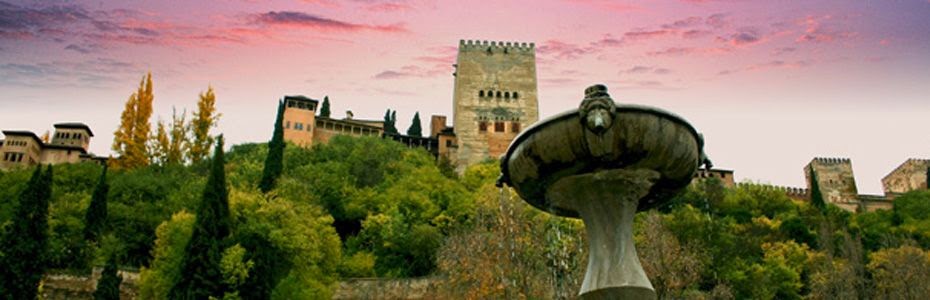

Must see places in Andalusia, Spain

If you are a muslim traveller or an islamic architecture lover those are the 7 things you must see in Granada

Top 10 foods to try in Morocco

One of the great cuisines of the world, Moroccan cooking abounds with subtle spices and intriguing flavour combinations.

Top Five Must See Things in Cordoba, Spain

Cordoba قرطبة in the Andalucia province of southern Spain is a city with more than 2,500 years of developed history.

ChefChaouen, the blue city in Morocco

Located just a few hours by bus from Tangier and far enough off the beaten track to dissuade many tourists, Chefchaouen is quiet enough for those visitors overwhelmed by the busy medinas of Fez and Marrakech, and has just enough of what is quintessentially Moroccan to be of interest to other travelers looking for something a bit more authentic.

Fes, Morocco

The most mystical of Morocco's imperial cities, Fez. Capital and spiritual center of Morocco, this city is situated in a narrow valley against the backdrop of the Middle Atlas

Mostrando entradas con la etiqueta Cities of Morocco. Mostrar todas las entradas

jueves, 10 de septiembre de 2015

Morocco's arts and crafts, and the best shopping

The medinas of Morocco are hives of traditional industry, where you will see exquisite examples of the country’s flourishing arts and crafts.
Exploring the souks of Fez and Marrakech is like walking down the corridors of time. More is revealed the more you delve, for it is in the hidden fondouks and courtyards off the main drag that traditional crafts and industries thrive in ways that have barely changed since Andalusian refugees introduced them over 1,000 years ago.

Crafts are grouped according to type, with the finer crafts located close to the Great Mosque. Each craft is organised into a guild, with apprentices working under master craftsmen for several years. Only when an apprentice is deemed to have the necessary skills and mental application will the master craftsman declare him fit to work alone. The traditional crafts of Morocco still make the best bargains. Here's our guide to the best souvenirs to bring back from Morocco.

What to buy in Morocco

Carpets

First and most prominent of the handicraft traditions are carpets and rugs, hand-knotted and in some cases, still coloured with vegetable dyes. Designs (apart from the Turkish-inspired patterns of Rabat carpets) are predominantly traditional to Berber tribes.

Their colours and symbolic motifs enable experts to pin down not only the area in which a carpet was produced but sometimes the tribe or even family that made it.

Top-quality carpets sell for thousands of dirhams; more affordable and easily portable are Berber rugs, kilims or blankets. Try the small country souks around Marrakech.


Edibles – spices, nuts, oils, olives, sweets


Edibles are a popular purchase. As well as spices, nuts, herbs, olives and Moroccan sweets, possible buys include argan oil, produced in the southwest. It is sold, either on its own or mixed with ground almonds (a nut butter called amalou).

Because of its high value, it is difficult to guarantee that the oil has not been mixed with olive oil.

One way of being sure that the oil you buy is 100 percent pure is to buy from one of the women’s cooperatives organised by the Projet Conservation et Développement de l’Arganeraie, which markets its oil to supermarkets under the name Cooperative Tissaliwine and has the EU-approved certificate of producing an organic product.


Leather

Leather goods are widespread, from unpolished leather bags and belts to distinctive pointed slippers (babouches) and ornate pouffes, studded and dyed. Some leather goods are finished in a style closer to Italian designer luggage.

In all cases, price should go hand in hand with quality, so check the hide and workmanship before buying. Printed boxes and bookbindings have become the victims of their imitators and too often look tacky.


Jewellery

Jewellery is available for sale everywhere, although one of the best places to buy it is in Tiznit’s famous silversmiths’ souk and in the souks of Taroudant, Essaouira and Marrakech.

Dull silver is the basic material: heavy but beautifully decorated bracelets, delicate filigree rings, chunky necklaces of semi-precious stones (or occasionally of plastic, for the unwary) are most commonly found.

Slightly more unusual, and sometimes antique, are decorated daggers, scabbards, or Qur’an boxes, covered with silver-wire decoration.

The fastenings are often a weak point. Beware, too, of silver-plating masking what the Moroccans call b’shi-b’shi – meaning rubbish.


Marquetry

Marquetry is another traditional craft: wooden furniture, ornaments, chess sets and small wooden boxes made in cedar, thuya and oak, as well as boxes and mirror frames inlaid with camel bone.

Many wooden goods are inlaid with veneers or mother of pearl. Often the quality of finish is less than ideal: hinges are points to watch.

The woodworkers’ ateliers at Essaouira are an ideal place to buy (and to watch the manufacturing process).


Metalwork

Metalwork ranges from copper or brass items such as trays with fine, ornate hammered designs (which, along with a small folding wooden stand, make attractive tables) to wrought-iron and pierced copper or brass lanterns, mirror frames and tables with tiny hand-carved zellige-tile inlaid tops.

There is also custom-made, contemporary designer furniture which is in good supply in Marrakech’s ironworkers’ souk near Madrassa Ben Youssef.


Ceramics & Pottery

Pottery ranges from the rough earthenware of household pots and crocks to gaudy (and predominantly tourist-orientated) designs and beautiful blue and white, green or coloured ceramics from the main pottery centres of Safi, Fez, Meknes and Salé. Marrakech and Essaouira both have extensive pottery souks.

The more refined, detailed (and expensive) pieces usually come from Fez, while Safi is famous for its dark-green-coloured pieces. In Marrakech you can find almost anything, including modern takes on traditional designs.

Perfume

Perfume is loved by Moroccans of both sexes.

Western brands are admired, but traditional scents, such as musk, orange flower, patchouli and amber, remain popular and are usually found in pure essential oil form in the spice souks and apothecaries of most medinas.

Incense is used in the home on special occasions and for perfuming clothes.


jueves, 9 de abril de 2015

11 Top-Rated Tourist Attractions in طنجةTangier, Morocco

Always of huge strategic importance at the entrance to the Mediterranean, Tangier is the enthralling gateway to Africa, a tantalising introduction to a culture vastly different from that across the Strait of Gibraltar.

Tangier is divided into an old walled city, or medina, a nest of medieval alleyways, and a new, modern city, the ville nouvelle. The medina contains a kasbah, the walled fortress of the sultan, which forms its western corner; the Petit Socco (also known as Socco Chico and Souq Dakhel), an historic plaza in the centre; and of course, the souqs, or markets. The much more impressive Grand Socco, a pleasant square with a central fountain, is the hinge between the two sides of town, and the postcard entrance to the medina.

Shared from www.planetware.com


1 Medina

Medina
Medina Yutaka Fujii

Tangier's Medina (Old City) tumbles down the cliff towards the ocean in a labyrinth of narrow alleyways. The central vortex of Medina life is the square known as the Petit Socco, where old men sit for hours drinking tea and playing backgammon. During its fast-paced past, the Medina was a playground for author Paul Bowles and America's legendary Beatnik literary figures such as Jack Kerouac, Allen Ginsberg and William Burroughs. Wandering around this area is a must for Tangier visitors.

Just west of the Petit Socco on Rue Siaghine is The Church of the Immaculate Conception, built by the Spanish in 1880. East of the square is the Grand Mosque. In the southeast corner of the Old City is the Old American Legation, once the US consulate building and the oldest American diplomatic post. The museum inside traces the history of the relationship between the US and Morocco: as Morocco was one of the first countries to recognise American independence, the US established its legation in Tangier in 1821. The interesting exhibits inside include George Washington's famous letter to Mouilay Abdullah.

2 Kasbah

The Kasbah, where the sultan once lived, dominates the Medina's northern section. The gate opens onto a large courtyard, which leads to the Dar el-Makhzem Palace and the modern-day Kasbah Museum. The palace was built in the 17th century and enlarged by each reigning sultan. The carved wooden ceilings and marble courtyard showcase the intricacies of Moroccan craft-work. Also in the Kasbah is the infamous Cafe Detroit, which became a haunt for the visiting and expat writers, artists and hangers-on in the 1960s.

3 Kasbah Museum

Kasbah Museum
Kasbah Museum g-squared

The Kasbah Museum brings together an amazing number of exhibits tracing Morocco's history. The Antiquities Collection brings together finds from Roman sites such as Lixus and Volubilis and includes a life-size model of a Carthaginian tomb. There are also displays explaining Tangier's history and a large section devoted to Moroccan arts. The Fes Room is particularly interesting, containing silks and illustrated manuscripts as well as centuries-old ceramics decorated from golden yellow to the famous Fes-blue.

4 Ville Nouvelle

Ville Nouvelle
Ville Nouvelle Peter Collins

Tangier's Ville Nouvelle (New City) is a must for fans of late 19th and early 20th century architecture as it features many fine buildings from this time period. Here you'll find the Terrasse des Paresseux (Terrace of the Idle) where you can look out at the spectacular ocean view that has captivated so many European artists. With the harbour before you, look across the water for the hazy silhouettes of Gibraltar and southern Spain in the distance.

The Grand Socco (the main square) marks the end of the New City and entry to the Medina. This is where Tangier locals come to stroll, play and sit in the surrounding cafes for hours. Just to the square's north is the Mendoubia Gardens, a shady spot full of fig and dragon trees.

5 Contemporary Art Museum

This art gallery is devoted to modern Moroccan art, with works by the country's big-name artists on show. The gallery's grand old building dates to the 17th century. Peaceful gardens surround the museum, making the attraction a relaxing respite to the bustle outside.

6 Beach

Beach
Beach

Tangier's beach side district is intrinsically linked to the city's heady 1960s, when the beautiful and louche literary residents made this one of the world's most famous strips of sand. Its hey-day is now long gone, but the beach area is still a good place for a stroll with plenty of locals promenading and playing football along its length.

7 Cap Spartel

Cap Spartel
Cap Spartel

Cap Spartel marks Africa's northwest tip. The promontory projects into the water marking the boundary of Mediterranean Sea with Atlantic Ocean. The best time to come here is at sunset, when you can see dusk settle over the Atlantic. The lighthouse here, at the tip of the promontory, is especially photogenic.
Location: 11 km west of Tangier

8 Asilah

Asilah
Asilah

The little town of Asilah, on the northwest tip of Morocco's Atlantic coast, has a history that stretches back to the Roman era. More recently, it has been under the control of both Spain and Portugal. But the town's imposing ramparts, with surviving bastions and towers, now offer a setting for delightful seaside walks. The Portuguese fortifications enclose an old town of pretty white-and-blue-washed houses with a distinctive Mediterranean feel. The town is also famous for fried seafood dishes. Restaurants line the shore, making for a great place to put your feet up while you sample some fish.
Location: 40 km from Tangier

9 Larache

Larache
Larache

The seaside town of Larache is the closest settlement to the Lixus archaeological site, where Greek legend tells that Hercules gathered the golden apples. The site includes a temple, theatre, acropolis and baths. Back in town itself, Larache's Archaeological Museum is housed in the Chateau de la Cigogne. The museum contains a collection of finds unearthed from Lixus, including an interesting display of perfume bottles and jewellery.

10 Ceuta

Ceuta
Ceuta

Spain's little piece of Morocco, this oddity of a town is a major transport hub with ferries across the sea to Algeciras. The old fortifications (built by the Portuguese) around the San Filipe Moat are the town's main sight, but the Ceuta Museum is also worth a look for its well-displayed collection of Punic and Roman finds.

Those with an interest in religious art and architecture should also visit Ceuta's main square - home to the interesting Cathedral Museum and the 15th century Church of Our Lady of Africa.

11 Melilla

Melilla
Melilla

Melilla's fortified Medina is the centre of most of the town's sightseeing. The museum here is worth a look for its interesting archaeological section. There is a 17th century cathedral here as well. At nearby Three Fork's Cape, gaze out over the perfectly turquoise waters. From the lighthouse you can see the many small beaches and great blocks of anthracite rise out of the waters.

History

According to Greek mythology Tangier, or Tingi, was founded by the giant Anteus. Tingi is mentioned by Carthagian travellers as early as 500 BC, and Phoenician sailors visited even earlier. After the destruction of Carthage, Tingi was affiliated with the Berber kingdom of Mauretania. It then became an autonomous state under Roman protection, eventually becoming a Roman colony in the 3rd century AD during the reign of Diocletian, and ending as the capital of Mauretania Tingitana. In the fifth century Vandals conquered and occupied Tingi and from here swept across North Africa.

A century later Tingi became part of the Byzantine Empire and gradually fell into obscurity until the city's capture by Moussa bin Nasser during the first years of the eighth century. The city's inhabitants were converted to Islam but many Berber tribes joined the schismatic Kharijite rebellion and seized the port city in AD 739. When Moulay Idris I established his kingdom at Volubilis in AD 788, Tangier became a focal point in the struggle between the Idrissid dynasty and the Umayyads. This struggle continued until the Fatimid dynasty from Tunisia assumed power in AD 958.

Tangier came under the successive sway of the Almoravides and Almohades, after which the city fell under the influence of the Tunisian Hafsid dynasty before passing into the hands of the Merinids. By the 14th century Tangier became a major Mediterranean port frequented by European trading vessels bringing cloth, spices, metals and hunting birds in exchange for leather, wool, carpets, cereals and sugar. After an unsuccessful attempt to seize Tangier in 1437, the Portuguese finally conquered and occupied the city in 1471, converting the great mosque into a cathedral. For nearly three centuries the town was passed back and forth between the Spanish, Portuguese and finally the English, when it was given to Charles II as part of the dowry from Catherine of Braganza.

The English granted Tangier a charter, which made the city equal to English towns. In 1679 Moulay Ismail made an unsuccessful attempt to seize the town but maintained a crippling blockade, which ultimately led to a British retreat. Under Moulay Ismail the city was reconstructed to some extent but the city gradually declined until, by 1810, the population was no more than 5,000. Tangier began to revive from the mid-19th century when European colonial governments fought for influence over Morocco.

viernes, 27 de marzo de 2015

The blue city of Morocco, Chefchaouen

Shared from: www.journeybeyondtravel.com

Visitors to Morocco can find a cool, relaxing reprieve from the bustle of travel in the friendly mountain town of Chefchaouen (often abbreviated as “Chaouen”).

Located just a few hours by bus from Tangier and far enough off the beaten track to dissuade many tourists, Chefchaouen is quiet enough for those visitors overwhelmed by the busy medinas of Fez and Marrakech, and has just enough of what is quintessentially Moroccan to be of interest to other travelers looking for something a bit more authentic.

Whether you spend a couple of days wandering the clean medina streets, enjoying a hike through the Rif Mountains, or just want to relax with a book and a fresh mint tea, like most visitors to Chefchaouen, you will walk away having experienced something magical.

Map of Chefchaouen Medina

Here is a map of the Chefchaouen. You can download this map of the Chefchaouen medina for your own use. We include a similar map in each itinerary packet that travelers receive before their tour takes place with us at Journey Beyond Travel.

Chefchaouen Medina Map

Chefchaouen is located in the Rif Mountains of Morocco on the Mediterranean Coast. Morocco is an eclectic city with beauty all over.  When in Morocco, a visitor has an array of activities at the fingertips. In the High Atlas Mountains, trekking takes many visitors to Mt. Toubkal and back.

Much of the country is unpopulated, largely uncharted, and vibrantly green, especially in the valleys and the north. Whether coming for some sun and fun or hiking and biking, Morocco tours get you a slitouce of whatever it is you’re looking for.


For adventurers who want the offerings of comfort and a city adventure there is the famous Chefchaouen in Morocco. This city is situated between two peaks of the Rif Mountains.  It is considered the most beautiful town in all of Morocco by many who visit.

It is an artsy place with white washed mountain homes making you feel as if you are in your own world. There is a balance of the type of popular tourism found in Morocco and the historical culture found here. The hues of blues will mesmerize the stoutest traveler.

The number one thing to do on our list in Chefchaouen is the Medina.  The Medina is the old town of the city.  There is a heavy Andalucian influence in the architecture of the Medina with red tiled roofs littering the valley and bright blue buildings winking at you with every turn.  The lanes are narrow making walking the best way to get around the streets.  Since the Medina is one of the smaller ones in Morocco you will never feel lost.

In the heart of the Medina is Plaza Uta El- Hammam.  This square is lined with cafes and restaurants.  You can watch the world go by as you sit eating traditional dishes of Morocco. Many visitors spend the evening in the square watching others walk by relaxing after a day of sightseeing.

The plaza is dominated by the Kasbah and Grande Mosque. The Mosque is well known for its octagonal shaped tower.  History of the Mosque dates it to the 15th century.  It was built by the son of the town’s founder, Ali Ben Rachid.  Unfortunately tourists cannot tour inside the Mosque as it is not open to non- Muslims.  All the same it is worthy of visiting the area to see the structure from the outside.

The architecture is something you will not forget.  While in the square you will have a chance to see the walled fortress of the Kasbah which hosts one of the most beautiful gardens in Chefchaouen and Morocco.  Near the garden is a small Ethnographic Museum.  To learn about the culture of the Rif Mountains you will find no place better than the museum.  An art gallery is also located on the premises.  To see magnificent views of Old Chefchaouen you will have to visit this location.  Many of the paintings have been done by long ago residents as well as local artists of today.

Relaxing is part of a vacation.  To treat yourself right on this vacation consider taking advantage of one of the spas in Chefchaouen. The Center Viva Form is a most sophisticated spa.  It is located at the Atlas Riad Chaouen Hotel.  They have a full service amount of offerings from pedicures to full body massages.  A second spa is the Douches Barakat.  It is a more local place to relax and enjoy the full services offered.

The best place to go trekking in Chefchaouen when you are looking for something off the streets is going to be Talassemtane national Park.  It begins just outside of town.  The small villages of Kalaa and Akchour are well known for the trekking experiences one can have there.  The Bridge of God which is a natural structure constantly draws the attention of tourists.  The formation is a stone arch which can lead towards the cascades in the area.  The magnificent waterfalls are something to behold, and your tour operator will be more than happy to take you to the area.

Eating in Chefchaouen is a pleasure. Restaurants like La Lampe Magique provide a wonderful atmosphere while serving a top notch Moroccan cuisine.  There is a lounge at the restaurant or a roof top terrace for a better view of the city.  Auberage Dardara Restaurant offers tajine and couscous as specialities.  The restaurant is well known for having the freshest herbs and vegetables for their meals.

Chefchaouen is unlike other cities in Morocco to visit. Casablanca is a city for a quick stop, while Rabbat is an economic center. Chefchaouen is the relaxation capitol, a place to chillax and unwind.

by Sam Mitchell

martes, 17 de marzo de 2015

15 Top-Rated Tourist Attractions in Rabat

Rabat was founded as an Arab army outpost in the 12th century and given the generic name for military encampment, Ribat, which is still in use today. For centuries Rabat and Salé were rival principalities, but eventually Rabat began to dominate the area. Salé's power was ultimately eclipsed altogether by its larger neighbour.

In the early 17th century, Rabat became a centre of anti-European piracy centred at the stronghold of the Kasbah des Oudaias. Rabat was first made a modern capital in 1912 by Morocco's French overlords, and remained the nation's capital after independence in 1956. The city is the residence of the royal family.

Nowdays, as Morocco's capital, Rabat is home to the country's most important museum, the Royal Palace, and the Mausoleum of Mohamed V, as well as to several historical attractions. Situated right on the Atlantic Ocean, with the Bou Regreg River running to the west separating it from its sister-city of Salé, Rabat is a pretty place.

It has a much calmer atmosphere than nearby Casablanca. And for many tourists, a visit to Rabat can be a pleasant surprise and a welcome break from the hustle of other Moroccan cities. History-fiends are sure to enjoy wandering the Chellah excavation area and exploring the lovely Oudaias Kasbah.

1 Oudaias Kasbah


Rabat's Kasbah district is one of the city's top sightseeing draws. Inside the 11th century fortress walls, a tranquil and tiny neighbourhood of twisting white-and-blue lanes were built in Andalusian-style. It is a joy to visit and photograph. Also inside, on Rue el Jamma, is the Kasbah Mosque, built in 1150 and the oldest mosque in Rabat. The district has fine views over to Salé and the Atlantic Ocean.

2 Hassan Tower

Hassan Tower

Built by the Almohads, the unfinished Hassan Tower was the work of ruler Yacoub al-Mansour and would have been the minaret for his grand vision of a mosque on this site. Upon his death in 1150, construction was abandoned and this 45 m tower is all that remains of his original plan. Beautiful and intricate motifs and designs cover the tower's facade, pointing to the sumptuousness of what al-Mansour had in mind. The Hassan Tower is next door to the Mausoleum of Mohamed V.
Location: Avenue Hassan II, Rabat

3 Mausoleum of Mohamed V

Mausoleum of Mohamed V

The glittering Mausoleum of King Mohamed V lies in state on the very place where, upon his return from exile in Madagascar, he gathered thousands of Moroccans together to thank God for giving independence to their country. The opulent tomb chamber is a showcase of Moroccan traditional design, and has a grand marble tomb and walls covered in zellige tiles. Only Muslims can visit the adjoining mosque.

4 Chellah Necropolis

Chellah Necropolis

The remnants of the 14th century Merinid citadel-town of Chellah are an atmospheric place. The walled ruins are positioned on an older Roman town called Sala, which archaeologists uncovered evidence of in the 1930s. Today, parts of both these settlements can be seen. Chellah thrived as a Merinid citadel in the early 14th century. The crumbled ruins of mosques and mausoleums they built here are now covered with rambling brambles, providing nesting sites for storks. The excavated Roman part of the site includes a forum, bath and temple. For a good overview of the entire Chellah ruins, an overlooking terrace provides excellent views across the site.

5 Oudaias Museum and the Andalusian Gardens

Oudaias Museum and the Andalusian Gardens

Within the Oudaias Kasbah are the lovely Andalusian Gardens, which were laid out in the early 20th century. The Oudaias Museum, set within the gardens, is housed in the opulent 17th century lodge built by Moulay Ismail as his first Rabat residence. At the far end of the lodge, a room displays an ancient Moroccan interior. Cushions in brocade, silk and gold cover the divans around the room. A little further on, there is an exhibit of ancient illuminated Qur'ans, jewellery, pottery and musical instruments.

6 Rabat Archaeology Museum

Built in 1932 and enlarged a few years later to display excavated finds, this museum is home to Morocco's best archaeological collection. The prehistoric section brings together human remains from the middle Palaeolithic period to the Neolithic, illustrating the continuity and size of the population at this time. Pre-Roman civilisations are well represented.

The Roman and Hellenistic exhibits are renowned, and the collection of bronzes is incredibly impressive. Even if you're not a museum-person, this is the one museum on your Morocco travels that you shouldn't miss.

7 Medina

Medina

Rabat's rambling Medina area has a distinctly Andalusian style to its buildings as most of the architecture here dates from the 17th century when Muslims from Spain's Andalusia region arrived. This makes it very different to the Medina's of Fes and Marrakesh. The two best shopping streets are Souk es Sebbat and Rue Souka, and there are a number of interesting buildings within the district that make a wander here worthwhile. In particular look out for the Koubba Mosque on Rue Bou Kroun, and the Merinid Fountain and Grand Mosque both on Rue Souka. The Mellah (Jewish Quarter) is located in the southeast corner of the Medina and has an interesting flea market.

8 Royal Palace

Royal Palace

Construction of Rabat's Royal Palace began in 1864, and a wall surrounds the sprawling building. The Fes el-Bali complex is not open to the public as the current king still uses the palace as his residence. You can get good photographs of the palace exterior from nearby the Sunna Mosque.

9 New City

New City

Rabat's Ville Nouvelle (New City) is home to the Archaeological Museum and also the surprisingly interesting Postal Museum (on Avenue Mohamed V), which brings together a superb collection of Moroccan stamps, telephones and telegraph machines. The streets of the Ville Nouvelle host a wealth of French colonial architecture and are a pleasant place for a stroll. Right on the district's edge, Avenue Hassan II follows the 17th century Undulations Wall separating the modern city from the Medina.

10 Abul Hassan Medersa

Abul Hassan Medersa

Directly across the Bou Regreg River, facing Rabat, the town of Salé is home to several interesting medersas (madrassa - Islamic school of learning) and mausoleums. In particular, the Abul Hassan Medersa is worth a visit. It dates from the Merinid era in the 14th century and has an interior covered with beautifully restored examples of traditional religious decoration, including zellige tile-work and carved wood panels. If you climb up to the roof you can get excellent views across the water to Rabat.

11 Salé Medina

Salé Medina

The Medina area in Salé is a quaint and picturesque place to spend a few hours in the afternoon. As well as the Abul Hassan Medersa, the district is also home to Salés' Grand Mosque, the Mausoleum of Sidi Ben Ashir with its photogenic whitewashed tomb, and the Fondouk (khan) al-Askour.

12 Kenitra

Kenitra

Established as a military fort by Morocco's first French Resident General in 1912, Kenitra is a modern town on the road to Tangier. Although the town doesn't have much to offer visitors, it's a great base for trips to nearby Mahdia with its long beach, a haven for windsurfers. Other nearby sightseeing attractions include the interesting Kasbah neighbourhood, and the Roman garrison site of Thamusida. The ruins of Thamusida include a temple, bath, housing and a large garrison camp area.
Location: 46 km north of Rabat

13 Temara

Temara

Temara is a favourite weekend and holiday beach for Rabat locals. The beach has natural bathing pools making it a great option for families with young children worried about the waves.
Location: 13 km from Rabat

14 Mamora Forest

The Mamora Forest is located southeast of Kenitra. The forest's 134,000 trees include 50% of the cork trees in Morocco, but there are also eucalyptus, pine, acacia and Mamora wild pear. There are excellent bird-watching opportunities within the forest - look for white storks and turtle doves.

15 Natural Science Museum

Rabat's Natural Science Museum has an impressive 150 million year old skeleton of a Sauropod dinosaur on display. It was discovered in 1979, in the High Atlas Azilal region. There are also exhibits on the earth's geological origins.
Location: Agdal District, Rabat

viernes, 6 de febrero de 2015

Top 14 Must See Things in مراكش Marrakech, Morocco

Marrakesh مراكش  is a city that sums up all of Morocco's exotic North African charm.

The city's name provided the root for the name of the country itself, spelling out this town's importance down the ages. Within the hustle of the city core you'll find old and new clashing and blending, which can make some tourists almost dizzy.

Snake charmers and smooth shop touts both compete for your attention amid a noisy, colourful bustle that encapsulates Morocco's vibrant soul.

For shoppers this city is famous as a frenzied hub for bargain hunting. For history lovers the many museums and monuments are some of the country's not to be missed star attractions. And for those who just want to dive into local culture, the Medina offers Moroccan life in all its hectic glory. Marrakesh is also the gateway to Morocco's High Atlas region where you can relish the scenic mountain beauty after your Marrakesh metropolis adventures.

You can visit this city in our tour Spain & Morocco of  10days / nights 

1 Medina Souks

For many visitors, Marrakesh's labyrinth Medina (Old City) district is the town's star attraction. The narrow alleyways are a kaleidoscope of colors, scents and sounds, and bound to be the sightseeing highlight of your trip.

As well as simply wandering (and getting lost) amid the bustling maze, there are myriad shopping opportunities where you can put your haggling hat on and barter to your heart's content. Shoppers shouldn't miss the Babouche (shoe) Souk, Chouari (carpenter's) Souk, El-Attarine (perfume and spice) Souk and the Cherratine (leather) Souk.

Just west of the main souk area, at the end of Rue Bab Debbagh, you'll find Marrakesh's tanneries where animal skins are still dyed the old fashioned way.


2 Djemma El Fna

This large square at the entry to the Medina is the centre of Marrakesh life. The Djemma El Fna (assembly place of the nobodies) is a vibrant hub of bric-a-brac stalls, musicians, storytellers, fortune-tellers and snake charmers that never seems to rest.

Here the entire spectrum of Moroccan life enfolds before you. If being down among the thrum becomes too much, it's also easy to escape to one of the many surrounding rooftop cafes and restaurants where you can survey the crazy scene from above.

3 Koutoubia Mosque


The Koutoubia Mosque is Marrakesh's most famous landmark with its striking, 70 m tall minaret visible for miles in every direction.

Local Marrakesh legend tells that when first built it, the muezzin (man who calls the faithful to pray) for this mosque had to be blind as the minaret was so tall that it overlooked the ruler's harem.

The mosque was built in 1162 and is one of the great achievements of Almohad architecture. Non-Muslims are not allowed into the prayer hall.


4 Madrasa Ben Youssef


 Built in 1565 by the Saadians, the Madrasa (madrassa - Islamic school of learning) of Ben Youssef is the largest theological college in Morocco.

The warrens of rooms (with student cells which once were home to 900 pupils) are clustered around small internal courtyards in typical Islamic architecture style.

The fine zellige tiling, stalactite ceilings and Kufic inscriptions used as decoration across much of the building interior are the highlights of a visit to this Medina attraction.


5 Saadian Tombs


This 16th century burial ground is home to 66 members of the Saadian dynasty, which ruled over Marrakesh between 1524 and 1668.

The tombs here include that of the ruler Al-Mansour, his successors and their closest family members. It's a rambling, atmospheric place with the mausoleums set amid a rather overgrown garden.

In particular, the main mausoleum (where Moulay Yazid is buried) has a fine surviving mihrab (prayer niche).


6 Bahia Palace

This magnificent peacock of a palace was built in the 19th century as the residence of the Grand Vizier Bou Ahmed, who served Sultan Moulay al-Hassan I.

The interior decoration is a dazzling display of zellige tiles, painted ceilings and ornate wrought-iron features showcasing the opulent lives of those high-up in the sultan's favour at that time.

The palace is surrounded by sumptuous flower and tree-filled gardens.

7 Dar Si Said Museum of Moroccan Arts and Crafts


This lovely old palace built by Vizier Si Said is home to a wonderful collection of Berber jewellery in finely worked silver, oil lamps from Taroudant, pottery artifacts, embroidered leather, and marble.

There is also a display of Moroccan carpets and an amazing collection of traditional Moroccan door and window frames, which highlight this country's local architecture styles. For anyone interested in the evolution of North African art and crafts, it's a lovely place to potter about for a couple of hours.

Near the Dar Si Said, the Maison Tiskiwine has a rather wonderful collection of costumes, jewellery, arms, musical instruments, textiles and furniture (focused on Saharan culture) put together by Dutch art historian Bert Flint. Another branch of the museum is located in Agadir.

8 Marrakesh Museum

The Marrakesh Museum has an eclectic collection, which ranges from contemporary art to Qur'anic inscriptions with local ceramic work, textiles and coins thrown in for good measure. For most visitors, the real highlight of a visit here is the building the museum is housed in.

The Dar Me'nebhi was built in the early 20th century and was once home to a minister in Morocco's government.

The architecture is a harmonious blend of local North African form with Portuguese elements, and features an extremely impressive central courtyard area complete with lavish chandelier.

9 Almoravid Koubba

Also known as the Koubba Ba'adiyn, the Almoravid Koubba is Marrakesh's oldest monument - built in the 12th century during Ali Ben Youssuf's reign.

Although its original use is unknown, some experts have suggested that it may have been the ablution house of a mosque that once sat next door.

Its simple exterior design (a squat, square building topped with a dome) belies an interesting interior, with a dome ceiling covered in Almoravid motifs.

The koubba was one of the few buildings to survive the destruction wrecked on the city by Almohad conquerors who destroyed much of the earlier Almoravid architectural legacy.

10 Majorelle Gardens

These lush tropical gardens, full of cacti, palms and ferns, are the work of painter Jacques Majorelle. Originally from the town of Nancy in France, Majorelle came to Marrakesh for health reasons and became well known for his paintings of local Moroccan life.

His most famous work though was this garden and the vibrant blue (the colour now known as Majorelle blue) painter's studio he lived in on the grounds. After Majorelle's death in 1962, French fashion designer Yves St Laurent bought the property and upon his death in 2008, his ashes were scattered in the gardens.

A small pavilion on site has a small but interesting collection of Islamic art.

11 Manara Gardens


This inner-city garden is a bubble of serenity hidden right in the heart of Marrakesh. It's a local-favorite spot for getting out of the hustle to enjoy some peace and quiet.

The large pool in the center of the garden has a fine pavilion, built on the water's edge in the late 19th century.

For many local Marrakesh families the Manara Gardens are picnicking central and on the weekend it can be a great place to witness local family life.


12 Tizi-n'Test Pass

Even in a country chock-a-block full of sublime road-trip scenery, the Tizi-n'Test Pass stands out.

This winding mountain road heads south out of Marrakesh down to Taroudant in a dizzying array of switchbacks that may give the wobbles to those who don't like heights.

The mountain scenery along the way is simply sumptuous. A road branching off the pass just past Taliouine is the start of the high pass into the Draa Valley.

13 Imlil

The charming mountain village of Imlil is the starting point for excursions into Toubkal National Park.

 It's a chilled out kind of place that provides respite if you've been amid the Marrakesh hustle for awhile and want some peace and quiet.

The village is also home to a rather impressively restored kasbah (fortress).

The structure is now one of the town's best hotels, and played a starring role in the Martin Scorsese film 'Kundun'. Location: 57 km south of Marrakesh

14 Toubkal National Park

This National Park is home to Morocco's (and North Africa's) highest mountain, Djebel Toubkal, as well as a number of fantastic walking opportunities. 

If you don't fancy bagging Toubkal's 4,167 m peak then you can opt for the lovely scenic village-to-village Aremd circuit, which has sumptuous views without the sweaty effort required for mountain climbing.