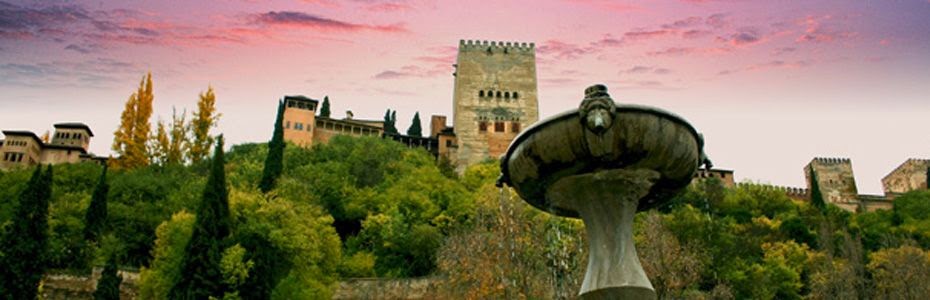

Must see places in Andalusia, Spain

If you are a muslim traveller or an islamic architecture lover those are the 7 things you must see in Granada

Top 10 foods to try in Morocco

One of the great cuisines of the world, Moroccan cooking abounds with subtle spices and intriguing flavour combinations.

Top Five Must See Things in Cordoba, Spain

Cordoba قرطبة in the Andalucia province of southern Spain is a city with more than 2,500 years of developed history.

ChefChaouen, the blue city in Morocco

Located just a few hours by bus from Tangier and far enough off the beaten track to dissuade many tourists, Chefchaouen is quiet enough for those visitors overwhelmed by the busy medinas of Fez and Marrakech, and has just enough of what is quintessentially Moroccan to be of interest to other travelers looking for something a bit more authentic.

Fes, Morocco

The most mystical of Morocco's imperial cities, Fez. Capital and spiritual center of Morocco, this city is situated in a narrow valley against the backdrop of the Middle Atlas

Mostrando entradas con la etiqueta Alhamraexpress. Mostrar todas las entradas

miércoles, 1 de abril de 2015

Travel the halal way... and discover the Great Mosque of Cordoba

THE GREAT MOSQUE OF CORDOBA, universal symbol of Moorish heritage in Spain, and one of history's most extraordinary works of art, awaits you in Cordoba.

Come and admire this architectural jewel - a unique space made up of forms, light, columns and colours, where you will feel all the splendour of ancient Al-Andalus.
Visit "Andalusia routes" or our Spain & Morocco Tour in our website and send your request trip for more information.

Puente Romano, Cordoba, SpainThe Mosque-Cathedral of Cordoba is the most important monument of all the Western Islamic world, and one of the most amazing in the world. The evolution of the “Omeya” style in Spain is resumed in the history of the Mosque of Cordoba, as well as other styles such as the Gothic, Renaissance and Baroque of the Christian architecture.

It seems as if the place that the Mosque-Cathedral of Cordoba occupies nowadays was dedicated, from ancient times, to the cult of different divinities. In this same place, and during the Visigoth occupation, another building was constructed, the “San Vicente” Basilic.

On top of this basilic and after paying half of the site, the primitive Mosque was constructed. This basilic, of rectangular shape, was shared for a period of time between Moslems and Christians.

After the Muslim enlargement, the Basilic became property of Abderraman I, who destroyed it to construct the first “Mosque Alhama” or main Mosque of the city. Nowadays, some of the constructive elements of the Visigoth building are integrated in the first part of Abderraman I.

The Great Mosque has two different areas: the courtyard or “arcade sahn“, where the “alminar” (minaret) is constructed (beneath the Renaissance tower) by Abd al-Rahman III, and the “haram” or praying hall.

The interior space consists of a forest of columns and red and white arches giving a strong chromatic effect. The site is divided into 5 different areas, corresponding each one of them to the different expansions that have occurred on it.

In planning the mosque, the architects incorporated a number of Roman columns with choice capitals. Some of the columns were already in the Gothic structure; others were sent from various regions of Iberia as presents from the governors of provinces. Ivory, jasper, porphyry, gold, silver, copper, and brass were used in the decorations. Marvellous mosaics and azulejos were designed. Panels of scented woods were fastened with nails of pure gold, and the red marble columns were said to be the work of God. The primitive part of the building, erected under the direction of Abd-er-Rahman I., was that bordering the Court of Oranges. Later, the immense temple embodied all the styles of Morisco architecture into one composition.
 
The Great Mosque of Córdoba held a place of importance amongst the Islamic community of al-Andalus for three centuries. In Córdoba, the capital, the Mosque was seen as the heart and central focus of the city. Muhammad Iqbal described its hypostyle hall as having "countless pillars like rows of palm trees in the oases of Syria". To the people of al-Andalus "the beauty of the mosque was so dazzling that it defied any description."

The main hall of the mosque was used for a variety of purposes. It served as a central Prayer hall for personal devotion, the five daily Muslim prayers and the special Friday prayers. It also would have served as a hall for teaching and for Sharia Law cases during the rule of Abd al-Rahman & his successors.


The Great Mosque of Córdoba exhibited features, and an architectural appearance, similar to the Great Mosque of Damascus, therefore it is evident that it was used as a model by Abd al-Rahman for the creation of the Great Mosque in Córdoba.

Layout

The building's floor plan is seen to be parallel to some of the earliest mosques built from the very beginning of Islam. It had a rectangular prayer hall with aisles arranged perpendicular to the qibla, the direction towards which Muslims pray. The prayer hall was large, flat, with timber ceilings held up by arches of horseshoe-like appearance.


One hundred fifty years following its creation, a staircase to the roof was added, along with a southward extension of the mosque itself. A bridge was built linking the prayer hall with the Caliph’s palace. The mosque was later expanded even further south, as was the courtyard which surrounded it.

The mosque was built in four stages, with each Caliph and his elite contributing to it.


Until the 11th century, the courtyard was unpaved earth with citrus and palm trees irrigated - at first by rainwater cisterns, and later by aqueduct.

Excavation indicates the trees were planted in a pattern, with surface irrigation channels. The stone channels visible today are not original.


Abd-er-Rahman III added a new tower. The minaret contained two staircases, which were built for the separate ascent and descent of the tower. On the summit there were three apples, two of gold and one of silver, with lilies of six petals.

The minaret is four-faced, with fourteen windows, having arches upon jasper columns, and the structure is adorned with tracery.


lunes, 3 de noviembre de 2014

Travel the halal way and discover.... Casa Batlló in Barcelona!

The colour and fantasy of the Casa Batlló captivates passers-by on the Passeig de Gràcia (Barcelona). Standing halfway up this elegant boulevard and in a strongly contrasting style to the neighbouring houses, the Casa Amatller and Casa Lleó Morera, Gaudí’s building reveals the splendour of an architect who was able to work on this project with total creative freedom, Antoni Gaudí.

The architect Antoni Gaudí undertook a radical refurbishment of a building in Barcelona’s Passeig de Gràcia dating from 1875 to create one of his boldest works. 


Gaudí’s imaginative efforts were key to the development of the project, as was the decorative work of the artisans who collaborated with him between 1904 and 1906. A simple glance gives rise to myriad interpretations.


The discs of multicoloured glazed-ceramics and broken shards of stained glass, placed with precision, depict flowers and water lilies and play with the reflections of the sunlight. This vast impressionist painting is often interpreted as the surface of the rolling sea in the heart of Passeig de Gràcia.

On the first floor of the Casa Batlló, a long sandstone balcony allows us to look inside the elegant mezzanine, while the other floors have balconies in the shape of masks. And at the top, a scaly ceramic skin and turret crowned by a four-armed cross remind us of the legend of Saint George. Inside the Casa Batlló, you can visit the mezzanine, see the ceramic skylight, the double attic space with its sequence of catenary arches, and the rooftop with its colourful mosaiced chimneys. An explosion of creative freedom where Gaudí spared no effort in creating a functional and modern house.

  
Add this excursion sending your request trip to Alhamratour 

lunes, 20 de octubre de 2014

Travel the Halal Way and discover the Royal Alcazars of Seville

You can visit this city in our tour Spain & Morocco of  10days / nights

The Alcázar of Seville (Spanish "Reales Alcázares de Sevilla" or "Royal Alcazars of Seville",  is a royal palace in Seville, Spain, originally a Moorish fort. The palace is renown as one of the most beautiful in Spain. It is the oldest royal palace still in use in Europe, and it was registered in 1987 by UNESCO as a World Heritage Site, along with the Seville Cathedral and the General Archive of the Indies.

The construction of the fort was ordered by Abd Al Ramn III, Caliph of Al-Andalus, in the year 913, which was changed into a fortified palace during the 11th century. In the 13th century, Seville now being in the hands of Castile, King Alfonso X ´the Wise´ extended it further.

3D orientation map of the Alcazar palace, Seville - Andalusia, Spain.
 
Pedro I, "the cruel" (1350 to 1369), made significant additions to the palace which is one of the most important examples of Mudejar architecture in Seville. The numerous rooms, patios and halls vary in architectural styles from the Islamic to Neoclassical. The beautiful gardens and fountains are specially worth visiting.

Also wanting to make their mark, the Alcázar was even further ´improved´ on by later kings; for example, the 16th century Emperor Charles V added elements in Gothic and Renaissance style to the palace.

Since the Alcázar has a century´s long history of expansions and renovations, one of the coolest things about it is it´s mixture of architectural styles. But the unavoidable highlight and an absolute must-see is the Mudejar Palace of Peter I (followed closely by the Gardens).

Interesting parts of the Alcazar

Horse shoe arches at the entrance of the ambassadors
Salon de los Embajadores (The Ambassadors Room): The magnificent dome of the Ambassadors Room is decorated with gilded cedar wood sculptures.

Arcos de Herradura (Horse Shoe arches): The Ambassadors Room is decorated with tiles and complex plaster work. It shows a beautiful example of the typical horse shoe arches.


El patio del yeso (plaster)
El Patio de la Montera (The Hunting Patio): This was the meeting place of the court before the hunt took place. The faade of the palace of Pedro I is a unique example of Mudejar design.

El Patio del Yeso (The Plaster Patio): This beautiful, ornate garden full of flowers and streams maintains elements of the almohade architectural style of the Moors from the 12 century.


El patio de las doncellas (maidens)
 Patio de las Doncellas (Patio of the maidens): This patio was decorated by the best architects in Granada. Patio del Crucero is above the ancient baths.

Salones de Carlos V (Rooms of Charles V): The rooms and chapel of Charles V are decorated with tapestries and coloured tiles from 16 Century.

El Patio de las Muñecas (The Patio of the Dolls): This patio with its bedrooms and adjacent corridors was the heart of the palace. It takes its name from the two tiny faces that decorate its arches.

The Gardens of the Alcazar Palace

Gardens of the Alcazar Palace
 These gardens, adorned with fountains and pavilions, provide shelter from the hustle and bustle of Seville. 

Jardin Inglés (English gardens). These gardens are modelled on those of the British Isles from 18 Century. The door to the Alcoba is of Islamic origin. The park was built in 1909 and the main gardener of the Real Casa de Campo, Juan Gras, was put in charge of planting the flowers. However, there are doubts as to whether his radical style fits in with the surroundings.

Jardin de los Poetas (The Garden of the Poets) The design of this garden is similar to that of the Forestier thanks to the influence of Joaquin Romero Murube. It's most emblematic feature is the two ponds that were inspired by the Arabs and Romans.

The english gardens at the Alcazar palace
 Jardin de la Vega Inclan (Garden of Vega Inclan) This is a well designed garden inspired by the Damas even though it lacks the refinement that had once existed. This garden consists of 20 mostly square flower beds that are separated by paths and fountains. These gardens took their inspiration from Islamic culture and the Renaissance.


Jardin de la Alcubilla (Garden of the Reservoir): This garden existed during the time of Charles V.

Jardin de la Alcubilla
In 913 the Caliph of Al-Andalus (modern Andalusia) ordered the construction of a castle there, which was changed into a fortified palace during the 11th century. In the 13th century, Seville now being in the hands of Castile, King Alfonso X ´the Wise´ extended it further.
About a hundred years later, King Peter I ordered the construction of one more palace on the site. Nowadays, this gorgeous palace is considered to be one of the best remaining examples of mudéjar architecture – a symbiosis of Christian and Moorish techniques and architecture; the two cultures living side by side at the time.
Also wanting to make their mark, the Alcázar was even further ´improved´ on by later kings; for example, the 16th century Emperor Charles V added elements in Gothic and Renaissance style to the palace.
Since the Alcázar has a century´s long history of expansions and renovations, one of the coolest things about it is it´s mixture of architectural styles. But the unavoidable highlight and an absolute must-see is the Mudejar Palace of Peter I (followed closely by the Gardens).
- See more at: http://travelersinnseville.com/516/the-history-of-the-royal-alcazares-of-seville#sthash.RDaSRMUX.dpuf
In 913 the Caliph of Al-Andalus (modern Andalusia) ordered the construction of a castle there, which was changed into a fortified palace during the 11th century. In the 13th century, Seville now being in the hands of Castile, King Alfonso X ´the Wise´ extended it further.
About a hundred years later, King Peter I ordered the construction of one more palace on the site. Nowadays, this gorgeous palace is considered to be one of the best remaining examples of mudéjar architecture – a symbiosis of Christian and Moorish techniques and architecture; the two cultures living side by side at the time.
Also wanting to make their mark, the Alcázar was even further ´improved´ on by later kings; for example, the 16th century Emperor Charles V added elements in Gothic and Renaissance style to the palace.
Since the Alcázar has a century´s long history of expansions and renovations, one of the coolest things about it is it´s mixture of architectural styles. But the unavoidable highlight and an absolute must-see is the Mudejar Palace of Peter I (followed closely by the Gardens).
- See more at: http://travelersinnseville.com/516/the-history-of-the-royal-alcazares-of-seville#sthash.RDaSRMUX.dpuf
In 913 the Caliph of Al-Andalus (modern Andalusia) ordered the construction of a castle there, which was changed into a fortified palace during the 11th century. In the 13th century, Seville now being in the hands of Castile, King Alfonso X ´the Wise´ extended it further.
About a hundred years later, King Peter I ordered the construction of one more palace on the site. Nowadays, this gorgeous palace is considered to be one of the best remaining examples of mudéjar architecture – a symbiosis of Christian and Moorish techniques and architecture; the two cultures living side by side at the time.
Also wanting to make their mark, the Alcázar was even further ´improved´ on by later kings; for example, the 16th century Emperor Charles V added elements in Gothic and Renaissance style to the palace.
Since the Alcázar has a century´s long history of expansions and renovations, one of the coolest things about it is it´s mixture of architectural styles. But the unavoidable highlight and an absolute must-see is the Mudejar Palace of Peter I (followed closely by the Gardens).
- See more at: http://travelersinnseville.com/516/the-history-of-the-royal-alcazares-of-seville#sthash.RDaSRMUX.dpuf

miércoles, 1 de octubre de 2014

Marbella confirma su liderazgo en el sector del Turismo Halal en España

‘Halal’ es un término que aparece mencionado en el Corán y que significa ‘permitido, saludable y

El Instituto Halal es la entidad que gestiona la Marca de Garantía Halal creada por la Junta Islámica de España, con sede en Córdoba, aplicada a alimentos, productos y servicios que desde empresas y entidades se ofertan a públicos de práctica islámica, tanto en nuestro país y en el ámbito de la UE, como para la exportación a países islámicos.
beneficioso’, referido tanto a alimentación como a conductas.

Cuando un turista musulmán elige destino vacacional lo hace, en la gran mayoría de las veces, pensando en un lugar en el que tenga acceso a establecimientos que ofrezcan servicios acordes a su forma de vida y conforme a la ley islámica. El turismo ‘halal’, todavía por explotar en España es, hoy por hoy, uno de los retos para los empresarios hoteleros y hosteleros del país. Así se ha puesto de manifiesto en el primer Congreso Internacional de Turismo ‘Halal’, un foro pionero en Europa, celebrado hace solo unos días en Granada. Marbella, como tantas otras veces en su historia, se sitúa ya en cabeza de carrera y estuvo representada en este encuentro a través de Alanda Hotel, el primero del país en obtener la certificación oficial.

Desde su compra, hace un año, por parte de la corporación empresarial saudí Fawaz Al Hokair, el Alanda Hotel Marbella –antiguo NH Alanda– ubicado en plena Milla de Oro, y a apenas 60 metros de la Mezquita del Rey Fahd, ha venido trabajando en la consecución de un certificado que cumple uno de los objetivos marcados por la propiedad: convertir el establecimiento en un referente para el turista musulmán. Desde que abrió sus puertas, el hotel mantiene varias normas: no ofrece bebidas alcohólicas en ninguno de sus restaurantes, ni tampoco cerdo y derivados.

Ello, como sostiene el director del Alanda, Fernando Portal, no ha disuadido a un buen número de clientes nacionales o británicos, que siguen siendo mayoritarios.

Desde hace unos días, en la puerta de entrada luce la placa que acredita al hotel ante el turista musulmán. El trabajo para conseguir el certificado ha sido intenso, basado en varias auditorías que han analizado no solo el servicio de restaurante y economato, sino el resto de departamentos «uno a uno». «Hemos tenido que aportar una ficha técnica, emitida por nuestros proveedores, de cada uno de los productos que tenemos en el economato», señala Portal «No cabe duda de que estamos hablando de un concepto nuevo que viene a ampliar la oferta hotelera de la Costa del Sol», resume.

Espacios para el rezo

Habilitar más espacios en los que poder rezar, tener habitaciones orientadas a la Meca o señalizas, preservar un horario distinto de piscina para las mujeres y los hombres son algunos de los puntos en los que deben trabajar los hoteles que optan a la certificación del Instituto Halal de España. De momento, en el establecimiento marbellí no se planten hacer esta última distinción de horarios para el baño. Sí se ha señalizado la Meca en las habitaciones y se ha confeccionado un ‘kit’ que se entrega a los clientes y que contiene alfombrilla para el rezo. Igualmente se restringe la programación televisiva, en la que no se ofrecen programas o películas de contenido violento, erótico o pornográfico.

Del mismo modo, los restaurantes disponen de menús que se adaptan a la estricta dieta musulmana. La filosofía ‘Health’ (sano) se ha convertido en seña de identidad de un establecimiento que ha hecho de sus zumos naturales –tan perseguidos por las ‘celebrities’– en uno de sus principales reclamos durante el verano que acaba de finalizar.

Según las cifras que maneja el Instituto Halal, el turismo islámico deja en Andalucía más de 300 millones de euros año. La búsqueda de nuevos mercados para hacer que el sector turístico de la Comunidad siga creciendo llevará a nuevos hoteles a seguir la senda de Marbella.

Fuente: www.diariosur.es

miércoles, 2 de julio de 2014

Travel the halal way and discover.. Las Alpujarras southern flanks of the Sierra Nevada, Granada


The region of mountain villages known as Las Alpujarras clings to the southern flanks of the Sierra Nevada, cloven by deep, sheltered valleys and gorges which run down towards the Mediterranean.

The Alpujarra, as it is popularly known, in the singular, is famous throughout Spain because of its unique mini-ecology. Its terraced farmlands are constantly watered by the melting snow from above, constituting a high-altitude oasis of greenery which stands in dramatic contrast to the arid foothills below.


This is ideal hiking terrain for adventurous travellers, provided you take along a tent and well-padded sleeping bags - the average altitude is 4,000 feet above sea level.


 The cultural interest of the region lies in its fifty-odd villages, which were the last stronghold of the moorish. Soon after the Castillians took Granada in 1492, all the city´s Moors were forced to convert to Christianity. Those who refused took to the hills, settling in this remote, inaccessible area.


Constant pressure from the Christians led to a bloody uprising, the Morisco Rebellion of 1568, which was ruthlessly crushed out, with the public execution of the leader, Ben Humeya, in the main square of Granada. Soon followed a royal decree expelling from the Kingdom of Granada all people of moorish descent, since the "new Christians", as the converts were called, were all suspected of being ¨crypto-Muslims¨ in secret...

The villages of the Alpujarra were resettled with some 12,000 Christian families brought by king Felipe II from Galicia and Asturias in north-western Spain.

However, these unique hamlets have retained their traditional Berber architecture - terraced clusters of grey-white box-shaped houses with flat clay roofs - which is still common in the Rif and Atlas mountains of Morocco.


An street in Órgiva (Las Alpujarras, Granada)
Acequia de Las Ventanas


If you stray from the beaten path, you will be sure to catch sight of the region´s abundant wild life, such as the Cabra Hispanica, a mountain goat which roams the mountains in herds and is often seen standing on pinnacles, silhouetted against the sky. But as soon as it flairs the scent of man it will bound up the steepest slopes with amazing speed... The Alpujarra is also famous for its excellent birdwatching - the colourful Hoopoe with its stark, haunting cry, is a common sight.

ALCAICERÍA, the old silk market in muslim times in GRANADA

Travel the halal way.... and discover ALCAICERÍA, the old silk market in muslim times (GRANADA).

The Alpujarra mountain range, was important for the production of silk, where silkworms feasted on the leaves of the Mulberry trees. The raw material was then transported by mules, to Granada,where the silk threads were woven, then sold, either in bales, or made into clothing etc.

In the centre of Granadas' city, a bazaar was built , consisting of a grid like network of streets, with merchants shops, and inns, for the merchants to sleep, eat and conduct business. (The Corral del Carbon was originally a merchants inn - see my tip for further info).

Arched Gateways led into the bazzar, which were locked at night, while night watchmen guarded the area.

Originally, this bazaar covered the area from Plaza Nueva to Plaza Bib Rambla, and was a very important trading area.

However, on the night of 19th July 1843, a fire started in a shop that made matches, and the entire bazaar was destroyed. The area was soon re-built, but on a smaller scale.

Today, the bazaar still operates as a centre for trading, but mainly goods sold are souvenirs or crafts. It is an interesting place to wander around. Besides looking at the goods for sale, there are some good examples of Islamic architecture, and tiled wall decorations.


sábado, 14 de diciembre de 2013

Cordoba, where cultures come together

Over the centuries, the different peoples and cultures who settled in Cordoba left a priceless legacy of monuments in the streets of the city. If you come to southern Spain, then make a note to visit this destination. This city in Andalusia had all of Europe in awe during the Middle Ages. When you see its stunning heritage, you will understand why.

Its historic quarter has been declared a World Heritage Site by the UNESCO, although the main protagonist is actually the Great Mosque. It is considered the most important Islamic monument in the West, and is doubtless one of the world's most fascinating works of art. Its "forest" of columns, its two-tone arches and its decor, along with the Gothic, Renaissance and Baroque elements of the Christian cathedral built within it make this a unique, stunning architectural site.

Besides the Great Mosque you will find other magnificent buildings in this city. A gentle stroll around the historic centre will take you to the Alcázar (Palace) of the Christian Monarchs, with its beautiful gardens, its Moorish baths, and the Mosaic Room, where you can see the wonderful collection ofRoman mosaics found beneath Plaza de la Corredera Square. Head for the narrow streets of the Jewish Quarter where you can admire the beautiful plasterwork of its Synagogue. Also worth visiting are the Medina Azahara archaeological site, the typical Cordoba patios at Viana Palace, the Potro Inn, mentioned in "Don Quixote", the Baroque Merced Convent, Calahorra Tower...

In Spain, enjoying art and culture is an unforgettable experience. In Cordoba too: start planning your holiday and come and see for yourself.

sábado, 9 de noviembre de 2013

Travel the halal way.... and discover the ALCÁNTARA القنطرة BRIDGE (Toledo)


The word Alcántara comes from Arabic القنطرة (al-qanţarah), which means "bridge". 

The Alcantara Bridge was part of the defensive enclosure of the city of Toledo. Of Roman origin, around the year 788, is constructed as confluence of roads seeking passage to the city from the east, across the Tajo River. 

It was rebuilt under the leadership of Almanzor and, according to its inscription, was completed in 997 by Alef, his son, governor/alcaide of Toledo

From that time only retains the spur opposite side of the city, made of masonry. It still has decorative marbles Visigoths.

Later it was restored several times, one of them, the most important by Alfonso X, who built the Moorish tower of the western end and was later modified by the Catholic Monarchs in 1484. In the west side, the bridge has a fortified gate with battlements at its base and crown, consisting of a semicircular arch which included another horseshoe arch, and decorated with the statue of San Ildefonso and the shield of the Kings Catholics.

On the east side retains the Alcantara door (Bab al Yayl, means Horse's Gate), of Arab origin, built in the tenth century with significant christians interventions.

The bridge rests on two arches, the largest center, under which flows the River Tajo.


If you want to travel here send a request trip to +Alhamra Tour