Located just a few hours by bus from Tangier and far enough off the beaten track to dissuade many tourists, Chefchaouen is quiet enough for those visitors overwhelmed by the busy medinas of Fez and Marrakech, and has just enough of what is quintessentially Moroccan to be of interest to other travelers looking for something a bit more authentic.
The most mystical of Morocco's imperial cities, Fez. Capital and spiritual center of Morocco, this city is situated in a narrow valley against the backdrop of the Middle Atlas
The
medinas of Morocco are hives of traditional industry, where you will
see exquisite examples of the country’s flourishing arts and crafts.
Exploring the souks of Fez and Marrakech is like walking down the corridors of time. More is revealed the more you delve, for it is in the hidden fondouks
and courtyards off the main drag that traditional crafts and industries
thrive in ways that have barely changed since Andalusian refugees
introduced them over 1,000 years ago.
Crafts are grouped according to type, with the finer crafts located
close to the Great Mosque. Each craft is organised into a guild, with
apprentices working under master craftsmen for several years. Only when
an apprentice is deemed to have the necessary skills and mental
application will the master craftsman declare him fit to work alone. The
traditional crafts of Morocco still make the best bargains. Here's our
guide to the best souvenirs to bring back from Morocco.
What to buy in Morocco
Carpets
First and most prominent of the handicraft traditions are carpets and
rugs, hand-knotted and in some cases, still coloured with vegetable
dyes. Designs (apart from the Turkish-inspired patterns of Rabat
carpets) are predominantly traditional to Berber tribes.
Their colours
and symbolic motifs enable experts to pin down not only the area in
which a carpet was produced but sometimes the tribe or even family that
made it.
Top-quality carpets sell for thousands of dirhams; more
affordable and easily portable are Berber rugs, kilims or blankets. Try
the small country souks around Marrakech.
Edibles – spices, nuts, oils, olives, sweets
Edibles are a popular purchase. As well as spices, nuts, herbs,
olives and Moroccan sweets, possible buys include argan oil, produced in
the southwest. It is sold, either on its own or mixed with ground
almonds (a nut butter called amalou).
Because of its high value, it is
difficult to guarantee that the oil has not been mixed with olive oil.
One way of being sure that the oil you buy is 100 percent pure is to buy
from one of the women’s cooperatives organised by the Projet
Conservation et Développement de l’Arganeraie, which markets its oil to
supermarkets under the name Cooperative Tissaliwine and has the
EU-approved certificate of producing an organic product.
Leather
Leather goods are widespread, from unpolished leather bags and belts
to distinctive pointed slippers (babouches) and ornate pouffes, studded
and dyed. Some leather goods are finished in a style closer to Italian
designer luggage.
In all cases, price should go hand in hand with
quality, so check the hide and workmanship before buying. Printed boxes
and bookbindings have become the victims of their imitators and too
often look tacky.
Jewellery
Jewellery is available for sale everywhere, although one of the best
places to buy it is in Tiznit’s famous silversmiths’ souk and in the
souks of Taroudant, Essaouira and Marrakech.
Dull silver is the basic material: heavy but beautifully decorated
bracelets, delicate filigree rings, chunky necklaces of semi-precious
stones (or occasionally of plastic, for the unwary) are most commonly
found.
Slightly more unusual, and sometimes antique, are decorated
daggers, scabbards, or Qur’an boxes, covered with silver-wire
decoration.
The fastenings are often a weak point. Beware, too, of
silver-plating masking what the Moroccans call b’shi-b’shi – meaning
rubbish.
Marquetry
Marquetry is another traditional craft: wooden furniture, ornaments,
chess sets and small wooden boxes made in cedar, thuya and oak, as well
as boxes and mirror frames inlaid with camel bone.
Many wooden goods are
inlaid with veneers or mother of pearl. Often the quality of finish is
less than ideal: hinges are points to watch.
The woodworkers’ ateliers
at Essaouira are an ideal place to buy (and to watch the manufacturing
process).
Metalwork
Metalwork ranges from copper or brass items such as trays with fine,
ornate hammered designs (which, along with a small folding wooden stand,
make attractive tables) to wrought-iron and pierced copper or brass
lanterns, mirror frames and tables with tiny hand-carved zellige-tile
inlaid tops.
There is also custom-made, contemporary designer furniture
which is in good supply in Marrakech’s ironworkers’ souk near Madrassa
Ben Youssef.
Ceramics & Pottery
Pottery ranges from the rough earthenware of household pots and
crocks to gaudy (and predominantly tourist-orientated) designs and
beautiful blue and white, green or coloured ceramics from the main
pottery centres of Safi, Fez, Meknes and Salé. Marrakech and Essaouira
both have extensive pottery souks.
The more refined, detailed (and
expensive) pieces usually come from Fez, while Safi is famous for its
dark-green-coloured pieces. In Marrakech you can find almost anything,
including modern takes on traditional designs.
Perfume
Perfume is loved by Moroccans of both sexes.
Western brands are
admired, but traditional scents, such as musk, orange flower, patchouli
and amber, remain popular and are usually found in pure essential oil
form in the spice souks and apothecaries of most medinas.
Incense is
used in the home on special occasions and for perfuming clothes.
Fes or Fez (Arabic: فاس, Moroccan Arabic [fɛs], Berber: Fas) is the third largest city of Morocco, with a population of approximately 1 million.
Fes was the capital of Morocco until 1925, and is now the capital of the Fès-Boulemane administrative region. The modern Turkish name for Morocco, Fas, originally referred only to the capital city.
The city has two old medinas, the larger of which is Fes el Bali. It is listed as a UNESCO World Heritage Site and is believed to be one of the world's largest car-free urban areas. Al-Qarawiyyin, founded in AD 859, is the oldest continuously functioning madrasa in the world. The city has been called the "Mecca of the West" and the "Athens of Africa".
The name is probably taken from the word Fazaz, the old Berber name for the Middle Atlas
mountains near the city. The name is also attested as that of a Berber
tribe living south of Fes. Today, Ait Fazaz is the name of a small town
just west of Meknes.
Until the Almoravid rule in the 11th century, Fes consisted of two cities or medinas: Madinat Fas and Al-'Aliya, the former being founded by Idris I, the latter by his son, Idris II.
During Idrisid rule the capital city was known as Al-'Aliya, with the
name Fas being reserved for the separate site on the other side of the
river: No Idrisid coins have been found with the name Fes, only al-'Aliya and al-'Aliya Madinat Idris.
It is not known whether the name al-'Aliya was ever referred to both
medinas. It wasn't until 1070 that the two agglomerations were united
and the name Fas was used for the sites.
Foundation and the Idrisids
The city was founded on a bank of the Jawhar river by Idris I in 789, founder of the Zaydi Shi'ite Idrisid dynasty. His son, Idris II (808),
built a settlement on the opposing river bank. These settlements would
soon develop into two walled and largely autonomous sites, often in
conflict with one another: Madinat Fas and Al-'Aliya. In 808 Al-'Aliya replaced Walili as the capital of the Idrisids.
Arab emigration to Fez, including 800 Andalusi families of Berber descent in 817–818 expelled after a rebellion against the Umayyads of Córdoba, and 2,000 Arab families banned from Kairouan
(modern Tunisia) after another rebellion in 824, gave the city a more
Arabic character than others of the region.
The Andalusians settled in
Madinat Fas, while the Tunisians found their home in al-'Aliya. These
two waves of immigrants would subsequently give their name to the sites
'Adwat Al-Andalus and 'Adwat al-Qarawiyyin.
An important aspect of the city's population was of North-African
Berber descent, with rural Berbers from the surrounding countryside
settling there throughout this early period, mainly in Madinat Fas (the
Andalusian quarter) and later in Fes Jdid.
Upon the death of Idris II in 828, the dynasty’s territory was
divided among his sons. The eldest, Muhammad, received Fes. The newly
fragmented Idrisid power would never again be reunified.
During Yahya ibn Muhammad's rule in Fes the Kairouyine mosque, one of the oldest and largest in Africa, was built and its associated Al-Qarawiyyin Madrasa was founded (859).
Comparatively little is known about Idrisid Fes, owing to the lack of
comprehensive historical narratives and that little has survived of the
architecture and infrastructure of early Fes (Al-'Aliya). The sources
that mention Idrisid Fes, describe a rather rural one, not having the
cultural sophistication of the important cities of Al-Andalus and Ifriqiya.
In the 10th century the city was contested by the Caliphate of Córdoba and the Fatimids of Tunisia, who ruled the city through a host of Zenata clients. The Fatimids took the city in 927 and expelled the Idrissids, after which their Miknasa were installed there. The Miknasa were driven out of Fes in 980 by the Maghrawa, their fellow Zenata, allies of the Caliphate of Córdoba. It was in this period that the great Andalusian ruler Al-Mansur Ibn Abi Aamir
commissioned the Maghrawa to rebuild and refurnish the Al-Kairouan
mosque, giving it much of its current appearance. According to the Rawd al-Qirtas
and other Marinid era sources, the Maghrawi emir Dunas Al-Maghrawi
filled up the open spaces between the two medinas and the banks of the
river, dividing them with new constructions.
Thus, the two cities grew
into each other, being now only separated by their walls and the river.
His sons fortified the city to a great extent. This could not keep the
Almoravid emir Ibn Tashfin from conquering it in 1070, after more than a
decade of battling the Zenata warriors in the area and constant
besieging of the city.
In 1033, several thousand Jews were killed in a massacre.
Golden age and the Marinid period
Madinat Fas and Al-'Aliya were united in 1070 by the Almoravids:
The walls dividing them were destroyed, bridges connecting them were
built, and connecting walls were constructed that unified the medinas.
Under Almoravid patronage the largest expansion and renovation of the
Al-Kairouan mosque took place (1134-1143). Although the capital was
moved to Marrakech and Tlemcen under the Almoravids, Fez acquired a reputation for Maliki
legal scholarship and became an important centre of trade. Almoravid
impact on the city's structure was such that the second Almoravid ruler,
Ibn Tashfin, is often considered to be the second founder of Fes.
Like many Moroccan cities, Fes was greatly enlarged in the Almohad
era and saw its previously dominating rural aspect lessen. This was
accomplished partly by the settling there of Andalusians and the further
improvement of the infrastructure. At the start of the 13th century
they broke down the Idrisid city walls and constructed new ones, which
covered a much wider space. These Almohad walls exist to this day as the
outline of Fes el Bali.
Under Almohad rule the city grew to become the largest in the world
between 1170 and 1180, with an estimated 200.000 people living there.
In 1250 Fes regained its capital status under the Marinid dynasty. In 1276 after a massacre by the population to kill all Jews that was stopped by intervention of the Emir, they founded Fes Jdid,
which they made their administrative and military centre. Fez reached
its golden age in the Marinid period, which marked the beginning of its
official, historical narrative. It is from the Marinid period that Fes' reputation as an important intellectual centre largely dates. They established the first madrassas in the city and country.The principal monuments in the medina, the residences and public buildings, date from the Marinid period.
The madrasas are a hallmark of Marinid architecture, with its striking
blending of Andalusian and Almohad traditions. Between 1271 and 1357
seven madrassas were built in Fes, the style of which has come to be
typical of Fassi architecture.
The Jewish quarter of Fes, the Mellah
was built in 1438, near the royal residence in Fes Jdid. The Mellah at
first consisted of Jews from Fes el Bali and soon saw the arrival of Berber Jews from the Atlas range and Jewish immigrants from Al-Andalus. The Marinids spread the cult of Idris I and encouraged sharifism,
financing sharifian families as a way to legitimize their (in essence
secular) rule: From the 14th century onwards hundreds of families
throughout Morocco claimed descent from Idris I,
especially in Fes and the Rif mountains. In this regard they can be
seen as the enablers of the latter sharifian dynasties of Morocco. A revolt in 1465 overthrew the last Maranid sultan. In 1474 the Marinids were replaced by their relatives of the Wattasid dynasty, who faithfully (but for a large part unsuccessfully) continued Marinid policies.
Modern period
In the Early Modern Age, the Ottoman Empire came close to Fez after the conquest of Oujda in the 16th century. In 1554, the Wattasid Dynasty
took Fez with the support of the Turks, and the city became a vassal of
the Ottomans, who finally conquered it in 1579 under sultan Murad III.
The Ottoman power in North Africa focused on threats posed by Habsburg Spain and the Portuguese Kingdom.
As a result, Fez was not under pressure from the Ottoman rulers. The
conquest of Fez was the catalyst for the move of the capital city of the
Saadi Dynasty to Marrakech. Early in the 17th century the town returned to Moroccan control under Ahmad al-Mansur.
After the fall of the Saadi Dynasty (1649), Fez was a major trading post of the Barbary Coast of North Africa. Until the 19th century it was the only source of Fez hats (also known as the tarboosh).
Then manufacturing began in France and Turkey as well. Originally, the
dye for the hats came from a berry that was grown outside the city,
known as the Turkish kızılcık or Greek akenia (Cornus mas). Fez was also the end of a north-south gold trading route from Timbuktu. Fez was a prime manufacturing location for leather goods such as the Adarga.
The city became independent in 1790, under the leadership of Yazid
(1790–1792) and later of Abu´r-Rabi Sulayman. In 1795 control of the
city returned to Morocco. Fez took part in a rebellion in 1819-1821, led
by Ibrahim ibn Yazid, as well as in the 1832 rebellion led by Muhammad
ibn Tayyib.
Following the implementation of the Treaty of Fes, the city was heavily damaged in the 1912 Fes riots.[23]
Fez was the capital of Morocco until 1925. Rabat remained the capital even when Morocco achieved independence in 1956.
Despite its traditional character, there is a modern section: the
Ville Nouvelle or "New City". Today it is a bustling commercial center.
The popularity of the Fes has increased since the King of Morocco took a
computer engineer from Fes, Salma Bennani, as his wife.
Here you have an example tour! You can make your tailor made trip fill in a request trip in our web
Day 1 ARRIVAL TO BARCELONA (L, D)
The group will be received at the airport by a local Muslim Guide. Transfer for Barcelona city tour: starting at Las Ramblas, famous for its shops, restaurants and theatres, continue to Montjuic for a Panoramic view of Barcelona. After lunch, visit Parc Güell and Barcelona Olympic Park.
After dinner at la Bacerloneta neighborhood, transfer to hotel for overnight stay.
Day 2 BARCELONA-MADRID (B, L, D)
After breakfast, we will visit the beautiful work of world famous architect Antonio Gaudi: La Sagrada Familia Cathedral, Casa Batllo and Casa Mila.
After lunch, proceed for transfer to Madrid, the capital of Spain.
Dinner and overnight stay in Madrid.
Day 3 MADRID (B, L, D)
After breakfast, we will spend a full day visiting Madrid. We’ll introduce you
to the city’s highlights: Gran Via, Puerta del Sol, Real Madrid Santiago Bernabeu Stadium, Cibeles, Palacio Real, etc. Afterwards, we will enter some of the most iconic monuments of the city: Palacio Real and Prado Museum. Lunch and dinner will be served at local restaurants.
Overnight stay in Madrid.
Day 4 MADRID-CORDOBA (B, L, D)
After breakfast, proceed for transfer to Cordoba, the capital of the Caliphate, where you will visit the Great Mosque of Cordoba, the third largest mosque in the world.
You will also visit the old Arab and Jewish quarters where the group will have dinner.
Overnight stay in Cordoba.
Day 5 CORDOBA-GRANADA (B, L, D)
After breakfast, check out from the hotel and proceed for transfer to Madinat az- Zahra, an enigmatic complex built for Abd Ar-Rahman III. Afterwards, continue our trip to Granada, the last kingdom of Al-Andalus.
After lunch, the group will enjoy a nice walk around the Albayzín, a neighborhood of Al-Andalus origin, ideal for taking pictures. Dinner and Overnight stay in Granada.
Day 6 GRANADA (B, L, D)
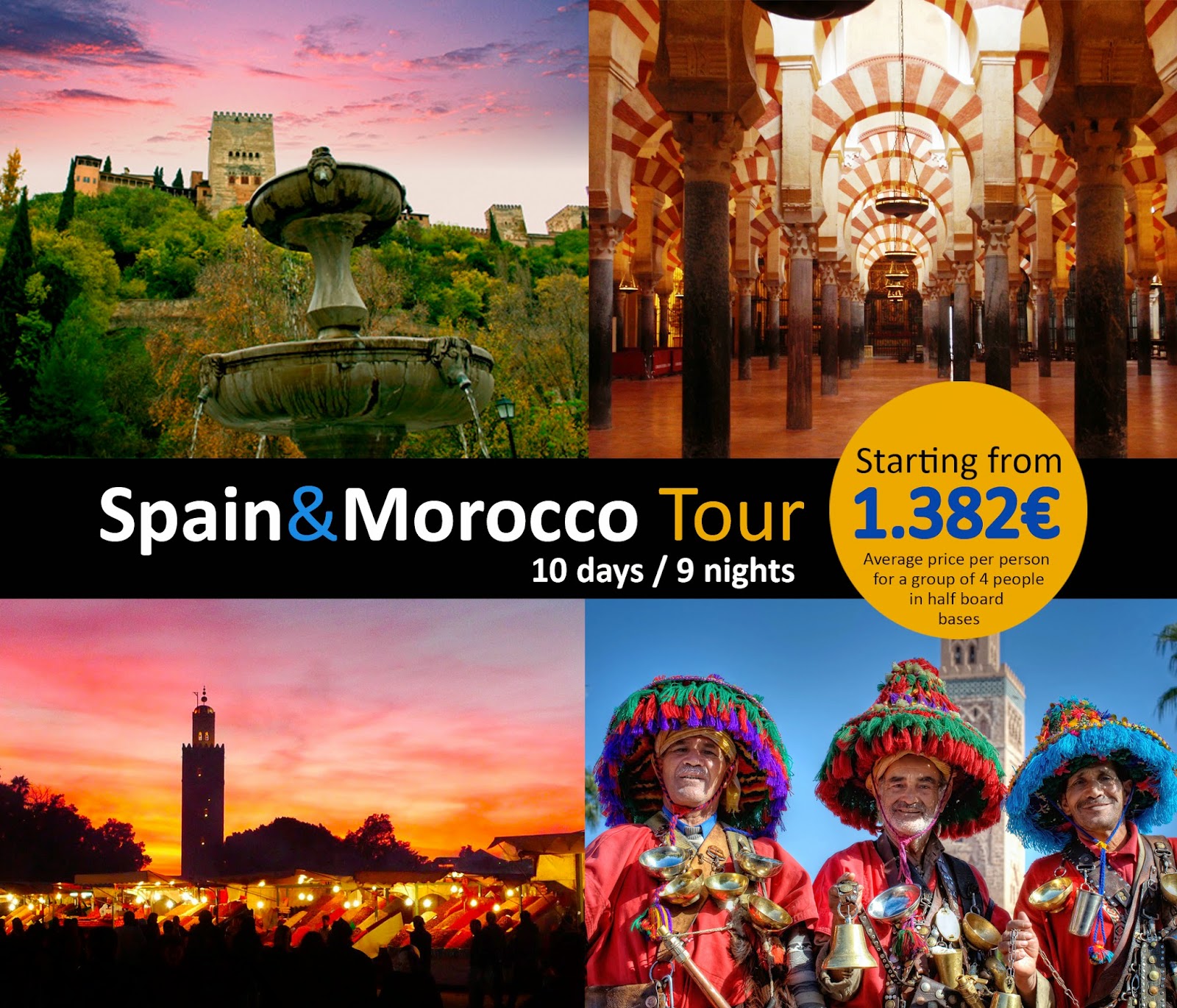
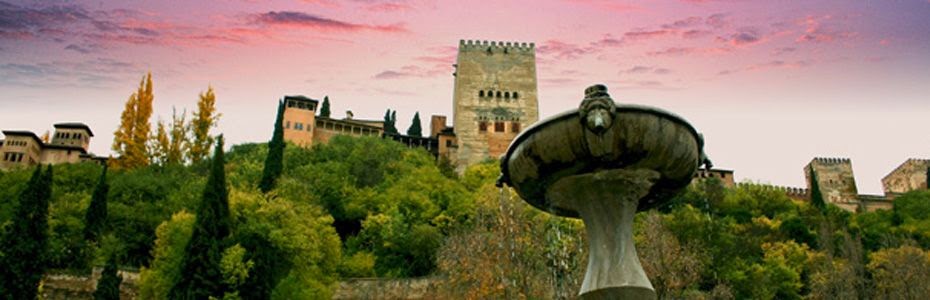
After breakfast, we will enjoy a full day in Granada. The day will start with a visit to the amazing Alhambra palaces, which include the Akasar, the Nazari Palaces and finally the Generalife gardens and summer palace.
After lunch, enjoy some free time for shopping in the city center and the old Arab quarters of el Albayzin.
Dinner and overnight stay in Granada.
Day 7 GRANADA-MARBELLA(COSTA DEL SOL) (B, L, D)
After breakfast, check out from the hotel and head towards Marbella, famous spot in Costa del Sol.
We will visit Malaga´s highlights: Gibralfaro´s Castle, The Alkasar, the Roman Theater and the Cathedral.
After a nice lunch at Torremolinos, continue to Marbella where the group will enjoy some free time for walking around the beach and watch sunset.
Dinner and overnight stay in Marbella.
Day 8 MARBELLA-GIBRALTAR-RABAT (B, L, D)
Early in the morning, we will head towards Gibraltar. We will cross the strait of Gibraltar from Tarifa to Tangier, the city where Tariq Ibn Ziyad served as governor before starting the conquest of the IberianPeninsula. We will continue traveling until we reach
After lunch, proceed for transfer to Casablanca, the economical capital of Morocco. Dinner and overnight stay in Casablanca. the capital of Morocco, Rabat.
Enjoy a quick tour of Rabat. Check-in at the hotel and enjoy a relaxing dinner. Overnight stay in Rabat.
Day 9 RABAT-FES-CASABLANCA (B, L, D)
After
breakfast, proceed for transfer to Fes, where after the group will
enjoy a walking tour of the old medina with a local guide. The old
medina is a beautiful labyrinth of intrinsic narrow streets. We will
visit several mosques and madrasas, as well as the world famous leather
tanneries.
Day 10 CASABLANCA DEPATURE (B)
After breakfast, check out from the hotel. If time permits, we will visit Hassan II Mosque, one of the largest mosques in the World and the group will enjoy some final shopping at Morocco´s mall, the largest of its kind in Africa.
Proceed for transfer to Casablanca airport for departure.
Travel the halal way and discover Spain and Morocco in this tour! This is only an example, you can do your tailor made trip writting us to contact@alhamratour.com
Day 1
Arrival to Madrid's airport. Pick up from the airport and transfer to
the hotel. In the evening, group meeng to describe the program. Dinner
at the hotel. Day 2 After
breakfast, city sightseeing tour by bus. Your tour leader will introduce
you to the city's highlights: Gran Via, Puertadel Sol, Real Madrid
Stadium, Cibeles, Prado Museum, etc. After, we will ¡enter some of the
most iconic monuments of the city.
Day 3 After
breakfast, we will hop on the bus to get to Cordoba. Toledo, the famous
“city of the three cultures” awaits us very on our way. Explore its
historic quarter, exactly the same it was in the Middle Ages. A tour of
its narrow streets will reveal an incredible and living monumental site.
Once in Corodoba, check-in at the hotel.
Day 4 Day trip to
Granada, where we will have a guided tour of the Alhambra, the city of
the last sultans of Al-Andalus: the Alcazaba, the Nasrid Palaces and the
Generalife. Aer that, you will do the old town of Albayzin and the city
center. Day 5 After breakfast, full day visit of Sevilla.
You will love the capital of the region of Andalousia. Sevilla is famous
for its city center, Plaza España, Jardín de Maria Luisa, Triana's
neighborhood, etc. Aer that, we will take you to Sevilla Outlet where
you can buy the best Spanish marks.
Day 6 After breakfast,
we will hop on the bus to Tarifa or Algeciras to catch our ferry. Stop
in Gibraltar, on the way, and will be able to visit the city. In Tarifa
or Algeciras we will cross the Strait of Gibraltar and arrive to
Tangier. Check-in at the hotel and dinner.
Day 7 Aer a
guided tour of Tanger, we will take the bus to get to Rabat. Volubilis
awaits for us on our way. Once in Rabat, check-in at yhe hotel and city
sightseeing tour of Rabat by bus.
Day 8 Full day visit to
Meknes and Fez. This amazing city is so beauful. Known for its
similarity with other cities on ancient Al-Andalus, it's a great city to
discover.
Day 9 Full day visit of Casablanca. We will
visit one of the biggest mosques in the world: the Hassan II Mosque.
Casablanca is the economic capital of Morocco. Day 10
Transfer to Casablanca's airport 4 hours before your flight me. Check-in
at the airlines desk and gathering of the group for the farewell. End
of theservices.






 Jewellery is available for sale everywhere, although one of the best
places to buy it is in Tiznit’s famous silversmiths’ souk and in the
souks of Taroudant, Essaouira and Marrakech.
Jewellery is available for sale everywhere, although one of the best
places to buy it is in Tiznit’s famous silversmiths’ souk and in the
souks of Taroudant, Essaouira and Marrakech.


 Perfume is loved by Moroccans of both sexes.