
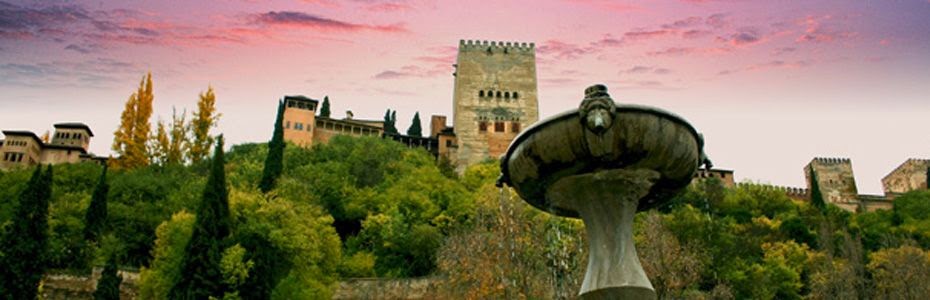





The Islamic kingdoms of medieval Spain are legendary for their artistic
and architectural glories. They are also famous, although perhaps at
times through rose-tinted spectacles, for centuries of co-existence
between Muslims, Jews and Christians, and for the flowering of a rich
culture which drew on the best of the Religions of the Book.
Nowadays, the best-known (and most visited) of the cities of these medieval kingdoms are Granada, home to the Alhambra palace, and Cordoba, site of the breathtaking Mezquita mosque with its forest of red and white arches.
But Seville, now a sprawling modern city, also deserves recognition for its Islamic-influenced cultural heritage. Seville was founded as the Roman city of Hispalis, and was known as Ishbiliya (Arabic:إشبيلية) after the Muslim conquest in 712.
During the Muslim rule in Spain, Seville came under the jurisdiction of the Caliphate of Córdoba before becoming the independent Taifa of Seville; later it was ruled by the Muslim Almoravids and the Almohads until finally being incorporated into the Christian Kingdom of Castile under Ferdinand III in 1248
The Moorish urban influences continued and are present in contemporary Seville, for instance in the custom of decorating with herbaje and small fountains the courtyards of the houses. However, most buildings of the Moorish aesthetic actually belong to the Mudéjar style of Islamic art, developed under Christian rule and inspired by the Arabic style. Original Moorish buildings are the Patio del Yeso in the Alcázar, the city walls, and the main section of the Giralda, bell tower of the Seville Cathedral.
You can visit this city in our tour Spain & Morocco of 10days / nights
 Overlooking the river is the Torre del Oro, which began life in the 13th century as a Moorish watchtower, part of the city walls that secured one end of a large chain that blocked off entrance to the harbor, which was at the time right in the center of Seville.
When the Catholic kings regained Seville and the city was granted the monopoly on all trade with the New World, the tower became an inspection point for taxing all cargoes before they were unloaded at the port.
The river eventually silted up, forcing the port to move to Cadiz, and the tower was no longer needed, and eventually the city walls around it were demolished. But the tower remained, later used as a prison.
Today it houses a maritime museum. Inside are displays relating to the Guadalquivir, and its role in navigation history. You’ll find ship models (including the three with which Columbus set out from Seville), maps and drawings, figureheads and a fine collection of navigation instruments.
 When Seville hosted the 1929 Exposición Ibero-Americana, this whole southern end of Seville was transformed into the fairgrounds, and various nations hired cutting-edge architects to design eye-catching pavilions were they could showcase their arts and technology.
Other pavilions were constructed to show off Spain’s on industry and innovation.
After the fair, several nations kept their pavilions as consulates, other buildings were turned into museums, and the entire park became Seville’s back yard.
Stretching along the river, Parque de María Luisa is a green space filled with fountains, gardens, palms, orange trees, Mediterranean pines, flower beds, pools and walkways, liberally dotted with benches and decorated throughout by colored tile work. Plaza de España defines one end, while at the other end two of the largest pavilions have become museums featuring archaeology and popular arts. Around the edges are consulates, including those of Peru and Colombia, and other buildings in Art Nouveau and Art deco styles, many of them also former fair pavilions.
 The focal point of the 1929 Ibero-American Exposition, Plaza de España is the work of architect Aníbal González, who blended elements of Spanish baroque, Mudéjar revival and the Art Deco that was popular at the time.
The towers were inspired by those on the great cathedral at Santiago de Compostella, and all around the immense crescent plaza are alcoves with colored tiled scenes representing the various provinces of Spain. Behind this is a wide arcaded gallery with views into the plaza and the moat that surrounds it.
The water feature is enhanced by boats and by ornate bridges crossing at intervals. Scenes from the movie Lawrence of Arabia were filmed here, and more recently scenes from two episodes of Star Wars. The fountain at the center of the plaza is lighted at night.
 Lovely and complex, the gardens are arranged, like the palace itself, into a series of garden rooms, through which you can stroll at leisure. And like the palace, some are intimate, some grand and soaring.
Wander among them to find fountains, tall topiary arches, walls of colored tile, carefully tended beds inside perfectly trimmed hedges, and other places where nature and Seville’s Mediterranean climate have been allowed to tend the garden.
Look especially for the spacious tree-shaded English Garden, the romantic Poet’s Garden, the Jardin de la Danza and the garden of Carlos V. The gardens are especially welcome in the summer, when their shade and fountains offer a respite from the heat.
 Begun by the Islamic rulers in 712, building was continued in the 1360s by King Pedro, who favored the Mudéjar style, a revival of the Moorish architecture and decoration.
One of the oldest European royal palaces that are still in use, the Alcázar seems to flow in and out between almost overwhelming interiors and elegantly arranged patios, whose decoration is no less splendid, but brighter and airier for being open to the sky.
Each of these spaces – grand rooms or exquisite patios – is a jewel box on its own, and together they form one of the world’s most opulent palaces.
Beyond their splendor, in these rooms and tiny enclosed gardens are a millennium of history. Their architecture is a catalog of changing tastes and styles, from the earliest Arabic period through the Mudéjar extension of Moorish elements as they blended with Gothic in the late Middle Ages and into the Renaissance, Baroque and even later periods.
Highlights are the delicate stone traceries of the Patio del Yeso and carvings of the Doncellas Patio, and the soaring and intricately tiled walls and dome of the Salon de Embajadores.
 In proclaiming this former minaret a World Heritage Site, UNESCO called it “the masterpiece of Almohad architecture.” Built 1184-96, the tower, considered the finest of the three remaining great Almohad minarets, was designed not only to call the faithful to prayer, but as an observation point to guard the city.
So important was the tower to the Moors that they wanted to destroy it when they knew their city would fall to the Christian kings in 1248. King Alfonso X threatened death to the entire city if a single stone were removed, saving it for posterity – or maybe so he’d have a place from which to view his restored domain, which he promptly did – on horseback.
In the Renaissance era (1560-68), the top of the belfry was extended and the present balconies added, but everything below the bells is the original Almohad minaret, its walls built of brick trellis work forming different patterns on each side, highlighted by niches and windows. La Giralda’s beautiful design has inspired a number of other buildings, among them the clock tower of the Ferry Building in San Francisco, the Wrigley Building in Chicago and The Biltmore in Miami.
 One of the three largest in the world (measured by volume it’s even bigger than St Peter’s in Rome), Seville’s cathedral is resplendent in gold and silver, all part of the riches that flowed through Seville when the city had the monopoly on trade with the New World.
The high altar is nearly 120 feet tall, a tour-de-force of woodcarving with all of its statues and surfaces covered in gold.
To one side, the tomb of Christopher Columbus is held high by four giant figures, and several chapels have ornate altars and paintings by major Spanish artists. The Sacristy holds some of the church’s vast treasury of intricate reliquaries of precious metals and stones, as well as paintings by some notables. The church follows the footprint of the mosque that it replaced, and the courtyard planted in orange trees was its courtyard.
Re
Nowadays, the best-known (and most visited) of the cities of these medieval kingdoms are Granada, home to the Alhambra palace, and Cordoba, site of the breathtaking Mezquita mosque with its forest of red and white arches.
But Seville, now a sprawling modern city, also deserves recognition for its Islamic-influenced cultural heritage. Seville was founded as the Roman city of Hispalis, and was known as Ishbiliya (Arabic:إشبيلية) after the Muslim conquest in 712.
During the Muslim rule in Spain, Seville came under the jurisdiction of the Caliphate of Córdoba before becoming the independent Taifa of Seville; later it was ruled by the Muslim Almoravids and the Almohads until finally being incorporated into the Christian Kingdom of Castile under Ferdinand III in 1248
The Moorish urban influences continued and are present in contemporary Seville, for instance in the custom of decorating with herbaje and small fountains the courtyards of the houses. However, most buildings of the Moorish aesthetic actually belong to the Mudéjar style of Islamic art, developed under Christian rule and inspired by the Arabic style. Original Moorish buildings are the Patio del Yeso in the Alcázar, the city walls, and the main section of the Giralda, bell tower of the Seville Cathedral.
You can visit this city in our tour Spain & Morocco of 10days / nights
Torre del Oro
 Overlooking the river is the Torre del Oro, which began life in the 13th century as a Moorish watchtower, part of the city walls that secured one end of a large chain that blocked off entrance to the harbor, which was at the time right in the center of Seville.
When the Catholic kings regained Seville and the city was granted the monopoly on all trade with the New World, the tower became an inspection point for taxing all cargoes before they were unloaded at the port.
The river eventually silted up, forcing the port to move to Cadiz, and the tower was no longer needed, and eventually the city walls around it were demolished. But the tower remained, later used as a prison.
Today it houses a maritime museum. Inside are displays relating to the Guadalquivir, and its role in navigation history. You’ll find ship models (including the three with which Columbus set out from Seville), maps and drawings, figureheads and a fine collection of navigation instruments.
Maria Luisa Park (Parque de María Luisa)
 When Seville hosted the 1929 Exposición Ibero-Americana, this whole southern end of Seville was transformed into the fairgrounds, and various nations hired cutting-edge architects to design eye-catching pavilions were they could showcase their arts and technology.
Other pavilions were constructed to show off Spain’s on industry and innovation.
After the fair, several nations kept their pavilions as consulates, other buildings were turned into museums, and the entire park became Seville’s back yard.
Stretching along the river, Parque de María Luisa is a green space filled with fountains, gardens, palms, orange trees, Mediterranean pines, flower beds, pools and walkways, liberally dotted with benches and decorated throughout by colored tile work. Plaza de España defines one end, while at the other end two of the largest pavilions have become museums featuring archaeology and popular arts. Around the edges are consulates, including those of Peru and Colombia, and other buildings in Art Nouveau and Art deco styles, many of them also former fair pavilions.
Plaza de España
 The focal point of the 1929 Ibero-American Exposition, Plaza de España is the work of architect Aníbal González, who blended elements of Spanish baroque, Mudéjar revival and the Art Deco that was popular at the time.
The towers were inspired by those on the great cathedral at Santiago de Compostella, and all around the immense crescent plaza are alcoves with colored tiled scenes representing the various provinces of Spain. Behind this is a wide arcaded gallery with views into the plaza and the moat that surrounds it.
The water feature is enhanced by boats and by ornate bridges crossing at intervals. Scenes from the movie Lawrence of Arabia were filmed here, and more recently scenes from two episodes of Star Wars. The fountain at the center of the plaza is lighted at night.
Jardines Reales Alcázar Gardens
 Lovely and complex, the gardens are arranged, like the palace itself, into a series of garden rooms, through which you can stroll at leisure. And like the palace, some are intimate, some grand and soaring.
Wander among them to find fountains, tall topiary arches, walls of colored tile, carefully tended beds inside perfectly trimmed hedges, and other places where nature and Seville’s Mediterranean climate have been allowed to tend the garden.
Look especially for the spacious tree-shaded English Garden, the romantic Poet’s Garden, the Jardin de la Danza and the garden of Carlos V. The gardens are especially welcome in the summer, when their shade and fountains offer a respite from the heat.
Real Alcázar (Royal Palace)
 Begun by the Islamic rulers in 712, building was continued in the 1360s by King Pedro, who favored the Mudéjar style, a revival of the Moorish architecture and decoration.
One of the oldest European royal palaces that are still in use, the Alcázar seems to flow in and out between almost overwhelming interiors and elegantly arranged patios, whose decoration is no less splendid, but brighter and airier for being open to the sky.
Each of these spaces – grand rooms or exquisite patios – is a jewel box on its own, and together they form one of the world’s most opulent palaces.
Beyond their splendor, in these rooms and tiny enclosed gardens are a millennium of history. Their architecture is a catalog of changing tastes and styles, from the earliest Arabic period through the Mudéjar extension of Moorish elements as they blended with Gothic in the late Middle Ages and into the Renaissance, Baroque and even later periods.
Highlights are the delicate stone traceries of the Patio del Yeso and carvings of the Doncellas Patio, and the soaring and intricately tiled walls and dome of the Salon de Embajadores.
La Giralda
 In proclaiming this former minaret a World Heritage Site, UNESCO called it “the masterpiece of Almohad architecture.” Built 1184-96, the tower, considered the finest of the three remaining great Almohad minarets, was designed not only to call the faithful to prayer, but as an observation point to guard the city.
So important was the tower to the Moors that they wanted to destroy it when they knew their city would fall to the Christian kings in 1248. King Alfonso X threatened death to the entire city if a single stone were removed, saving it for posterity – or maybe so he’d have a place from which to view his restored domain, which he promptly did – on horseback.
In the Renaissance era (1560-68), the top of the belfry was extended and the present balconies added, but everything below the bells is the original Almohad minaret, its walls built of brick trellis work forming different patterns on each side, highlighted by niches and windows. La Giralda’s beautiful design has inspired a number of other buildings, among them the clock tower of the Ferry Building in San Francisco, the Wrigley Building in Chicago and The Biltmore in Miami.
Seville Cathedral
 One of the three largest in the world (measured by volume it’s even bigger than St Peter’s in Rome), Seville’s cathedral is resplendent in gold and silver, all part of the riches that flowed through Seville when the city had the monopoly on trade with the New World.
The high altar is nearly 120 feet tall, a tour-de-force of woodcarving with all of its statues and surfaces covered in gold.
To one side, the tomb of Christopher Columbus is held high by four giant figures, and several chapels have ornate altars and paintings by major Spanish artists. The Sacristy holds some of the church’s vast treasury of intricate reliquaries of precious metals and stones, as well as paintings by some notables. The church follows the footprint of the mosque that it replaced, and the courtyard planted in orange trees was its courtyard.
Re


