The
Alcázar of Seville (Spanish "Reales Alcázares de
Sevilla" or "Royal Alcazars of
Seville", is a royal palace in
Seville, Spain, originally a Moorish fort. The palace is renown as one of the most beautiful in Spain. It is the oldest royal palace still in use in Europe, and it was registered in 1987 by UNESCO as a World Heritage Site, along with the Seville Cathedral and the General Archive of the Indies.
The construction of the fort was ordered by Abd Al Ramn III, Caliph of Al-Andalus, in the year 913, which was changed into a fortified palace during the 11th century. In the 13th century, Seville now being in the hands of Castile, King Alfonso X ´the Wise´ extended it further.
 |
| 3D orientation map of the Alcazar palace, Seville - Andalusia, Spain. |
Pedro I, "the cruel" (1350 to 1369), made significant
additions to the palace which is one of the most important examples of
Mudejar architecture in Seville. The numerous rooms, patios and halls
vary in architectural styles from the Islamic to Neoclassical. The
beautiful gardens and
fountains are specially worth visiting.
Also wanting to make their mark, the Alcázar was even further ´improved´ on by later kings; for example, the 16th century Emperor Charles V added elements in Gothic and Renaissance style to the palace.
Since the Alcázar has a century´s long history of expansions and renovations, one of the coolest things about it is it´s mixture of architectural styles. But the unavoidable highlight and an absolute must-see is the Mudejar Palace of Peter I (followed closely by the Gardens).
Interesting parts of the Alcazar
 |
| Horse shoe arches at the entrance of the ambassadors |
Salon de los Embajadores (The Ambassadors Room): The magnificent dome of the Ambassadors Room is decorated with gilded cedar wood sculptures.
Arcos de Herradura (Horse Shoe arches): The
Ambassadors Room is decorated with tiles and complex plaster work. It
shows a beautiful example of the typical horse shoe arches.
 |
| El patio del yeso (plaster) |
El Patio de la Montera (The Hunting Patio): This was the
meeting place of the court before the hunt took place. The faade of the
palace of Pedro I is a unique example of Mudejar design.
El Patio del Yeso (The Plaster Patio): This
beautiful, ornate garden full of flowers and streams maintains elements
of the almohade architectural style of the Moors from the 12 century.
 |
| El patio de las doncellas (maidens) |
Patio de las Doncellas (Patio of the maidens): This patio was decorated by the best architects in Granada.
Patio del Crucero is above the ancient baths.
Salones de Carlos V (Rooms of Charles V): The rooms and chapel of Charles V are decorated with tapestries and coloured tiles from 16 Century.
El Patio de las Muñecas (The Patio of the Dolls):
This patio with its bedrooms and adjacent corridors was the heart of the
palace. It takes its name from the two tiny faces that decorate its
arches.
The Gardens of the Alcazar Palace
 |
| Gardens of the Alcazar Palace |
These gardens, adorned with fountains and pavilions, provide shelter from the hustle and bustle of Seville.
Jardin Inglés (English gardens).
These gardens are modelled on those of the British Isles from
18 Century. The door to the Alcoba is of Islamic origin. The park was
built in 1909 and the main gardener of the Real Casa de Campo, Juan
Gras, was put in charge of planting the flowers. However, there are
doubts as to whether his radical style fits in with the surroundings.
Jardin de los Poetas (The Garden of the Poets)
The design of this garden is similar to that of the
Forestier thanks to the influence of Joaquin Romero Murube. It's most
emblematic feature is the two ponds that were inspired by the Arabs and
Romans.
 |
| The english gardens at the Alcazar palace |
Jardin de la Vega Inclan (Garden of Vega Inclan)
This is a well designed garden inspired by the Damas even
though it lacks the refinement that had once existed. This garden
consists of 20 mostly square flower beds that are separated by paths and
fountains. These gardens took their inspiration from Islamic culture
and the Renaissance.
Jardin de la Alcubilla (Garden of the Reservoir): This garden existed during the time of Charles V.
 |
| Jardin de la Alcubilla |
In 913 the Caliph of Al-Andalus (modern Andalusia) ordered the construction of a castle there, which was changed into a fortified palace during the 11th century. In the 13th century, Seville now being in the hands of Castile, King Alfonso X ´the Wise´ extended it further.
About a hundred years later, King Peter I
ordered the construction of one more palace on the site. Nowadays, this
gorgeous palace is considered to be one of the best remaining examples
of mudéjar architecture – a symbiosis of Christian and Moorish
techniques and architecture; the two cultures living side by side at the
time.
Also wanting to make their mark, the Alcázar was even further ´improved´ on by later kings; for example, the 16th century Emperor Charles V added elements in Gothic and Renaissance style to the palace.

Since
the Alcázar has a century´s long history of expansions and renovations,
one of the coolest things about it is it´s mixture of architectural
styles. But the unavoidable highlight and an absolute must-see is the
Mudejar Palace of Peter I (followed closely by the Gardens).
- See more at: http://travelersinnseville.com/516/the-history-of-the-royal-alcazares-of-seville#sthash.RDaSRMUX.dpuf
In 913 the Caliph of Al-Andalus (modern Andalusia) ordered the construction of a castle there, which was changed into a fortified palace during the 11th century. In the 13th century, Seville now being in the hands of Castile, King Alfonso X ´the Wise´ extended it further.
About a hundred years later, King Peter I
ordered the construction of one more palace on the site. Nowadays, this
gorgeous palace is considered to be one of the best remaining examples
of mudéjar architecture – a symbiosis of Christian and Moorish
techniques and architecture; the two cultures living side by side at the
time.
Also wanting to make their mark, the Alcázar was even further ´improved´ on by later kings; for example, the 16th century Emperor Charles V added elements in Gothic and Renaissance style to the palace.
Since
the Alcázar has a century´s long history of expansions and renovations,
one of the coolest things about it is it´s mixture of architectural
styles. But the unavoidable highlight and an absolute must-see is the
Mudejar Palace of Peter I (followed closely by the Gardens).
- See more at: http://travelersinnseville.com/516/the-history-of-the-royal-alcazares-of-seville#sthash.RDaSRMUX.dpuf
In 913 the Caliph of Al-Andalus (modern Andalusia) ordered the construction of a castle there, which was changed into a fortified palace during the 11th century. In the 13th century, Seville now being in the hands of Castile, King Alfonso X ´the Wise´ extended it further.
About a hundred years later, King Peter I
ordered the construction of one more palace on the site. Nowadays, this
gorgeous palace is considered to be one of the best remaining examples
of mudéjar architecture – a symbiosis of Christian and Moorish
techniques and architecture; the two cultures living side by side at the
time.
Also wanting to make their mark, the Alcázar was even further ´improved´ on by later kings; for example, the 16th century Emperor Charles V added elements in Gothic and Renaissance style to the palace.
Since
the Alcázar has a century´s long history of expansions and renovations,
one of the coolest things about it is it´s mixture of architectural
styles. But the unavoidable highlight and an absolute must-see is the
Mudejar Palace of Peter I (followed closely by the Gardens).
- See more at: http://travelersinnseville.com/516/the-history-of-the-royal-alcazares-of-seville#sthash.RDaSRMUX.dpuf

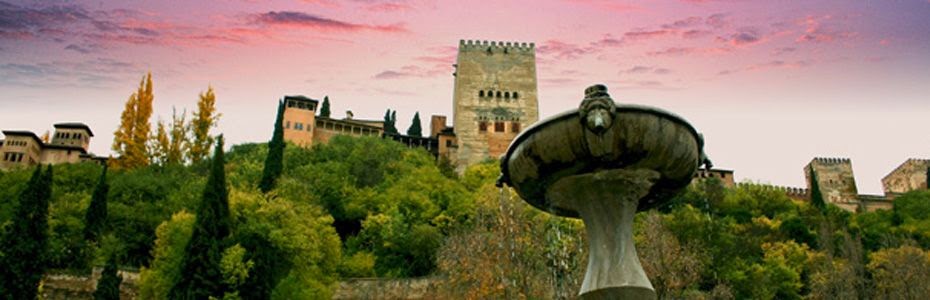





 When you go to Córdoba, besides visiting the city, you must visit the
archeological remains of Medina Azahara, one of the great works of
Islamic art in Andalucía.
When you go to Córdoba, besides visiting the city, you must visit the
archeological remains of Medina Azahara, one of the great works of
Islamic art in Andalucía. Its location in the foothills of Sierra Morena made it possible to
design an urban program in which the location and physical relationships
between the various constructions were expressive of the role of each
in the setting.
Its location in the foothills of Sierra Morena made it possible to
design an urban program in which the location and physical relationships
between the various constructions were expressive of the role of each
in the setting. The only spaces built on the lowest level are two broad
bands: the western, with an urban management orthogon, and the eastern,
with less rigid planning.
The only spaces built on the lowest level are two broad
bands: the western, with an urban management orthogon, and the eastern,
with less rigid planning.  Popular legend holds that the Caliph named az-Zahra, or Azahara, after his favorite concubine,
and that a statue of a woman stood over the entrance. Others, imagining
his demanding lover, say that he built this new city just to please
her. The truth, however, has probably more to do with politics than
love.
Popular legend holds that the Caliph named az-Zahra, or Azahara, after his favorite concubine,
and that a statue of a woman stood over the entrance. Others, imagining
his demanding lover, say that he built this new city just to please
her. The truth, however, has probably more to do with politics than
love.


