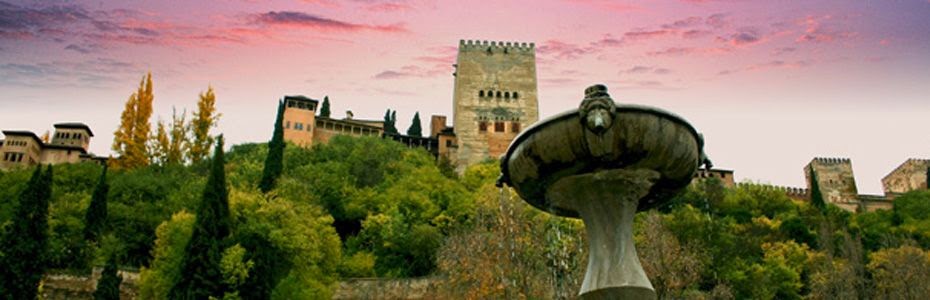

Must see places in Andalusia, Spain

If you are a muslim traveller or an islamic architecture lover those are the 7 things you must see in Granada

Top 10 foods to try in Morocco

One of the great cuisines of the world, Moroccan cooking abounds with subtle spices and intriguing flavour combinations.

Top Five Must See Things in Cordoba, Spain

Cordoba قرطبة in the Andalucia province of southern Spain is a city with more than 2,500 years of developed history.

ChefChaouen, the blue city in Morocco

Located just a few hours by bus from Tangier and far enough off the beaten track to dissuade many tourists, Chefchaouen is quiet enough for those visitors overwhelmed by the busy medinas of Fez and Marrakech, and has just enough of what is quintessentially Moroccan to be of interest to other travelers looking for something a bit more authentic.

Fes, Morocco

The most mystical of Morocco's imperial cities, Fez. Capital and spiritual center of Morocco, this city is situated in a narrow valley against the backdrop of the Middle Atlas

Mostrando entradas con la etiqueta halaltoursim. Mostrar todas las entradas

jueves, 27 de noviembre de 2014

1609 The expulsion of Moriscos, the muslim andalusian people

In 1492, after 10 years of fighting, King Muhammad XII, known as Boabdil to the Spanish) surrendered the keys of the Alhambra Palace in Granada to Isabella of Castile and Ferdinand of Aragon.

The last King of Granada and the Catholic Monarchs had signed the Capitulation of Granada at the end of 1491, a treaty which guaranteed rights to Muslims, including religious tolerance and fair treatment, in return for their unconditional surrender.

However, the rights of the natives of Granada were not respected for long. New special taxes aimed at Muslims were introduced, they were forced to live in segregated districts, and Christians began settling on what had been Muslim-owned land

The Capitulation of Granada (extracts)


•    That both great and small should be perfectly secure in their persons, families, and property.
•    That they should be allowed to continue living in their dwellings and residences, whether in the city, the suburbs, or any other part of the country.
•    That their laws should be preserved, and that no-one should judge them except by those same laws.
•    That their mosques, and the religious endowments pertaining to them, should remain as they were in the times of Islam.
•    That no Christian should enter the house of a Muslim, or insult him in any way.
•    That all Muslim captives taken during the siege of Granada, from whatever part of the country they might have come, but especially the nobles and chiefs mentioned in the agreement, should be liberated.
•    That all those who might choose to cross over to Africa should be allowed to take their departure within a certain time, and be conveyed thither in the king's ships, and without any pecuniary tax being imposed on them.
•    That after the expiration of that time no Muslim should be hindered from departing, provided he paid, in addition to the price of his passage, the tithe of whatever property he might carry with him.
•    That the Christians who had embraced Islam should not be compelled to relinquish it and adopt their former creed.

Capitulation of Granada (selection)

•    That any Muslim wishing to become a Christian should be allowed some days to consider the step he was about to take; after which he is to be questioned by both a Muslim and a Christian judge concerning his intended change, and if, after this examination, he still refuses to return to Islam, he should be permitted to follow his own inclination.
•    That no Muslim should be prosecuted for the death of a Christian slain during the siege; and that no restitution of property taken during this war should be enforced.
•    That no increase should be made to the usual taxes, but that, on the contrary, all the oppressive taxes lately imposed should be immediately suppressed.
•    That no Christian should be allowed to peep over the wall, or into the house of a Muslim or enter a mosque.
•    That any Muslim choosing to travel or reside among the Christians should be perfectly secure in his person and property.
•    That no badge or distinctive mark be put upon them, as was done with the Jews and Mudejare (converted Muslims).
•    That no muezzin should be interrupted in the act of calling the people to prayer, and no Muslim molested either in the performance of his daily devotions or in the observance of his fast, or in any other religious ceremony; but that if a Christian should be found laughing at them he should be punished for it.
•    That the Muslims should be exempted from all taxation for a certain number of years.

The Capitulation of Granada

The Capitulation is a remarkable example of religious toleration for its time (or even for modern times). From the conquest in 1492 until 1495, both parties to the Capitulation tried to respect it. However, during the last years of the 15th century, several decrees were issued which over-ruled it. Muslims rights were unilaterally revoked. The arrival in Granada of the Archbishop of Toledo, the Franciscan Francisco Jiménez de Cisneros, in October of 1499, led to important changes in their situation.

Relying on Canon Law, the Cardinal held that Christians who had converted to Islam (called
‘helches’) or their descendants should be forced to return to Christianity.

Moreover, about 5000 Arabic manuscripts from the Madrassa were burned in the Bib-Rambla square in Granada on the orders of the Archbishop. Such actions broke with the policy of mutual respect and peaceful assimilation.

Changes in attitude

"[Archbishop of Toledo] helches have to be restored to our faith, because Canon Law demands that they be reconciled and returned to our faith"
Archbishop Cisneros, 1499


"Don Fernando and Doña Ysabel. To all magistrates and mayors of the Kingdom of Granada. You know that the Moors who lived in that Kingdom converted to our holy Catholic faith, but they had many false books of their false sect, which should be burned in the fire to destroy their memory and avoid them making mistakes. And We order to any person in possession of these books that within the established period they should give up the aforementioned books under pain of death and confiscation of their wealth if they do not respect this."
Provision of the Catholic Monarchs ordering the burning of all books in the Kingdom of Granada, 1501

Revolt in the Albaicin

These events caused a revolt in the Albaicin (the most famous Muslim quarter of Granada) and
triggered an irreversible process of conversion.

In 1502 the Muslim population of the former Kingdom of Granada was forced to convert or be expelled and, at the beginning of the 16th century, the conversion to Catholicism was declared compulsory within the Kingdom of Castile and the territories of the Crown of Aragon. All the Muslims who remained in Spain became Moriscos.

A threat to the Hispanic Monarchy

During the 1550s Turks and Berbers became a serious threat to Mediterranean Christian countries. Moriscos were seen as possible allies and were therefore regarded as a potential threat to the Hispanic Monarchy. A lot of propagandists, including representatives of the Church, proposed measures for dealing with the threat. Moriscos were officially Christians and therefore, according to the Canon Law, if they were proved to be heretics or apostates, they should be condemned to death.


“It is said that the Moors should incur the death penalty, the loss of their property and their children or risk servitude and slavery. It would not be an injustice if they were put to the sword, but at least His Majesty, in conscience and good government, must banish them from these Kingdoms.”
Fray Pedro Arias to the State Council


“If they go to Africa they will join up with the people from there and they will return to Spain. These people can be deported to the coasts of “macallaos” and Terranova, which are wide and without any population, where they should be castrated.”
Martín de Salvatierra,Bishop of Segorbe, 1587


“that all men, women and children were shut up in drilled vessels without oars, rudders, rigging and sails and sent to Africa.”
Report from Juan Boil de Arenós to the State Council, 1601


The expulsion of Moriscos

Finally, in 1609, Philip III decreed the expulsion of all Moriscos. The main argument for this was the

Although there had been rumours of expulsion for a long time, the news still took most Moriscos by surprise. They had to sell their possessions hurriedly and lots of them were robbed and killed during the journey.

The situation of Moorish children was also tragic. A lot of them were separated from their parents and the King established that fathers or mothers who refused to leave their sons and daughters should be executed. As a consequence of these measures, thousands of children were virtually kidnapped under the protection of the law.
possible support of the Moriscos for a supposed Turkish invasion of Spain. This decision especially affected the Crown of Aragon and, particularly, the former Kingdom of Valencia, where Moriscos formed one third of the total population.

Text by: http://www.historiana.eu

martes, 25 de noviembre de 2014

The Albaycin al-bayyāzīn, the old Arab Quarter in Granada

The Albaycin is the old Arab Quarter. It comprises approximately the area between the hill of the Alhambra, the hill of San Cristobal, the Sacromonte and Elvira.  It was declared a world heritage site in 1984, along with the more famous Alhambra.

The name albaicín appears to derive from the Arab word al-bayyāzīn, pronounced with an imala in the Granadan Arabic accent as al-bayyīzīn, meaning "the falconers", although this is disputed by some linguists.

El Albayzin in Granada Spain is a wonderful neighborhood to explore on foot. While strolling along the whitewashed streets, visitors can admire old Moorish homes, beautiful fountains, and attractive plazas. Among the more renowned plazas is the Plaza de San Nicolas. It is at this plaza that the Mirador de San Nicolas can be found. This "mirador," or lookout point, offers amazing views of the Alhambra, especially at sunset.

 The Albaycin is like a different world within Granada. This is due to the strong Muslim influence in this area. It was the place where the first Ziri court was built in the eleventh century.

The city descended from Saint Nicholas to the banks of the River Darro. The Albaycin featured luxurious carmenes and public baths, like the Banuelo

There is a lot to see in the Albaicin Quarter, including remnants of an old gate, Puerta Elvira, to the city and numerous cisterns that harken back to days gone by.

Despite the development that followed the Christian conquest, the Albayzín still bears witness to the medieval Moorish settlement, as its urban fabric, architecture and main characteristics (form, materials, colours), were not changed when it was adapted to the Christian way of life, to survive as a remarkable example of a Spanish-Moorish town.


Nowdays, Albaycin Bajo has a very North African feel, and you will find kebabs and falafel on the local restaurant menus. As for the shops, they offer all kinds of things, including Moroccan handicrafts. Many are found along Calle Caldereria Nueva, which extends from the Albaicin to some of the city's more modern neighborhoods.


Next to the Arabic Quarter in Granada it's  Sacromonte. A neighborhood of sorts, Sacromonte is known for its gitano (gypsy) heritage and features some interesting caves. It's also where the Granada flamenco shows take place.

martes, 4 de noviembre de 2014

Travel the halal way and discover.... the Sagrada Familia in Barcelona!

The Sagrada Família, Antoni Gaudí's unfinished masterpiece, is one of Barcelona's most popular
tourist attractions. Construction on this church will continue for at least another decade, but it has already become Barcelona's most important landmark.

A New Church

The idea for the construction of a new church was launched by a devout organisation whose goal was to bring an end to the de-christianisation of the Barcelonese, which had started with the industrialization and was caused by the increasing level of education of the Catalan population. 

The organisation purchased a plot of land in the new Eixample district in 1877. The architect Francisco de Paula del Villar designed a neo-Gothic church and led the construction which started in 1882.


Antoni Gaudí's Design

 One year later, the modernist architect Antoni Gaudí took over as lead architect at the age of thirty-one. From that moment on, Gaudí devoted most of his life to the construction of the church.

Instead of sticking to the original plans, Gaudí changed the design drastically. The neo-Gothic style made way for Gaudí's trademark modernist style, which was based on forms found in nature. When he died in 1926 only one facade (the Nativity Facade), one tower, the apse and the crypt were finished.

Because Gaudí was constantly improvising and changing the design while construction was going on, he left few designs and models. And most of these were destroyed in 1936 during the Civil War. 

Eighteen Towers

Still, architects now have a clear idea of what Gaudí had in mind. The last version of his design called for a church 95m/312ft long and 60m/197ft wide. The church will be able to accommodate some thirteen thousand people. When finished, the Sagrada Família will have a total of eighteen towers.

Four towers on each of the three facades represent the twelve apostles. The towers reach a height of 90 to 120 meters (394ft). Another four towers represent the four evangelists. They will surround the largest, 170m/558ft tall tower, dedicated to Jesus Christ. The last tower, dedicated to Virgin Mary, will be built over the apse.

Construction

After Gaudí's death in 1926 construction slowed dramatically due to a lack of funds and the outbreak of the Civil War.

Construction pace started to pick up again in the mid 1950s and now two facades and eight towers have been completed. The main nave was roofed in 2000. At that time construction was expected to last for another hundred years, but modern technology has enabled architects to speed up construction so that the Sagrada Família is now slated for completion in 2026, the centenary of Gaudí's death. 

Facades

The first facade, facing east, is known as the Nativity Facade. It was finished by Gaudí himself and is
ornamented in a Baroque fashion with motifs of animals and plants.

Nativity Facade
Opposite the Nativity Facade is the Passion Facade. Construction started in 1954, but only in 1987 sculptures depicting the crucified Jesus Christ were added. As soon as they were installed, the abstract figures caused a storm of criticism, as the style was very different from Gaudí's.

The third and main facade is the Glory Facade. Construction of this facade - the most monumental of the three - started in 2002 and is still ongoing. This facade, on the south side of the church, will picture life and death. 

Visiting Sagrada Família

Interior Sagrada Familia
Even though the Sagrada Família is far from finished, the remarkable church is well worth a visit. You can visit the crypt were Gaudí is buried as well as the transept and central nave with its giant, tree-like pillars and spectacular vaulting. A museum narrates the history of the church and tells the story of its great architect.

You can also visit the towers. An elevator and a long walk will lead you to the top of a tower from where you have a magnificent view over Barcelona. The climb is not recommended for those with fear of heights or for people with claustrophobia!

Send us a request trip and add this excusion in Barcelona to your travel 


lunes, 3 de noviembre de 2014

Travel the halal way and discover.... Casa Batlló in Barcelona!

The colour and fantasy of the Casa Batlló captivates passers-by on the Passeig de Gràcia (Barcelona). Standing halfway up this elegant boulevard and in a strongly contrasting style to the neighbouring houses, the Casa Amatller and Casa Lleó Morera, Gaudí’s building reveals the splendour of an architect who was able to work on this project with total creative freedom, Antoni Gaudí.

The architect Antoni Gaudí undertook a radical refurbishment of a building in Barcelona’s Passeig de Gràcia dating from 1875 to create one of his boldest works. 


Gaudí’s imaginative efforts were key to the development of the project, as was the decorative work of the artisans who collaborated with him between 1904 and 1906. A simple glance gives rise to myriad interpretations.


The discs of multicoloured glazed-ceramics and broken shards of stained glass, placed with precision, depict flowers and water lilies and play with the reflections of the sunlight. This vast impressionist painting is often interpreted as the surface of the rolling sea in the heart of Passeig de Gràcia.

On the first floor of the Casa Batlló, a long sandstone balcony allows us to look inside the elegant mezzanine, while the other floors have balconies in the shape of masks. And at the top, a scaly ceramic skin and turret crowned by a four-armed cross remind us of the legend of Saint George. Inside the Casa Batlló, you can visit the mezzanine, see the ceramic skylight, the double attic space with its sequence of catenary arches, and the rooftop with its colourful mosaiced chimneys. An explosion of creative freedom where Gaudí spared no effort in creating a functional and modern house.

  
Add this excursion sending your request trip to Alhamratour 

martes, 28 de octubre de 2014

jueves, 23 de octubre de 2014

Travel the halal way and discover.... Camp Nou and the F.C.BARCELONA Museum.

The tour begins at the visiting team changing room from where -and through the tunnel- you will reach the ground. Once there, you will be able to walk on the grass, seat down on the team bench and contemplate the Camp Nou magnificence. 

The tour also includes a visit to the Chapel, the TV Room, the Press Room, the Fundacio Zone and the Presidential Box. Last but not least, you will be offered the possibility to rise the European Champions Cup with your own hands.

Do not miss this fantastic opportunity! Visit the stadium of one of the most important teams in the world. Go into the locker rooms and know the Club’s history at the museum.

Add this excursion to your travel! It will be unforgetable. For more information send us a Request Trip

lunes, 20 de octubre de 2014

Travel the Halal Way and discover the Royal Alcazars of Seville

You can visit this city in our tour Spain & Morocco of  10days / nights

The Alcázar of Seville (Spanish "Reales Alcázares de Sevilla" or "Royal Alcazars of Seville",  is a royal palace in Seville, Spain, originally a Moorish fort. The palace is renown as one of the most beautiful in Spain. It is the oldest royal palace still in use in Europe, and it was registered in 1987 by UNESCO as a World Heritage Site, along with the Seville Cathedral and the General Archive of the Indies.

The construction of the fort was ordered by Abd Al Ramn III, Caliph of Al-Andalus, in the year 913, which was changed into a fortified palace during the 11th century. In the 13th century, Seville now being in the hands of Castile, King Alfonso X ´the Wise´ extended it further.

3D orientation map of the Alcazar palace, Seville - Andalusia, Spain.
 
Pedro I, "the cruel" (1350 to 1369), made significant additions to the palace which is one of the most important examples of Mudejar architecture in Seville. The numerous rooms, patios and halls vary in architectural styles from the Islamic to Neoclassical. The beautiful gardens and fountains are specially worth visiting.

Also wanting to make their mark, the Alcázar was even further ´improved´ on by later kings; for example, the 16th century Emperor Charles V added elements in Gothic and Renaissance style to the palace.

Since the Alcázar has a century´s long history of expansions and renovations, one of the coolest things about it is it´s mixture of architectural styles. But the unavoidable highlight and an absolute must-see is the Mudejar Palace of Peter I (followed closely by the Gardens).

Interesting parts of the Alcazar

Horse shoe arches at the entrance of the ambassadors
Salon de los Embajadores (The Ambassadors Room): The magnificent dome of the Ambassadors Room is decorated with gilded cedar wood sculptures.

Arcos de Herradura (Horse Shoe arches): The Ambassadors Room is decorated with tiles and complex plaster work. It shows a beautiful example of the typical horse shoe arches.


El patio del yeso (plaster)
El Patio de la Montera (The Hunting Patio): This was the meeting place of the court before the hunt took place. The faade of the palace of Pedro I is a unique example of Mudejar design.

El Patio del Yeso (The Plaster Patio): This beautiful, ornate garden full of flowers and streams maintains elements of the almohade architectural style of the Moors from the 12 century.


El patio de las doncellas (maidens)
 Patio de las Doncellas (Patio of the maidens): This patio was decorated by the best architects in Granada. Patio del Crucero is above the ancient baths.

Salones de Carlos V (Rooms of Charles V): The rooms and chapel of Charles V are decorated with tapestries and coloured tiles from 16 Century.

El Patio de las Muñecas (The Patio of the Dolls): This patio with its bedrooms and adjacent corridors was the heart of the palace. It takes its name from the two tiny faces that decorate its arches.

The Gardens of the Alcazar Palace

Gardens of the Alcazar Palace
 These gardens, adorned with fountains and pavilions, provide shelter from the hustle and bustle of Seville. 

Jardin Inglés (English gardens). These gardens are modelled on those of the British Isles from 18 Century. The door to the Alcoba is of Islamic origin. The park was built in 1909 and the main gardener of the Real Casa de Campo, Juan Gras, was put in charge of planting the flowers. However, there are doubts as to whether his radical style fits in with the surroundings.

Jardin de los Poetas (The Garden of the Poets) The design of this garden is similar to that of the Forestier thanks to the influence of Joaquin Romero Murube. It's most emblematic feature is the two ponds that were inspired by the Arabs and Romans.

The english gardens at the Alcazar palace
 Jardin de la Vega Inclan (Garden of Vega Inclan) This is a well designed garden inspired by the Damas even though it lacks the refinement that had once existed. This garden consists of 20 mostly square flower beds that are separated by paths and fountains. These gardens took their inspiration from Islamic culture and the Renaissance.


Jardin de la Alcubilla (Garden of the Reservoir): This garden existed during the time of Charles V.

Jardin de la Alcubilla
In 913 the Caliph of Al-Andalus (modern Andalusia) ordered the construction of a castle there, which was changed into a fortified palace during the 11th century. In the 13th century, Seville now being in the hands of Castile, King Alfonso X ´the Wise´ extended it further.
About a hundred years later, King Peter I ordered the construction of one more palace on the site. Nowadays, this gorgeous palace is considered to be one of the best remaining examples of mudéjar architecture – a symbiosis of Christian and Moorish techniques and architecture; the two cultures living side by side at the time.
Also wanting to make their mark, the Alcázar was even further ´improved´ on by later kings; for example, the 16th century Emperor Charles V added elements in Gothic and Renaissance style to the palace.
Since the Alcázar has a century´s long history of expansions and renovations, one of the coolest things about it is it´s mixture of architectural styles. But the unavoidable highlight and an absolute must-see is the Mudejar Palace of Peter I (followed closely by the Gardens).
- See more at: http://travelersinnseville.com/516/the-history-of-the-royal-alcazares-of-seville#sthash.RDaSRMUX.dpuf
In 913 the Caliph of Al-Andalus (modern Andalusia) ordered the construction of a castle there, which was changed into a fortified palace during the 11th century. In the 13th century, Seville now being in the hands of Castile, King Alfonso X ´the Wise´ extended it further.
About a hundred years later, King Peter I ordered the construction of one more palace on the site. Nowadays, this gorgeous palace is considered to be one of the best remaining examples of mudéjar architecture – a symbiosis of Christian and Moorish techniques and architecture; the two cultures living side by side at the time.
Also wanting to make their mark, the Alcázar was even further ´improved´ on by later kings; for example, the 16th century Emperor Charles V added elements in Gothic and Renaissance style to the palace.
Since the Alcázar has a century´s long history of expansions and renovations, one of the coolest things about it is it´s mixture of architectural styles. But the unavoidable highlight and an absolute must-see is the Mudejar Palace of Peter I (followed closely by the Gardens).
- See more at: http://travelersinnseville.com/516/the-history-of-the-royal-alcazares-of-seville#sthash.RDaSRMUX.dpuf
In 913 the Caliph of Al-Andalus (modern Andalusia) ordered the construction of a castle there, which was changed into a fortified palace during the 11th century. In the 13th century, Seville now being in the hands of Castile, King Alfonso X ´the Wise´ extended it further.
About a hundred years later, King Peter I ordered the construction of one more palace on the site. Nowadays, this gorgeous palace is considered to be one of the best remaining examples of mudéjar architecture – a symbiosis of Christian and Moorish techniques and architecture; the two cultures living side by side at the time.
Also wanting to make their mark, the Alcázar was even further ´improved´ on by later kings; for example, the 16th century Emperor Charles V added elements in Gothic and Renaissance style to the palace.
Since the Alcázar has a century´s long history of expansions and renovations, one of the coolest things about it is it´s mixture of architectural styles. But the unavoidable highlight and an absolute must-see is the Mudejar Palace of Peter I (followed closely by the Gardens).
- See more at: http://travelersinnseville.com/516/the-history-of-the-royal-alcazares-of-seville#sthash.RDaSRMUX.dpuf

martes, 14 de octubre de 2014

Mazapán (from Arabic موثابان mawthābān), an arab sweet born in Toledo in Al-Andalus


Travel the halal way to Toledo (Spain) and discover this delicius andalusian sweet, mazapán (from Arabic موثابان mawthābān)


This sweet is made from peeled and ground raw almonds, kneaded with sugar, which is usually shaped to form small figures. The most famous marzipan is made in Toledo, and its production is protected by a Protected Geographic Indication (PGI). This city has a long history of marzipan making, although its origin is unclear. According to some, marzipan was created by the Arabs: the word comes from 'mahsaban', which is applied to all types of sweets made from almonds and other dried fruits and nuts. Others believe It's origin is in Spain, then known as Al-Andalus, in Toledo (850-900, though more probably 1150 during the reign of Alfonso VII)

In Toledo this specialty was known as Postre Regio (instead of Mazapán) and there are also mentions in The Book of One Thousand and One Nights of an almond paste eaten during Ramadan and as an aphrodisiac.


martes, 7 de octubre de 2014

Travel the Halal way and Discover the moorish Gibraltar


The Rock of Gibraltar
Gibraltar is an intriguing destination for the curious traveler. The British territory is only 6.8 square
kilometers, making it easy to explore on foot, and its location at the entrance of the Mediterranean south of Spain makes it a good jumping-off point for further travels. The landscape is dotted with caves and tunnels, Gibraltar has a rich, swashbuckling history and its underlying Britishness makes it a perfect destination for pub- and tea-lovers who also crave the sunshine.

Gibraltar's Islamic history began with the arrival of Tariq ibn-Ziyad on 27 April 711 at the start of the Umayyad conquest of Hispania. The name of the city comes from the arabic Jabal-ı Tārıq (جبل طارق, "Mountain of Tariq" which name was later corrupted into "Gibraltar" by the Spanish.

The history of Moorish Gibraltar began with the landing of the Muslims in Hispania and the fall of the Visigothic Kingdom of Toledo in 711 and ended with the fall of Gibraltar to Christian hands 751 years later, in 1462, with an interregnum during the early 14th century.

The Madinat al-Fath (City of Victory) was intended to be a major city furnished with palaces and mosques, but it seems to have fallen well short of the ambitions of its founder, the Almohad caliph Abd al-Mu'min, by the time it was captured by the Kingdom of Castile in 1309 after a short siege. Muslim control was restored in 1333 after another, much longer, siege. The city subsequently underwent a major expansion and refortification. A number of buildings and structures from this period still exist, including the Moorish Castle, parts of the Moorish walls, a bath-house and a subterranean reservoir.
Monkey in Gibraltar

Naturally, the main sight in Gibraltar is The Rock. The upper Rock's nature reserve offers spectacular views of the town and sea below. The reserve is also home to the only free-living primates on the entire continent. Over 240 Barbary Macaques thrive around the Apes' Den, an area close to the center cable-car station. According to local legend, the British will disappear from Gibraltar when the tailless apes do.

The British side of Gibraltar is most evident on Main Street. The pedestrianized drag is lined with cozy pubs, charming tea shops and busy restaurants. Although it looks like it could be a street in London, a distinctly Spanish lilt is still in the air, reminding visitors that they are indeed in Mediterranean Europe.

Ibrahim Al Ibrahim Mosque, Gibraltar

Not far from Main Street is the Ibrahim Al Ibrahim Mosque, a symbol of the religious and racial symbiosis of the territory's past. Opened in 1997, the mosque was built by King Fahd of Saudi Arabia to feed the religious needs of Moroccans working on the Rock, and it is the largest mosque in the non-Islamic world.

miércoles, 1 de octubre de 2014

Marbella confirma su liderazgo en el sector del Turismo Halal en España

‘Halal’ es un término que aparece mencionado en el Corán y que significa ‘permitido, saludable y

El Instituto Halal es la entidad que gestiona la Marca de Garantía Halal creada por la Junta Islámica de España, con sede en Córdoba, aplicada a alimentos, productos y servicios que desde empresas y entidades se ofertan a públicos de práctica islámica, tanto en nuestro país y en el ámbito de la UE, como para la exportación a países islámicos.
beneficioso’, referido tanto a alimentación como a conductas.

Cuando un turista musulmán elige destino vacacional lo hace, en la gran mayoría de las veces, pensando en un lugar en el que tenga acceso a establecimientos que ofrezcan servicios acordes a su forma de vida y conforme a la ley islámica. El turismo ‘halal’, todavía por explotar en España es, hoy por hoy, uno de los retos para los empresarios hoteleros y hosteleros del país. Así se ha puesto de manifiesto en el primer Congreso Internacional de Turismo ‘Halal’, un foro pionero en Europa, celebrado hace solo unos días en Granada. Marbella, como tantas otras veces en su historia, se sitúa ya en cabeza de carrera y estuvo representada en este encuentro a través de Alanda Hotel, el primero del país en obtener la certificación oficial.

Desde su compra, hace un año, por parte de la corporación empresarial saudí Fawaz Al Hokair, el Alanda Hotel Marbella –antiguo NH Alanda– ubicado en plena Milla de Oro, y a apenas 60 metros de la Mezquita del Rey Fahd, ha venido trabajando en la consecución de un certificado que cumple uno de los objetivos marcados por la propiedad: convertir el establecimiento en un referente para el turista musulmán. Desde que abrió sus puertas, el hotel mantiene varias normas: no ofrece bebidas alcohólicas en ninguno de sus restaurantes, ni tampoco cerdo y derivados.

Ello, como sostiene el director del Alanda, Fernando Portal, no ha disuadido a un buen número de clientes nacionales o británicos, que siguen siendo mayoritarios.

Desde hace unos días, en la puerta de entrada luce la placa que acredita al hotel ante el turista musulmán. El trabajo para conseguir el certificado ha sido intenso, basado en varias auditorías que han analizado no solo el servicio de restaurante y economato, sino el resto de departamentos «uno a uno». «Hemos tenido que aportar una ficha técnica, emitida por nuestros proveedores, de cada uno de los productos que tenemos en el economato», señala Portal «No cabe duda de que estamos hablando de un concepto nuevo que viene a ampliar la oferta hotelera de la Costa del Sol», resume.

Espacios para el rezo

Habilitar más espacios en los que poder rezar, tener habitaciones orientadas a la Meca o señalizas, preservar un horario distinto de piscina para las mujeres y los hombres son algunos de los puntos en los que deben trabajar los hoteles que optan a la certificación del Instituto Halal de España. De momento, en el establecimiento marbellí no se planten hacer esta última distinción de horarios para el baño. Sí se ha señalizado la Meca en las habitaciones y se ha confeccionado un ‘kit’ que se entrega a los clientes y que contiene alfombrilla para el rezo. Igualmente se restringe la programación televisiva, en la que no se ofrecen programas o películas de contenido violento, erótico o pornográfico.

Del mismo modo, los restaurantes disponen de menús que se adaptan a la estricta dieta musulmana. La filosofía ‘Health’ (sano) se ha convertido en seña de identidad de un establecimiento que ha hecho de sus zumos naturales –tan perseguidos por las ‘celebrities’– en uno de sus principales reclamos durante el verano que acaba de finalizar.

Según las cifras que maneja el Instituto Halal, el turismo islámico deja en Andalucía más de 300 millones de euros año. La búsqueda de nuevos mercados para hacer que el sector turístico de la Comunidad siga creciendo llevará a nuevos hoteles a seguir la senda de Marbella.

Fuente: www.diariosur.es

miércoles, 24 de septiembre de 2014

"The Almoravides Route" Spain & Morocco Tour


Travel the halal way and discover Spain and Morocco in this tour! This is only an example, you can do your tailor made trip writting us to contact@alhamratour.com

Day 1
Arrival to Madrid's airport. Pick up from the airport and transfer to the hotel. In the evening, group meeng to describe the program. Dinner at the hotel.

Day 2
After breakfast, city sightseeing tour by bus. Your tour leader will introduce you to the city's highlights: Gran Via, Puertadel Sol, Real Madrid Stadium, Cibeles, Prado Museum, etc. After, we will ¡enter some of the most iconic monuments of the
city.

Day 3
After breakfast, we will hop on the bus to get to Cordoba. Toledo, the famous “city of the three cultures” awaits us very on our way. Explore its historic quarter, exactly the same it was in the Middle Ages. A tour of its narrow streets will reveal an incredible and living monumental site. Once in Corodoba, check-in at the hotel.

Day 4
Day trip to Granada, where we will have a guided tour of the Alhambra, the city of the last sultans of Al-Andalus: the Alcazaba, the Nasrid Palaces and the Generalife. Aer that, you will do the old town of Albayzin and the city center.

Day 5

After breakfast, full day visit of Sevilla. You will love the capital of the region of Andalousia. Sevilla is famous for its city center, Plaza España, Jardín de Maria Luisa, Triana's neighborhood, etc. Aer that, we will take you to Sevilla Outlet where you can buy the best Spanish marks.

Day 6
After breakfast, we will hop on the bus to Tarifa or Algeciras to catch our ferry. Stop in Gibraltar, on the way, and will be able to visit the city. In Tarifa or Algeciras we will cross the Strait of Gibraltar and arrive to Tangier. Check-in at the hotel and dinner.

Day 7
Aer a guided tour of Tanger, we will take the bus to get to Rabat. Volubilis awaits for us on our way. Once in Rabat, check-in at yhe hotel and city sightseeing tour of Rabat by bus.

Day 8
Full day visit to Meknes and Fez. This amazing city is so beauful. Known for its similarity with other cities on ancient Al-Andalus, it's a great city to discover.

Day 9
Full day visit of Casablanca. We will visit one of the biggest mosques in the world: the Hassan II Mosque. Casablanca is the economic capital of Morocco.

Day 10

Transfer to Casablanca's airport 4 hours before your flight me. Check-in at the airlines desk and gathering of the group for the farewell. End of theservices.

#halaltourism #alhamratour #alhambra #granada #sevilla #morocco #muslimfriendly #halal #cordoba #fez #gibraltar #tailormadetrip

miércoles, 2 de julio de 2014

ALCAICERÍA, the old silk market in muslim times in GRANADA

Travel the halal way.... and discover ALCAICERÍA, the old silk market in muslim times (GRANADA).

The Alpujarra mountain range, was important for the production of silk, where silkworms feasted on the leaves of the Mulberry trees. The raw material was then transported by mules, to Granada,where the silk threads were woven, then sold, either in bales, or made into clothing etc.

In the centre of Granadas' city, a bazaar was built , consisting of a grid like network of streets, with merchants shops, and inns, for the merchants to sleep, eat and conduct business. (The Corral del Carbon was originally a merchants inn - see my tip for further info).

Arched Gateways led into the bazzar, which were locked at night, while night watchmen guarded the area.

Originally, this bazaar covered the area from Plaza Nueva to Plaza Bib Rambla, and was a very important trading area.

However, on the night of 19th July 1843, a fire started in a shop that made matches, and the entire bazaar was destroyed. The area was soon re-built, but on a smaller scale.

Today, the bazaar still operates as a centre for trading, but mainly goods sold are souvenirs or crafts. It is an interesting place to wander around. Besides looking at the goods for sale, there are some good examples of Islamic architecture, and tiled wall decorations.