Must see places in Andalusia, Spain

If you are a muslim traveller or an islamic architecture lover those are the 7 things you must see in Granada

Top 10 foods to try in Morocco

One of the great cuisines of the world, Moroccan cooking abounds with subtle spices and intriguing flavour combinations.

Top Five Must See Things in Cordoba, Spain

Cordoba قرطبة in the Andalucia province of southern Spain is a city with more than 2,500 years of developed history.

ChefChaouen, the blue city in Morocco

Located just a few hours by bus from Tangier and far enough off the beaten track to dissuade many tourists, Chefchaouen is quiet enough for those visitors overwhelmed by the busy medinas of Fez and Marrakech, and has just enough of what is quintessentially Moroccan to be of interest to other travelers looking for something a bit more authentic.

Fes, Morocco

The most mystical of Morocco's imperial cities, Fez. Capital and spiritual center of Morocco, this city is situated in a narrow valley against the backdrop of the Middle Atlas

Mostrando entradas con la etiqueta turistaarabe. Mostrar todas las entradas

viernes, 7 de noviembre de 2014

Documentary in Arabic: The Alhambra, an Andalusi palatine city in Granada (Spain). قصر الحمراء. التراث نظري.


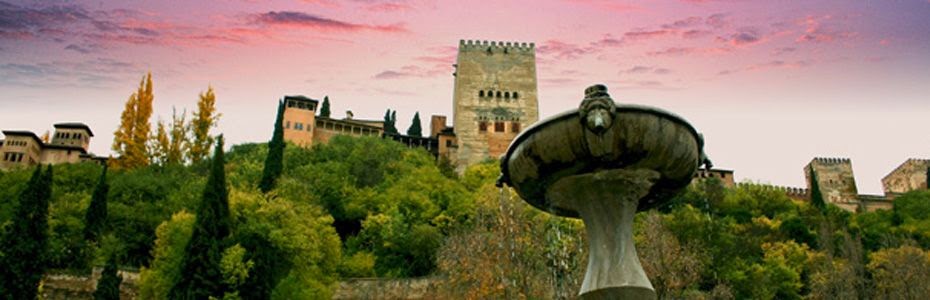
The Alhambra, in Granada, Spain is one of the most evocative buildings I've ever visited in my life. It's an absolute must-visit for any traveller to Andalucia - the biggest province in Southern Spain.
The Alhambra was an Arabic fortress built while the Moors (Muslims from North Africa) still laid claim to this part of Spain - back in the c13th or so.

"Alhambra" is a Spanish rendering of the Arabic words "qa'lat al-Hamra", meaning "red castle". The significance of the "red" part is easy to see, as it comes from the dusty red stone that was used to build the thick walls around the castle.

The entire site has got a magic feeling to it - a raise-the-hairs-on-the-back-of-your-neck kind of buzz that envelops you from the moment you begin the steep climb to its entrance-way.
The Alhambra rustles with incredible Arabic myths, and is filled with the whispers of ghosts from times gone by. It's staggeringly beautiful, and feels like a creation from an old story-book, miraculously brought to life.

The setting is also like something from a picture postcard. The Alhambra stands proudly atop of one of the steep vantage-points of Granada - a hill called La Sabika.

The castle lurks behind blood-red boundary walls, and is framed against the snowy peaks of the Sierra Nevada mountain-range, some distance behind.


miércoles, 5 de noviembre de 2014

Artinya Apa Agensi Pariwisata Halal?


'Halal' adalah istilah yang disebutkan dalam Al-Qur'an yang artinya 'diizinkan, sehat dan bermanfaat, hal ini merupakan cerminan perilaku dari orang Muslim.

Ketika seorang turis Muslim memilih tujuan tempat liburan, sebagian besar waktu mereka akan di habiskan untuk berlibur ke tempat yang memiliki akses ke fasilitas dan pelayanan sesuai dengan tatacara gaya kehidupan menurut hukum Islam.

Hal ini menyebabkan awal dari terbentuknya pasar pariwisata Islam di Andalusia, Spanyol dan Eropa pada umumnya, di mana jenis pariwisata Islam ini perlu untuk dikembangkan.

Oleh karena itu, diadakanlah kongres pertama Pariwisata Internasional tentang 'Halal' di mana Alhamratour juga hadir, ini merupakan forum perintis di Eropa yang digelar beberapa hari lalu di Granada, di mana industri pariwisata global akan bertemu untuk memperdalam khasanah pariwisata Islam di Eropa. Peserta yang hadir dari berbagai macam pariwisatapun turut serta untuk melaporkan parawisata Islam terkini. 

Pada tahun 2013 Alhamratour lahir di Granada (Andalusia, Spanyol), ini adalah lembaga pariwisata yang halal, keseluruhan pegawainya terdiri dari orang-orang Muslim Spanyol dan negara lainnya untuk mendukung parawisata Islam di Eropa.

Alhamratour  mengawasi semua kegiatan perjalanan bagi semua tamu-tamu pariwisata agar hanya mengkonsumsi produk dan pelayanan yang halal, sehingga tamu-tamu tersebut bisa menikmati perjalannya tanpa harus ragu-ragu karena biasanya seorang Muslim akan merasakan perbedaan yang signifikan ketika jalan-jalan di negara non-Islam. 

Oleh sebab itu, untuk membuat suatu perjalanan pariwisata yang halal dan menyenangkan, Alhamratour menemani dan menyediakan transportasi serta memandu tamu-tamu parawisata dari kedatangan sampai kepulangannya di beberapa tempat tujuan dengan berbagai aktivitas pariwisata di Maroko, Spanyol dan negara lain di Eropa, dengan cara menggabungkan perjalanan beberapa negara menjadi satu perjalanan pariwisata.

Pelayanan pemandu pariwisata ini akan ditawarkan dalam bahasa Spanyol, Arab, Inggris, Perancis dan Jerman. 

Dalam pelayanannya, Alhamratour memanfaatkan kekayaan warisan Muslim Spanyol dengan memberikan informasi untuk menelusuri jejak-jejak budaya Islam. Selain memperlihatkan monumen-monumen yang lebih terkenal dari setiap tempat, Alhamratour akan memberikan penjelasan tentang warisan sejarah Andalusia yang sangat kaya di seluruh negara Spanyol serta pastinya tidak lupa juga untuk mengunjungi semua tempat-tempat Islam di Spanyol pada zaman sekarang ini. Alhamratour juga memiliki kegiatan kunjungan ke beberapa masjid dan komunitas-komunitas yang penting dan berpengaruh hingga saat ini.

viernes, 31 de octubre de 2014

Travel the halal way and discover.... Park Güell in Barcelona!

Park Güell was an attempt to create a housing estate in a natural setting in the old village of Gràcia: an ambitious property development project commissioned by Gaudí’s patron, Eusebi Güell. 

The architect chose an uneven site covering a surface area of 15 hectares where 40 detached houses were to be built. Only two were actually completed, and Gaudí lived in one of them.


It is now a museum devoted to the architect’s life and work. Gaudí prepared the site of Park Güell between 1900 and 1914, showcasing his urban-planning concerns by building paths, arcades and viaducts that were fully integrated into Barcelona’s natural surroundings.

Gaudí’s characteristic vivid imagination is revealed in the different elements that amaze visitors from around the world that visit 
Barcelona. The gatehouses, which were originally designed as the caretaker’s house, are now home to the Park Güell Interpretation Centre. 

The flight of steps, with its famous dragon covered in coloured broken-ceramic pieces, leads to the hypostyle hall, an impressive space comprising 86 columns which underpins the plaza above. The curving bench around the perimeter of the plaza was designed by Jujol, one of Gaudí’s associates in the construction of this unique park in the old village of Gràcia which has been declared a World Heritage Site

martes, 28 de octubre de 2014

lunes, 20 de octubre de 2014

Travel the Halal Way and discover the Royal Alcazars of Seville

You can visit this city in our tour Spain & Morocco of  10days / nights

The Alcázar of Seville (Spanish "Reales Alcázares de Sevilla" or "Royal Alcazars of Seville",  is a royal palace in Seville, Spain, originally a Moorish fort. The palace is renown as one of the most beautiful in Spain. It is the oldest royal palace still in use in Europe, and it was registered in 1987 by UNESCO as a World Heritage Site, along with the Seville Cathedral and the General Archive of the Indies.

The construction of the fort was ordered by Abd Al Ramn III, Caliph of Al-Andalus, in the year 913, which was changed into a fortified palace during the 11th century. In the 13th century, Seville now being in the hands of Castile, King Alfonso X ´the Wise´ extended it further.

3D orientation map of the Alcazar palace, Seville - Andalusia, Spain.
 
Pedro I, "the cruel" (1350 to 1369), made significant additions to the palace which is one of the most important examples of Mudejar architecture in Seville. The numerous rooms, patios and halls vary in architectural styles from the Islamic to Neoclassical. The beautiful gardens and fountains are specially worth visiting.

Also wanting to make their mark, the Alcázar was even further ´improved´ on by later kings; for example, the 16th century Emperor Charles V added elements in Gothic and Renaissance style to the palace.

Since the Alcázar has a century´s long history of expansions and renovations, one of the coolest things about it is it´s mixture of architectural styles. But the unavoidable highlight and an absolute must-see is the Mudejar Palace of Peter I (followed closely by the Gardens).

Interesting parts of the Alcazar

Horse shoe arches at the entrance of the ambassadors
Salon de los Embajadores (The Ambassadors Room): The magnificent dome of the Ambassadors Room is decorated with gilded cedar wood sculptures.

Arcos de Herradura (Horse Shoe arches): The Ambassadors Room is decorated with tiles and complex plaster work. It shows a beautiful example of the typical horse shoe arches.


El patio del yeso (plaster)
El Patio de la Montera (The Hunting Patio): This was the meeting place of the court before the hunt took place. The faade of the palace of Pedro I is a unique example of Mudejar design.

El Patio del Yeso (The Plaster Patio): This beautiful, ornate garden full of flowers and streams maintains elements of the almohade architectural style of the Moors from the 12 century.


El patio de las doncellas (maidens)
 Patio de las Doncellas (Patio of the maidens): This patio was decorated by the best architects in Granada. Patio del Crucero is above the ancient baths.

Salones de Carlos V (Rooms of Charles V): The rooms and chapel of Charles V are decorated with tapestries and coloured tiles from 16 Century.

El Patio de las Muñecas (The Patio of the Dolls): This patio with its bedrooms and adjacent corridors was the heart of the palace. It takes its name from the two tiny faces that decorate its arches.

The Gardens of the Alcazar Palace

Gardens of the Alcazar Palace
 These gardens, adorned with fountains and pavilions, provide shelter from the hustle and bustle of Seville. 

Jardin Inglés (English gardens). These gardens are modelled on those of the British Isles from 18 Century. The door to the Alcoba is of Islamic origin. The park was built in 1909 and the main gardener of the Real Casa de Campo, Juan Gras, was put in charge of planting the flowers. However, there are doubts as to whether his radical style fits in with the surroundings.

Jardin de los Poetas (The Garden of the Poets) The design of this garden is similar to that of the Forestier thanks to the influence of Joaquin Romero Murube. It's most emblematic feature is the two ponds that were inspired by the Arabs and Romans.

The english gardens at the Alcazar palace
 Jardin de la Vega Inclan (Garden of Vega Inclan) This is a well designed garden inspired by the Damas even though it lacks the refinement that had once existed. This garden consists of 20 mostly square flower beds that are separated by paths and fountains. These gardens took their inspiration from Islamic culture and the Renaissance.


Jardin de la Alcubilla (Garden of the Reservoir): This garden existed during the time of Charles V.

Jardin de la Alcubilla
In 913 the Caliph of Al-Andalus (modern Andalusia) ordered the construction of a castle there, which was changed into a fortified palace during the 11th century. In the 13th century, Seville now being in the hands of Castile, King Alfonso X ´the Wise´ extended it further.
About a hundred years later, King Peter I ordered the construction of one more palace on the site. Nowadays, this gorgeous palace is considered to be one of the best remaining examples of mudéjar architecture – a symbiosis of Christian and Moorish techniques and architecture; the two cultures living side by side at the time.
Also wanting to make their mark, the Alcázar was even further ´improved´ on by later kings; for example, the 16th century Emperor Charles V added elements in Gothic and Renaissance style to the palace.
Since the Alcázar has a century´s long history of expansions and renovations, one of the coolest things about it is it´s mixture of architectural styles. But the unavoidable highlight and an absolute must-see is the Mudejar Palace of Peter I (followed closely by the Gardens).
- See more at: http://travelersinnseville.com/516/the-history-of-the-royal-alcazares-of-seville#sthash.RDaSRMUX.dpuf
In 913 the Caliph of Al-Andalus (modern Andalusia) ordered the construction of a castle there, which was changed into a fortified palace during the 11th century. In the 13th century, Seville now being in the hands of Castile, King Alfonso X ´the Wise´ extended it further.
About a hundred years later, King Peter I ordered the construction of one more palace on the site. Nowadays, this gorgeous palace is considered to be one of the best remaining examples of mudéjar architecture – a symbiosis of Christian and Moorish techniques and architecture; the two cultures living side by side at the time.
Also wanting to make their mark, the Alcázar was even further ´improved´ on by later kings; for example, the 16th century Emperor Charles V added elements in Gothic and Renaissance style to the palace.
Since the Alcázar has a century´s long history of expansions and renovations, one of the coolest things about it is it´s mixture of architectural styles. But the unavoidable highlight and an absolute must-see is the Mudejar Palace of Peter I (followed closely by the Gardens).
- See more at: http://travelersinnseville.com/516/the-history-of-the-royal-alcazares-of-seville#sthash.RDaSRMUX.dpuf
In 913 the Caliph of Al-Andalus (modern Andalusia) ordered the construction of a castle there, which was changed into a fortified palace during the 11th century. In the 13th century, Seville now being in the hands of Castile, King Alfonso X ´the Wise´ extended it further.
About a hundred years later, King Peter I ordered the construction of one more palace on the site. Nowadays, this gorgeous palace is considered to be one of the best remaining examples of mudéjar architecture – a symbiosis of Christian and Moorish techniques and architecture; the two cultures living side by side at the time.
Also wanting to make their mark, the Alcázar was even further ´improved´ on by later kings; for example, the 16th century Emperor Charles V added elements in Gothic and Renaissance style to the palace.
Since the Alcázar has a century´s long history of expansions and renovations, one of the coolest things about it is it´s mixture of architectural styles. But the unavoidable highlight and an absolute must-see is the Mudejar Palace of Peter I (followed closely by the Gardens).
- See more at: http://travelersinnseville.com/516/the-history-of-the-royal-alcazares-of-seville#sthash.RDaSRMUX.dpuf

viernes, 10 de octubre de 2014

Travel the halal way and discover Toledo, the city of the Three Cultures

Toledo (Tulaytulah) is located 42 miles (70 km) southwest of Madrid, on a large hill that juts up from the meseta (high plain) in the La Mancha region. It is surrounded on three sides by the Tajo river, serving as a natural fortress.

Since Roman times, Toledo served as a strategic location on the road from Emerita (modern Mérida in the southwest), to Caesar-Augusta (modern Zaragoza in the northeast). The city became the capital of the Visigoths. The conquest, without a fight, of the city by the Berbers of Tarik in the year 711, began the period of Muslim domination in which the Moors occupied Toledo for 373 years, a relatively short period, but their influence was enormous, both in the labyrinth-like layout of narrow and steep alleyways, of parapet walks that go nowhere, often with covered passageways on top, and in important architectural remains, such as the Bab-al-Mardum mosque, today known as Cristo de la Luz (the Christ of Light), built by Musa ibn Ali, among others.

Bab-al-Mardum mosque, today known as Cristo de la Luz (the Christ of Light), in Toledo


The religious tolerance of the Muslims allowed the Christians to co-exist with the Moors, and led to the appearance of the so-called Mozárabes-"Mozarabs"-who created a unique culture which would have far-reaching effects on architecture and decoration, as well as customs, vocabulary, literature and music. This situation also allowed the Jews to form a prosperous community, although their presence dated back to the Visigoth period.


In 1085, when Alfonso VI took the city walls with no bloodshed, many of the Muslim inhabitants decided to stay with the Christians and Jews. The harmony between the three cultures bore fruit as notable as the School of Translators of Toledo, renowned for having recuperated part of classical culture from various Arab documents. The Islamic legacy faded with time, and the Catholic Monarchs, Ferdinand and Isabella, expelled the Jews in the 15th century. However, the cultural mix in the city had been determined and can still be felt today.
Mazapán (from Arabic موثابان mawthābān)


Today, Toledo is known for its mazapan (marzipan), a pastry made with sugar, eggs and almonds. Persian immigrants introduced this delectable delight to Al-Andalus.


Toledo also has long been famed for its metalwork, particularly steel blades and other arms. Expert craftsmen produce these items in a style clearly reflecting Islamic origins.


Damasquinos
Jewelry and other articles of gold and black metal are called damasquinos. The term refers to the Syrian city of Damascus. The Umayyads came from Damascus to establish their rule in Iberia.

Toledo features a quaint Medieval quality, with narrow cobblestone streets and a variety of handicrafts. It has a population of about 75,000 inhabitants. In 1986, UNESCO designated the city as a World Heritage Site for its extensive cultural and monumental heritage.


martes, 7 de octubre de 2014

What is Halal Tourism?

The term ” halal tourism ,” which refers to the tourism offerings for practicing Muslims, represents a turnover of € 103 billion worldwide. This is a market that Spain wants to take a bigger share, thanks in particular, to its rich Islamic cultural heritage in Andalusia. Hence the organisation of the first conference on the subject in Granada on 22 and 23 September 2014 , where Alhamratour was present, under the auspices of the Halal Institute Cordoba was held.

SPAIN . The Alhambra in Granada, the Cordoba Mosque , the Giralda in Seville … the list of great monuments of Islamic cultural legacy in Spain is long.  The cultural wealth is mainly concentrated mainly in Andalusia, home to the recent ” halal tourism” International Conference held in Grenada by the London firm Creative Minds Media.


The Halal Institute of Cordoba advocates the development of one of the most promising tourist segments in the city. There are, obviously, quite a few reasons for this. First, because Spain, and, particularly, Andalusia, is a popular destination for Muslim tourists because of its 800-strong history. Second, it is the economic activity related to this type of tourism that justifies the development of a ‘ Halal tourism offering “, ie : a tour offering for practicing Muslims, particularly from clients in the Middle East . These tourists spend twice as much as the average in Spain , according to figures from Turespaña. Tourists from Saudi Arabia, for example, spend a budget of € 2,287 per person on their holiday, against 2,116 for those in the UAE , or € 1,703 for the Egyptian tourist. Compared with the average amount of € 956 per person spending for all holidaymakers in Spain, the amount spent by the Muslim tourists from the oil-rich Gulf states is much larger which can not be ignored.
Alhamratour in the Halal Conference 2014 in Granada (HTC2014)

The ” The Muslim Travel Index 2014″ study, presented in Granada during this international conference halal tourism, reveals another significant figure : aggregate expenditures on Muslim tourists represent a business volume of 103 bn € in the world . A big market where Spain wants to take more space . If the country is the world’s third -largest number of international tourists, it ranks only sixth place ranking Muslim tourists ( including behind France , Italy and Great Britain). Hence the importance for the Spanish tourism industry forward in welcoming Muslim tourists practitioners , representing about 10% of travelers in Andalusia, and an annual turnover estimated at € 387 million. In this sense, the Halal Institute of Cordoba has an important role as a body of recognized certification. Although the number of ” halal ” facilities so far remains very limited in the tourism sector in Spain , with only two restaurants and a hotel in Andalusia.

Muslim tourists visitting and praying in the Granada's Mosque

However, the changes proposed by the Institute of Cordoba formations stir more curiosity hoteliers. Fittingly , the study presented in Granada also shows that tourists from the Middle East are those who spend the most in terms of accommodation in Spain, namely € 129 on average per person per night , in front of the Chinese and Russian ( respectively € 115 and € 91 ) . “This is to recognize that the efforts against Muslim tourists can go beyond food ,” says Muhammad Escudero, director of Halal Certification Institute Cordoba : ” It is often the small details to make considered very important for these customers, as signaling the direction of Mecca , the layout of prayer space , information in Arabic, or absence of alcohol and pork … “

"A guarantee of quality"

Since this summer , Alanda Hotel Marbella is the first certified “halal” Spain hotel. A four star hotel bought by Saudi group Al Fawaz Hokair a year ago, and that has made this certification a marketing argument , as evidenced by the sales manager , Ignacio Gimenez . ” We do not serve alcohol or pork , which attracted obviously Muslims around the world committed to their religion ; but beyond this halal deposit also appeals to a broad customer base that holds the beneficial aspect of the process, especially since the certification involves traceability and therefore guarantees quality.

The absence of alcohol is not a drawback . Sometimes it is an asset for a family , Muslim or not customers looking for a relaxing holiday while enjoying the service and installation of a four-star hotel , the spa or the beach restaurant . In short, the ‘halal’ certification is a further guarantee of attention here that shows this month (September) of 86% occupancy rate. Evidence that the commitment does not interfere with the activity.

"We announce our halal recess policy when making reservations , and we have never been abandoned or even the slightest criticism ; customers may be surprised , but it’s always positive ,"said Ignacio Gimenez . 

These reactions now allow the company to consider an international hotel development with the same positioning ” halal ” .

Article by: halaltimes.com via www.econostrum.info

Travel the Halal way and Discover the moorish Gibraltar


The Rock of Gibraltar
Gibraltar is an intriguing destination for the curious traveler. The British territory is only 6.8 square
kilometers, making it easy to explore on foot, and its location at the entrance of the Mediterranean south of Spain makes it a good jumping-off point for further travels. The landscape is dotted with caves and tunnels, Gibraltar has a rich, swashbuckling history and its underlying Britishness makes it a perfect destination for pub- and tea-lovers who also crave the sunshine.

Gibraltar's Islamic history began with the arrival of Tariq ibn-Ziyad on 27 April 711 at the start of the Umayyad conquest of Hispania. The name of the city comes from the arabic Jabal-ı Tārıq (جبل طارق, "Mountain of Tariq" which name was later corrupted into "Gibraltar" by the Spanish.

The history of Moorish Gibraltar began with the landing of the Muslims in Hispania and the fall of the Visigothic Kingdom of Toledo in 711 and ended with the fall of Gibraltar to Christian hands 751 years later, in 1462, with an interregnum during the early 14th century.

The Madinat al-Fath (City of Victory) was intended to be a major city furnished with palaces and mosques, but it seems to have fallen well short of the ambitions of its founder, the Almohad caliph Abd al-Mu'min, by the time it was captured by the Kingdom of Castile in 1309 after a short siege. Muslim control was restored in 1333 after another, much longer, siege. The city subsequently underwent a major expansion and refortification. A number of buildings and structures from this period still exist, including the Moorish Castle, parts of the Moorish walls, a bath-house and a subterranean reservoir.
Monkey in Gibraltar

Naturally, the main sight in Gibraltar is The Rock. The upper Rock's nature reserve offers spectacular views of the town and sea below. The reserve is also home to the only free-living primates on the entire continent. Over 240 Barbary Macaques thrive around the Apes' Den, an area close to the center cable-car station. According to local legend, the British will disappear from Gibraltar when the tailless apes do.

The British side of Gibraltar is most evident on Main Street. The pedestrianized drag is lined with cozy pubs, charming tea shops and busy restaurants. Although it looks like it could be a street in London, a distinctly Spanish lilt is still in the air, reminding visitors that they are indeed in Mediterranean Europe.

Ibrahim Al Ibrahim Mosque, Gibraltar

Not far from Main Street is the Ibrahim Al Ibrahim Mosque, a symbol of the religious and racial symbiosis of the territory's past. Opened in 1997, the mosque was built by King Fahd of Saudi Arabia to feed the religious needs of Moroccans working on the Rock, and it is the largest mosque in the non-Islamic world.

jueves, 2 de octubre de 2014

Alhamratour "Travel the Halal way" ¿Que es una Agencia de Turismo Halal?

‘Halal’ es un término que aparece mencionado en el Corán y que significa ‘permitido, saludable y beneficioso’, referido tanto a alimentación como a conductas para el musulmán.
Cuando un turista musulmán elige destino vacacional lo hace, en la gran mayoría de las veces, pensando en un lugar en el que tenga acceso a establecimientos que ofrezcan servicios acordes a su forma de vida y conforme a la ley islámica. 


Turistas musulmanes en el Patio de los Leones de la Alhambra 

Esto ha creado una demanda en el mercado del turismo en Andalucia, España y Europa en general, donde este tipo de turismo emergente está en proceso de adecuación para su posible explotación.
Así se ha puesto de manifiesto en el primer Congreso Internacional de Turismo ‘Halal’, donde Alhamratour estuvo presente, un foro pionero en Europa, celebrado hace solo unos días en Granada, donde  la industria del turismo mundial se dio cita para profundizar en las formas de aprovechar este nicho de mercado. En el evento se informó a los asistentes de las previsiones de este tipo de turismo y sus tendencias para dar a conocer este mercado de consumidores musulmanes.

Es en este contexto en el año 2013 cuando nace Alhamratour en Granada (Andalucia, España), agencia de turismo halal, formada íntegramente por trabajadores musulmanes españoles y otras nacionalidades para dar soporte a esta demanda.

Alhamratour durante la estancia del cliente clientes cuida al detalle para que solo consuma productos y servicios halal y  pueda disfrutar de sus vacaciones sin preocuparse de las cuestiones típicas al viajar a un país no musulmán.

Para ello Alhamratour acompaña, transporta y guía en todo momento al turista desde su llegada hasta su ida dentro de una amplia gama de destinos y actividades en Marruecos, España y resto de Europa, con la posibilidad de combinarlos en un solo tour. 

Los acompañamientos se realizan en español, árabe, inglés, francés y alemán entre otros.

Turistas visitando y realizando sus rezos en la Mezquita Mayor de Granada

Alhamratour aprovecha también el rico legado hispano-musulmán para dar un valor cultural añadido a sus servicios. Aparte de enseñar los monumentos más emblemáticos de cada lugar, hacemos especial incapié en mostrar el rico histórico legado andalusí existente en todo el territorio español, así como el entorno hispano-musulmán actual visitando las comunidades y mezquitas más representativas del lugar.

miércoles, 2 de julio de 2014

ALCAICERÍA, the old silk market in muslim times in GRANADA

Travel the halal way.... and discover ALCAICERÍA, the old silk market in muslim times (GRANADA).

The Alpujarra mountain range, was important for the production of silk, where silkworms feasted on the leaves of the Mulberry trees. The raw material was then transported by mules, to Granada,where the silk threads were woven, then sold, either in bales, or made into clothing etc.

In the centre of Granadas' city, a bazaar was built , consisting of a grid like network of streets, with merchants shops, and inns, for the merchants to sleep, eat and conduct business. (The Corral del Carbon was originally a merchants inn - see my tip for further info).

Arched Gateways led into the bazzar, which were locked at night, while night watchmen guarded the area.

Originally, this bazaar covered the area from Plaza Nueva to Plaza Bib Rambla, and was a very important trading area.

However, on the night of 19th July 1843, a fire started in a shop that made matches, and the entire bazaar was destroyed. The area was soon re-built, but on a smaller scale.

Today, the bazaar still operates as a centre for trading, but mainly goods sold are souvenirs or crafts. It is an interesting place to wander around. Besides looking at the goods for sale, there are some good examples of Islamic architecture, and tiled wall decorations.