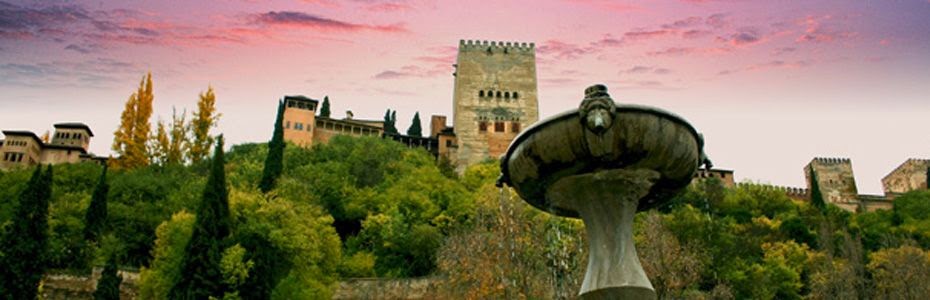

Must see places in Andalusia, Spain

If you are a muslim traveller or an islamic architecture lover those are the 7 things you must see in Granada

Top 10 foods to try in Morocco

One of the great cuisines of the world, Moroccan cooking abounds with subtle spices and intriguing flavour combinations.

Top Five Must See Things in Cordoba, Spain

Cordoba قرطبة in the Andalucia province of southern Spain is a city with more than 2,500 years of developed history.

ChefChaouen, the blue city in Morocco

Located just a few hours by bus from Tangier and far enough off the beaten track to dissuade many tourists, Chefchaouen is quiet enough for those visitors overwhelmed by the busy medinas of Fez and Marrakech, and has just enough of what is quintessentially Moroccan to be of interest to other travelers looking for something a bit more authentic.

Fes, Morocco

The most mystical of Morocco's imperial cities, Fez. Capital and spiritual center of Morocco, this city is situated in a narrow valley against the backdrop of the Middle Atlas

Mostrando entradas con la etiqueta Cordoba. Mostrar todas las entradas

miércoles, 15 de abril de 2015

Must see places in Andalusia, Spain

malaga-spainThe region of Andalusia stretches over 87 268 km² of land. Andalusia makes up 17% of Spain. This autonomous region has lots to offer to its visitors.

You can visit Andalusia in our tour Spain & Morocco of  10days / nights

Here are some highlights in this fascinating part of Spain.      

The natural beaches of Cabo de Gata, Almeria. This area is named Cabo de Gata after the mineral Agate (agata) which used to be mined in that area. As your drive through this National Park you will see the landscapes vary. From expanses of desert with cactus and prickly pear trees to beautiful rustic beaches. You will discover villages that look like they came straight out of the Wild West. It´s easy to see how this area has attracted so many film producers. Recently Ridley Scott filmed scenes for the film Exodus at Playa de los Genoveses. The bird scene from Indiana Jones and the Last Crusade was also filmed here.


The Alpujarra villages. These small villages extend across a large area in Granada and Almeria provinces. The region is beside the Sierra Nevada mountain range and boasts dramatic landscapes. A day out around the Alpujarras is a unique experience. The locals thrive on the sale of local craftwork and delicious food from that area. This group of villages is currently on the UNESCO waiting list to be added as a World Heritage site. It has a history of Silk production and was once one of the main producers of silk in the world. You will love this area of Andalusia if you enjoy nature, walking, and local crafts. You may like to party in the Alpujarra at one of the local fiestas in the summer months.


 The Alhambra Palace and Generalife. This group of palaces and gardens is a UNESCO World Heritage site. Located in the city of Granada, this site received 2,315,017 visitors last year. (2013 figures) This began as a fortress over 1000 years ago. As the years passed it changed gradually as different monarchs conquered the Kingdom of Al Andalus. A fascinating history lies before any visitor to this spectacular place. The intricate plasterwork on its walls seems unending. The reflective details in the architecture adds symmetry to the Nasrid palaces. As you wander through the Alhambra complex you may think you have travelled back in time.


Cordoba. Yet another UNESCO World Heritage site, the Mezquita of Cordoba is well worth a visit. Building of this impressive mosque began in 786 and took around 200 years to complete. This Cathedral mosuqe is located in the centre of old quarter of Cordoba. The central hall is full of hundreds of columns and arches. Many of these stone columns came from other countries across the empire although at a first glance they look alike. Cordoba is also well known for it´s colourful patio festival. Although it takes place in May you can visit the patios at other times of the year too. The sunset across the roman bridge is stunning. A walk around the old streets after dark is particularly magical.

 
Malaga. Although the coastal towns of Malaga are popular for their beaches and nightlife, the old quarter of Malaga must be included on your visit. The city has it´s own fortress or Alcazaba and the impressive Roman amphitheatre too. The views from the Alcazaba over the coastline and the port are well worth the jaunt up the hill. (take the bus) T. As you walk around the city centre you may see flower sellers with white jasmine flowers for sale. Known locally as biznagas they make an unusual gift to take home. Don´t miss the Calle Larios, the main commercial street or the bar Pimpi, a must see for any visitor to Malaga.

malaga-spain

Ronda is an inland town in the Malaga province. The town is seperated in two by a vast gorge. The two areas of the old town and the newer part where the commercial area is. The surrounding countryside and views from the bridge will make for impressive holiday photos. This bridge puente nuevo inspired Ernest Hemingway in For whom the bell tolls. Ronda´s Plaza de Toros has a museum which displays different aspects of this spanish tradition. Ronda makes a good destination for a day trip if staying along the Costa del Sol or in Marbella.

Ronda, Malaga, Spain

Seville. The city of Seville is famous for its Easter processions and it´s traditional Feria de Abril. If you have chance to visit at Eastertime you will be able to enjoy the intense atmosphere of the Easter processions. The Feria de abril follows after easter and lasts for 10 days. Colourful flamenco dresses and lots of bottles of manzanilla dry wine are enjoyed each year at the fair. Monuments worth visiting in the city are the Cathedral of Seville with the its famous Giralda, the Alcázar and the Archivo General de Indias. The three buildings are UNESCO listed. The Plaza de España, Parque Maria Luisa  and the neighbourhood of Triana are also recommended for any visitor.


Cadiz. This coastal city is still one of the most important seaports in Spain. This city is the oldest in Spain, founded in the 11th century B.C. It´s often called the Tacita de Plata, meaning the silver tea cup. There is something special about Cadiz. The atmosphere of the city and the friendly locals make any visit enjoyable. Go and taste some tapas in the Barrio de La Palma,  just a short walk from the beach.  Take a walk along the fortified walls beside the sea and see the San Esteban Castle. You can also see Cadiz from above at Torre Tavira, using their camara oscura.


Cadiz
The National park of Doñana is a birdwatchers paradise. This park located in Huelva province is yet another UNESCO listed site. With a large number of protected birds in it´s grounds you can enjoy birdwatching in a beautiful natural setting. Flamingos, geese, vultures, kites and many others are here this impressive park. 


Doñana National Park, Andalusia, Spain


miércoles, 1 de abril de 2015

Travel the halal way... and discover the Great Mosque of Cordoba

THE GREAT MOSQUE OF CORDOBA, universal symbol of Moorish heritage in Spain, and one of history's most extraordinary works of art, awaits you in Cordoba.

Come and admire this architectural jewel - a unique space made up of forms, light, columns and colours, where you will feel all the splendour of ancient Al-Andalus.
Visit "Andalusia routes" or our Spain & Morocco Tour in our website and send your request trip for more information.

Puente Romano, Cordoba, SpainThe Mosque-Cathedral of Cordoba is the most important monument of all the Western Islamic world, and one of the most amazing in the world. The evolution of the “Omeya” style in Spain is resumed in the history of the Mosque of Cordoba, as well as other styles such as the Gothic, Renaissance and Baroque of the Christian architecture.

It seems as if the place that the Mosque-Cathedral of Cordoba occupies nowadays was dedicated, from ancient times, to the cult of different divinities. In this same place, and during the Visigoth occupation, another building was constructed, the “San Vicente” Basilic.

On top of this basilic and after paying half of the site, the primitive Mosque was constructed. This basilic, of rectangular shape, was shared for a period of time between Moslems and Christians.

After the Muslim enlargement, the Basilic became property of Abderraman I, who destroyed it to construct the first “Mosque Alhama” or main Mosque of the city. Nowadays, some of the constructive elements of the Visigoth building are integrated in the first part of Abderraman I.

The Great Mosque has two different areas: the courtyard or “arcade sahn“, where the “alminar” (minaret) is constructed (beneath the Renaissance tower) by Abd al-Rahman III, and the “haram” or praying hall.

The interior space consists of a forest of columns and red and white arches giving a strong chromatic effect. The site is divided into 5 different areas, corresponding each one of them to the different expansions that have occurred on it.

In planning the mosque, the architects incorporated a number of Roman columns with choice capitals. Some of the columns were already in the Gothic structure; others were sent from various regions of Iberia as presents from the governors of provinces. Ivory, jasper, porphyry, gold, silver, copper, and brass were used in the decorations. Marvellous mosaics and azulejos were designed. Panels of scented woods were fastened with nails of pure gold, and the red marble columns were said to be the work of God. The primitive part of the building, erected under the direction of Abd-er-Rahman I., was that bordering the Court of Oranges. Later, the immense temple embodied all the styles of Morisco architecture into one composition.
 
The Great Mosque of Córdoba held a place of importance amongst the Islamic community of al-Andalus for three centuries. In Córdoba, the capital, the Mosque was seen as the heart and central focus of the city. Muhammad Iqbal described its hypostyle hall as having "countless pillars like rows of palm trees in the oases of Syria". To the people of al-Andalus "the beauty of the mosque was so dazzling that it defied any description."

The main hall of the mosque was used for a variety of purposes. It served as a central Prayer hall for personal devotion, the five daily Muslim prayers and the special Friday prayers. It also would have served as a hall for teaching and for Sharia Law cases during the rule of Abd al-Rahman & his successors.


The Great Mosque of Córdoba exhibited features, and an architectural appearance, similar to the Great Mosque of Damascus, therefore it is evident that it was used as a model by Abd al-Rahman for the creation of the Great Mosque in Córdoba.

Layout

The building's floor plan is seen to be parallel to some of the earliest mosques built from the very beginning of Islam. It had a rectangular prayer hall with aisles arranged perpendicular to the qibla, the direction towards which Muslims pray. The prayer hall was large, flat, with timber ceilings held up by arches of horseshoe-like appearance.


One hundred fifty years following its creation, a staircase to the roof was added, along with a southward extension of the mosque itself. A bridge was built linking the prayer hall with the Caliph’s palace. The mosque was later expanded even further south, as was the courtyard which surrounded it.

The mosque was built in four stages, with each Caliph and his elite contributing to it.


Until the 11th century, the courtyard was unpaved earth with citrus and palm trees irrigated - at first by rainwater cisterns, and later by aqueduct.

Excavation indicates the trees were planted in a pattern, with surface irrigation channels. The stone channels visible today are not original.


Abd-er-Rahman III added a new tower. The minaret contained two staircases, which were built for the separate ascent and descent of the tower. On the summit there were three apples, two of gold and one of silver, with lilies of six petals.

The minaret is four-faced, with fourteen windows, having arches upon jasper columns, and the structure is adorned with tracery.


martes, 27 de enero de 2015

Travel the halal way and discover Spain & Morocco in this 9 days tour


Here you have an example tour! You can make your tailor made trip fill in a request trip in our web

Day 1 ARRIVAL TO BARCELONA (L, D)
The group will be received at the airport by a local Muslim Guide. Transfer for Barcelona city tour: starting at Las Ramblas, famous for its shops, restaurants and theatres, continue to Montjuic for a Panoramic view of Barcelona. After lunch, visit Parc Güell and Barcelona Olympic Park.
After dinner at la Bacerloneta neighborhood, transfer to hotel for overnight stay.

Day 2 BARCELONA-MADRID (B, L, D)
After breakfast, we will visit the beautiful work of world famous architect Antonio Gaudi: La Sagrada Familia Cathedral, Casa Batllo and Casa Mila.
After lunch, proceed for transfer to Madrid, the capital of Spain.
Dinner and overnight stay in Madrid. 

Day 3 MADRID (B, L, D)
After breakfast, we will spend a full day visiting Madrid. We’ll introduce you
to the city’s highlights: Gran Via, Puerta del Sol, Real Madrid Santiago Bernabeu Stadium, Cibeles, Palacio Real, etc. Afterwards, we will enter some of the most iconic monuments of the city: Palacio Real and Prado Museum. Lunch and dinner will be served at local restaurants.
Overnight stay in Madrid.

Day 4 MADRID-CORDOBA (B, L, D)
After breakfast, proceed for transfer to Cordoba, the capital of the Caliphate, where you will visit the Great Mosque of Cordoba, the third largest mosque in the world.
You will also visit the old Arab and Jewish quarters where the group will have dinner.
Overnight stay in Cordoba.

Day 5 CORDOBA-GRANADA (B, L, D)
After breakfast, check out from the hotel and proceed for transfer to Madinat az-
Zahra, an enigmatic complex built for Abd Ar-Rahman III. Afterwards, continue our trip to Granada, the last kingdom of Al-Andalus.
After lunch, the group will enjoy a nice walk around the Albayzín, a neighborhood of Al-Andalus origin, ideal for taking pictures. Dinner and Overnight stay in Granada.

Day 6 GRANADA  (B, L, D)
After breakfast, we will enjoy a full day in Granada. The day will start with a visit to the amazing Alhambra palaces, which include the Akasar, the Nazari Palaces and finally the Generalife gardens and summer palace.
After lunch, enjoy some free time for shopping in the city center and the old Arab quarters of el Albayzin.
Dinner and overnight stay in Granada.

Day 7 GRANADA-MARBELLA(COSTA DEL SOL) (B, L, D)
After breakfast, check out from the hotel and head towards Marbella, famous spot in Costa del Sol.
We will visit Malaga´s highlights: Gibralfaro´s Castle, The Alkasar, the Roman Theater and the Cathedral.
After a nice lunch at Torremolinos, continue to Marbella where the group will enjoy some free time for walking around the beach and watch sunset.
Dinner and overnight stay in Marbella.

Day 8 MARBELLA-GIBRALTAR-RABAT (B, L, D)
Early in the morning, we will head towards Gibraltar. We will cross the strait of Gibraltar from Tarifa to Tangier, the city where Tariq Ibn Ziyad served as governor before starting the conquest of the IberianPeninsula. We will continue traveling until we reach

After lunch, proceed for transfer to Casablanca, the economical capital of Morocco. Dinner and overnight stay in Casablanca. the capital of Morocco, Rabat.

Enjoy a quick tour of Rabat. Check-in at the hotel and enjoy a relaxing dinner. Overnight stay in Rabat.

Day 9 RABAT-FES-CASABLANCA (B, L, D)
After breakfast, proceed for transfer to Fes, where after the group will enjoy a walking tour of the old medina with a local guide. The old medina is a beautiful labyrinth of intrinsic narrow streets. We will visit several mosques and madrasas, as well as the world famous leather tanneries.
       
Day 10 CASABLANCA DEPATURE (B)
After breakfast, check out from the hotel. If time permits, we will visit Hassan II Mosque, one of the largest mosques in the World and the group will enjoy some final shopping at Morocco´s mall, the largest of its kind in Africa.

Proceed for transfer to Casablanca airport for departure.

miércoles, 14 de enero de 2015

Alcázar of the Christian Monarchs, Cordoba (Spain)

The Alcázar de los Reyes Cristianos (Spanish for "Alcázar of the Christian Monarchs"), also known as the Alcázar of Córdoba, is a medieval Alcázar located in the historic centre of Córdoba, Spain next to the Guadalquivir River and near the Grand Mosque. The Alcázar takes its name from the Arabic word القصر (Al-Qasr, meaning "the Palace"). The fortress served as one of the primary residences of Isabella I of Castile and Ferdinand II of Aragon.

History

In early medieval times, the site was occupied by a Visigoth fortress. When the Visigoths fell to the Umayyad conquest of Hispania, the emirs of the Umayyad Caliphate in Damascus rebuilt the structure. The Umayyads fell to the Abbasid Caliphate and the surviving member of the Umayyad Dynasty, Abd ar-Rahman I, fled to Córdoba. Abd ar-Rahman I's successors established the independent Caliphate of Córdoba and used the Alcázar as their palace. 

The city subsequently flourished as an important political and cultural center, and the Alcázar was expanded to a very large compound with baths, gardens, and the largest library in the West. Watermills on the nearby Guadalquivir powered water lifting to irrigate the extensive gardens.
In 1236, Christian forces took Córdoba during the Reconquista. In 1328, Alfonso XI of Castile began building the present day structure on part of the site for the old fortress. Other parts of the Moorish Alcázar had been given as spoils to the bishop, nobles, and the Order of Calatrava. Alfonso's structure retained only part of the Moorish ruins but the structure appears Islamic since Alfonso used the Mudéjar style.
The Alcázar was involved in the civil war where Henry IV of Castile faced a rebellion that backed his teenage, half-brother Alfonso. During the war, the Alcázar's defenses were upgraded to deal with the advent of gunpowder. At the same time, the Alcázar's main tower, now known as the "Inquisition Tower" was constructed.

Henry's successor, Isabella and her husband Ferdinand used the Alcázar for one of the first permanent tribunals of the Spanish Inquisition and as a headquarters for their campaign against the Nasrid dynasty in Granada, the last remaining Moorish kingdom in the Iberian Peninsula. The Inquisition began using the Alcázar as one of its headquarters in 1482, converting much of it, including the Arab baths, into torture and interrogation chambers. The Inquisition maintained a tribunal here for three centuries. Boabdil was held prisoner here in 1483 until he promised to make Granada a tributary state. When Boabdil refused to surrender his kingdom in 1489, the Christians launched an attack. Isabella and Ferdinand's campaign against Granada succeeded in 1492. The same year, the monarchs met Cristóbal Colón in the Alcázar as he prepared to take his first voyage to the Americas.
The Alcázar served as a garrison for Napoleon Bonaparte's troops in 1810. In 1821, the Alcázar became a prison. Finally, the Spanish government made the Alcázar a tourist attraction and national monument in the 1950s.

Description

The Alcázar centers on the Patio Morisco ("Courtyard of the Moriscos"), another popular feature. There are two towers: the Torre de los Leones ("Tower of the Lions) and the Torre de Homenaje ("Tower of Homage"). The latter has Gothic features including an ogival ceiling.
A series of Roman mosaics and a Roman sarcophagus are displayed in the Inquisition Tower.

More about Córdoba in our blog:

martes, 16 de diciembre de 2014

"Al-Andalus living museum" in the Calahorra Tower in Cordoba

The Al-Andalus living museum is located in an old Moorish fortress, and recreates the time of maximum splendour in this Andalusian city.

The museum is in the Calahorra Tower, opposite the Great Mosque, at the end of the Roman Bridge. Its aim is to provide a recreation of the Cordoba of the period between the 9th-13th centuries, at a time of brilliant cultural, artistic and scientific achievement. Its modern facilities include a system of headphones and infrared data transfer that guide you through the eight themed rooms with dioramas.

The Calahorra Tower was built by order of Enrique II de Trastamara to defend the city when under attack from his brother Pedro I 'the Cruel'. It was used as a prison in the 18th century, a girls' school in the 19th, and today houses the Roger Garaudy Museum of the Three Cultures. The interactive guided tour illustrates the many ways in which Jewish, Christian and Moslem cultures thrived side by side in Medieval Cordoba. Visitors especially enjoy the excellent scale models of the Cordoban Mosque and other well-known Andalusian buildings and the spectacular view over Cordoba from the battlements at the end of the tour.


Room 1
The first lounge of the museum has as aim to welcome the visitors, who enter into an historical place, of dreams, where a unique language.
The visit leads us to the period which encloses the centuries IX and XIII, Cordoba was at that time the biggest city and the faith, between Occident and Orient.... here begins the real renaissance.


Room 2
On the right there is a second lounge, known as the Philosopher Lounge, in fact inside the Muslim figures such as Averroes or Ibn al Arabi, the Jewish Maimonides or the Christian Monarch Alfonso X the Wisemen.

All of them keep a special link with our city.
The ambiance and the spoken explanation are oriented to strengthen the importance of the thought of that moment, the wisdom, without being separated from the science, which are treated in the following lounges, neither the faith.


Room 3
The next lounge is the one dedicated to the Sciences and the Techniques, and in it the technological progresses are shown and they are materialized in Al andalus, such as the new techniques for the agriculture and the irrigation. There is a wonderful scale plan of the Noria mill, which was used by the Caliph Alcazar, and which is conserved by the river.

Other Cordovan figures are treated such as Abulcassis al-Zahri a surgeon and the al-Idrisi, known for his Map of the world, Tabula Rogeriana


Room 4
We go up the stairs and we arrive to the second floor, where we find the known lounge as The Summit: the palace and the mosque, referring to the city-palace of Madinat al Zahra and the Mosque Alhama of Cordoba. It stands out the reception which the caliph Abd Al–Rahman III gave to a Christian monk sent by the Byzantine Emperor

In front there is the Mihrab of the Mosque in Cordoba, carried out in Al-hakam II Period, with materials brought from the orient, thanks to the good relationships.


Room 5
In the following lounge, thanks to a wonderful scale model of the nazari palace of the Alhambra and his complete explanations and effects of light and sound, we get to entry into this marvellous place, from the sunset till the end of it, in this moment the little rooms are illuminated.
The Comares Tower, the Lounge of Dos Hermanas, the Leones Courtyard in which there is a wonderful fountain... all is studied and elaborated with details, and easily to know by the visitors. 

Room 6
It is very close to the granadine palace where the Lounge of Andalusi Music, it is a very little room very interesting. The visitor enters into the richest al-Andalus, at the same time you are under the Mihrab of the Mosque Alhama of Cordoba, one of the most beautiful and impressive places that Islam could create.

The lounge is completed with a little collection of musical instruments belonging to the Andalusi period, and witness of its
rich culture. 
 
Room 7
We arrive to the third and last floor of our tower, and in it we enter into one of the most special lounges of the museums, dedicated to the Mosque Aljama of Cordoba. An exceptional mock-up is in the room, a mock-up who looks in great detail all the outside covers and the most important points of the interior, like the Skylight of Villaviciosa or the mihrab. As in the previous case devoted to the Alhambra, the mock-up is set with phrases and high quality sound effects.

Room 8
From the lounge dedicated to the monument of our city we pass to another which shows us others that without having the artistical and historical relevance they represent the fingerprint of those who lived and shared our city.

Among the columns of the Mosque, under the red and the whiteness of their voussoirs, there are the Caliph Alcazar, the Royal Baths, the Almodovar Door, the Craft Market and the Synagogue... and the river Guadalquivir, the witness of our history. 

Room 9
We end our visit with the Live Museum of Al-Andalus, but before we have a last stop, the lounge called Multivision, where we will enjoy an audiovisual projection which is about the three cultures and it is the theme of the museum. So every hour you have this projection.

Here the visit ends, however it is better to visit it and at the same time go up to the terrace in order to enjoy the most beautiful sight of our city.

Text by: www.artencordoba.com
Photos by: www.artencordoba.com
                  www.nuriacalvodiseno.tk

The Muslim Cordoba قرطبة

However, in the 8th century, something happened in Cordoba which was to radically change the course of history in the western world. A contingent of Arabic troops landed on the Mediterranean coast, and easily took over the weakened Visigoth kingdom. Cordoba was captured by Mugit, a deputy of Tariq, and Moslems settled in Cordoba side by side with their Christian counterparts. They lived in harmony, as is proved by the fact that the Moslems actually paid the Visigoths for the rights to move the musalla (the primitive prayer area outside the city walls) to the Visigoth basilica of San Vicente, thus forming the beginnings of the Great Mosque which still survives to this day.

The first rulers of the Islamic Qurtuba made it the administrative centre of their recently conquered lands. However, the fiercely tribal nature of the Arab and Berber peoples soon produced disputes between the rival factions struggling for power.

Abd al-Rahman I, known as "the Fugitive" or "the Dispossessed", united all the disaffected groups around the figure of the future Emir. In the year 756 these factions took over Cordoba and proclaimed it capital of the independent Emirate of Al-Andalus. Abd al-Rahman I carried out the first major enlargement of the Great Mosque of Cordoba and rebuilt the city walls and the Alcazar (castle). Hisham I, his son, finished off his father's work in the Great Mosque and built the first minaret, which has not survived. When Abd al-Rahman II came to power, the mosque was enlarged further and a lot of new building went on all over the city.

However, it was in the rule of Abd al-Rahman III when Cordoba really came into the limelight. In the  Medina Azahara outside the city walls, an endless source of legends due partly to the extravagantly expensive building materials used.

The arrival of the Omeyan year 929 Cordoba was proclaimed Capital of the independent Caliphate thus creating a schism with Damascus, and converting Cordoba into the religious, political and administrative centre of the entire Islamic kingdom in the west. One of the Caliph's first acts was to build the dazzling, but short-lived, royal residence of

The rule of Alhaken II, son of Abd al-Rahman III, heralded an era of stable government and the period of greatest cultural splendour in Cordoba. The Great Mosque was extended again, this time in the same majestic style as Medina Azahara. 

His successor, Hixam II, was only a puppet ruler, and left the task of government to his vizier Almanzor, who was responsible for the third and last major enlargement of the mosque.

The joint rule of Almanzor and Hixam weakened the kingdom, and the end was not far in sight. The Caliphate finally collapsed in 1013, and the city became one of the interim Taifa kingdoms.

lunes, 15 de diciembre de 2014

مدينة الزهراء‎ Madīnat az-Zahrā The city of the flower

When you go to Córdoba, besides visiting the city, you must visit the archeological remains of Medina Azahara, one of the great works of Islamic art in Andalucía.


Medina Azahara (Arabic: مدينة الزهراء‎ Madīnat az-Zahrā: literal meaning "city of the flower") is the ruins of a vast, fortified Arab Muslim medieval palace-city built by Abd-ar-Rahman III al-Nasir, (912–961) Umayyad Caliph of Córdoba, and located on the western outskirts of Córdoba, Spain. It was an Arab Muslim medieval town and the de facto capital of al-Andalus, or Muslim Spain, as the heart of the administration and government was within its walls. Built beginning in 936-940, the city included ceremonial reception halls, mosques, administrative and government offices, gardens, a mint, workshops, barracks, residences, and baths. Water was supplied through aqueducts.

10,000 men worked in its construction using the best materials: precious metals, marble, polychrome stones, etc.

Medinat-al-Zahra was organized in three big terraces surrounded by a wall. In the upper part was the royal palace, with the rooms of the caliph and his family; the middle one was the bureaucratic and administrative area, with the halls and gardens; the lower one was destined for the houses of the people, as well as for the souk and mosque.

Its location in the foothills of Sierra Morena made it possible to design an urban program in which the location and physical relationships between the various constructions were expressive of the role of each in the setting.

The palace was located at a higher level, and staggered its buildings along the side of the mountain in an expression of clear preeminence over the urban hamlets and the Aljama Mosque spread across the plains below.

Following the terraces, the first corresponds to the residential area of the caliph, next comes the official area including the houses of the viziers, the guard-room, administrative offices and gardens.

Next is the city proper, with housing, crafts, and the great mosque of the two lower terraces separated by another wall in order to isolate the upper palace complex. Archaeological research has revealed an urban morphology characterized by the existence of large areas of undeveloped land, which serves to empty the entire southern front of the fortress, ensuring privacy and maintaining an open, idyllic country landscape.

The only spaces built on the lowest level are two broad bands: the western, with an urban management orthogon, and the eastern, with less rigid planning.

Popular legend holds that the Caliph named az-Zahra, or Azahara, after his favorite concubine, and that a statue of a woman stood over the entrance. Others, imagining his demanding lover, say that he built this new city just to please her. The truth, however, has probably more to do with politics than love.

 Abd ar-Rahman III ordered the construction of this city at a time when he had just finished consolidating his political power in the Iberian Peninsula and was entering into conflict with the Fatimid dynasty for the control of North Africa.

 Zahara means 'shining, radiant or blossoming' in Arabic: the name communicates aspirations of power and status, not romantic love. Az-Zahra is the most common title for the daughter of the Prophet Muhammad Fatimah az-Zahra. As such, the Fatimid dynasty of North Africa adorned many buildings and even towns with her name.


martes, 7 de octubre de 2014

What is Halal Tourism?

The term ” halal tourism ,” which refers to the tourism offerings for practicing Muslims, represents a turnover of € 103 billion worldwide. This is a market that Spain wants to take a bigger share, thanks in particular, to its rich Islamic cultural heritage in Andalusia. Hence the organisation of the first conference on the subject in Granada on 22 and 23 September 2014 , where Alhamratour was present, under the auspices of the Halal Institute Cordoba was held.

SPAIN . The Alhambra in Granada, the Cordoba Mosque , the Giralda in Seville … the list of great monuments of Islamic cultural legacy in Spain is long.  The cultural wealth is mainly concentrated mainly in Andalusia, home to the recent ” halal tourism” International Conference held in Grenada by the London firm Creative Minds Media.


The Halal Institute of Cordoba advocates the development of one of the most promising tourist segments in the city. There are, obviously, quite a few reasons for this. First, because Spain, and, particularly, Andalusia, is a popular destination for Muslim tourists because of its 800-strong history. Second, it is the economic activity related to this type of tourism that justifies the development of a ‘ Halal tourism offering “, ie : a tour offering for practicing Muslims, particularly from clients in the Middle East . These tourists spend twice as much as the average in Spain , according to figures from Turespaña. Tourists from Saudi Arabia, for example, spend a budget of € 2,287 per person on their holiday, against 2,116 for those in the UAE , or € 1,703 for the Egyptian tourist. Compared with the average amount of € 956 per person spending for all holidaymakers in Spain, the amount spent by the Muslim tourists from the oil-rich Gulf states is much larger which can not be ignored.
Alhamratour in the Halal Conference 2014 in Granada (HTC2014)

The ” The Muslim Travel Index 2014″ study, presented in Granada during this international conference halal tourism, reveals another significant figure : aggregate expenditures on Muslim tourists represent a business volume of 103 bn € in the world . A big market where Spain wants to take more space . If the country is the world’s third -largest number of international tourists, it ranks only sixth place ranking Muslim tourists ( including behind France , Italy and Great Britain). Hence the importance for the Spanish tourism industry forward in welcoming Muslim tourists practitioners , representing about 10% of travelers in Andalusia, and an annual turnover estimated at € 387 million. In this sense, the Halal Institute of Cordoba has an important role as a body of recognized certification. Although the number of ” halal ” facilities so far remains very limited in the tourism sector in Spain , with only two restaurants and a hotel in Andalusia.

Muslim tourists visitting and praying in the Granada's Mosque

However, the changes proposed by the Institute of Cordoba formations stir more curiosity hoteliers. Fittingly , the study presented in Granada also shows that tourists from the Middle East are those who spend the most in terms of accommodation in Spain, namely € 129 on average per person per night , in front of the Chinese and Russian ( respectively € 115 and € 91 ) . “This is to recognize that the efforts against Muslim tourists can go beyond food ,” says Muhammad Escudero, director of Halal Certification Institute Cordoba : ” It is often the small details to make considered very important for these customers, as signaling the direction of Mecca , the layout of prayer space , information in Arabic, or absence of alcohol and pork … “

"A guarantee of quality"

Since this summer , Alanda Hotel Marbella is the first certified “halal” Spain hotel. A four star hotel bought by Saudi group Al Fawaz Hokair a year ago, and that has made this certification a marketing argument , as evidenced by the sales manager , Ignacio Gimenez . ” We do not serve alcohol or pork , which attracted obviously Muslims around the world committed to their religion ; but beyond this halal deposit also appeals to a broad customer base that holds the beneficial aspect of the process, especially since the certification involves traceability and therefore guarantees quality.

The absence of alcohol is not a drawback . Sometimes it is an asset for a family , Muslim or not customers looking for a relaxing holiday while enjoying the service and installation of a four-star hotel , the spa or the beach restaurant . In short, the ‘halal’ certification is a further guarantee of attention here that shows this month (September) of 86% occupancy rate. Evidence that the commitment does not interfere with the activity.

"We announce our halal recess policy when making reservations , and we have never been abandoned or even the slightest criticism ; customers may be surprised , but it’s always positive ,"said Ignacio Gimenez . 

These reactions now allow the company to consider an international hotel development with the same positioning ” halal ” .

Article by: halaltimes.com via www.econostrum.info

miércoles, 24 de septiembre de 2014

"The Almoravides Route" Spain & Morocco Tour


Travel the halal way and discover Spain and Morocco in this tour! This is only an example, you can do your tailor made trip writting us to contact@alhamratour.com

Day 1
Arrival to Madrid's airport. Pick up from the airport and transfer to the hotel. In the evening, group meeng to describe the program. Dinner at the hotel.

Day 2
After breakfast, city sightseeing tour by bus. Your tour leader will introduce you to the city's highlights: Gran Via, Puertadel Sol, Real Madrid Stadium, Cibeles, Prado Museum, etc. After, we will ¡enter some of the most iconic monuments of the
city.

Day 3
After breakfast, we will hop on the bus to get to Cordoba. Toledo, the famous “city of the three cultures” awaits us very on our way. Explore its historic quarter, exactly the same it was in the Middle Ages. A tour of its narrow streets will reveal an incredible and living monumental site. Once in Corodoba, check-in at the hotel.

Day 4
Day trip to Granada, where we will have a guided tour of the Alhambra, the city of the last sultans of Al-Andalus: the Alcazaba, the Nasrid Palaces and the Generalife. Aer that, you will do the old town of Albayzin and the city center.

Day 5

After breakfast, full day visit of Sevilla. You will love the capital of the region of Andalousia. Sevilla is famous for its city center, Plaza España, Jardín de Maria Luisa, Triana's neighborhood, etc. Aer that, we will take you to Sevilla Outlet where you can buy the best Spanish marks.

Day 6
After breakfast, we will hop on the bus to Tarifa or Algeciras to catch our ferry. Stop in Gibraltar, on the way, and will be able to visit the city. In Tarifa or Algeciras we will cross the Strait of Gibraltar and arrive to Tangier. Check-in at the hotel and dinner.

Day 7
Aer a guided tour of Tanger, we will take the bus to get to Rabat. Volubilis awaits for us on our way. Once in Rabat, check-in at yhe hotel and city sightseeing tour of Rabat by bus.

Day 8
Full day visit to Meknes and Fez. This amazing city is so beauful. Known for its similarity with other cities on ancient Al-Andalus, it's a great city to discover.

Day 9
Full day visit of Casablanca. We will visit one of the biggest mosques in the world: the Hassan II Mosque. Casablanca is the economic capital of Morocco.

Day 10

Transfer to Casablanca's airport 4 hours before your flight me. Check-in at the airlines desk and gathering of the group for the farewell. End of theservices.

#halaltourism #alhamratour #alhambra #granada #sevilla #morocco #muslimfriendly #halal #cordoba #fez #gibraltar #tailormadetrip

miércoles, 27 de agosto de 2014

The Orange-tree Courtyard of the Cordoba's Mosque


The "Patio de los Naranjos" (the Orange-tree Courtyard) is part of the Cordoba's Mosque, and is undoubtedly the largest courtyard and oldest of the city. Its origin is tied to the temple itself, in the year 786. His name is undoubtedly due to the 98 orange trees that it contains, planted in rows in the late eighteenth century.

This is an enclosed area 130 meters long by 50 wide, divided into three parts, each with a fountain in the center.

The appearance of the courtyard has undergone many changes in the course of history. One important change was when it was extended to the north during the reign of Abd al-Rahman III, when the former minaret of Hixem was knocked down, or the extension to the east carried out by Almanzor.

 In Islamic times, the area was used for public events such as administering justice or teaching, and the arches connecting the courtyard with the main body of the mosque used to be open. It was intended from the very start as a courtyard with porticos (the galleries were started by Abderramán I and finished in the time of Hixem I, who built the minaret and the ablutions hall).

However, the cloisters visible today date from the beginning of the 16th century, when Bishop Martín Fernández de Angulo entrusted the architect Hernán Ruiz I with the task of totally rebuilding them.

Beneath the ground where the orange trees are planted lies a large water cistern which ensured in Muslim times a constant supply of water for the ritual ablutions. The first mention of palm trees being planted here goes back to the 13th century, and there were orange trees in the 15th century, with olive trees and cypresses being added in the 18th.

sábado, 14 de diciembre de 2013

Cordoba, where cultures come together

Over the centuries, the different peoples and cultures who settled in Cordoba left a priceless legacy of monuments in the streets of the city. If you come to southern Spain, then make a note to visit this destination. This city in Andalusia had all of Europe in awe during the Middle Ages. When you see its stunning heritage, you will understand why.

Its historic quarter has been declared a World Heritage Site by the UNESCO, although the main protagonist is actually the Great Mosque. It is considered the most important Islamic monument in the West, and is doubtless one of the world's most fascinating works of art. Its "forest" of columns, its two-tone arches and its decor, along with the Gothic, Renaissance and Baroque elements of the Christian cathedral built within it make this a unique, stunning architectural site.

Besides the Great Mosque you will find other magnificent buildings in this city. A gentle stroll around the historic centre will take you to the Alcázar (Palace) of the Christian Monarchs, with its beautiful gardens, its Moorish baths, and the Mosaic Room, where you can see the wonderful collection ofRoman mosaics found beneath Plaza de la Corredera Square. Head for the narrow streets of the Jewish Quarter where you can admire the beautiful plasterwork of its Synagogue. Also worth visiting are the Medina Azahara archaeological site, the typical Cordoba patios at Viana Palace, the Potro Inn, mentioned in "Don Quixote", the Baroque Merced Convent, Calahorra Tower...

In Spain, enjoying art and culture is an unforgettable experience. In Cordoba too: start planning your holiday and come and see for yourself.