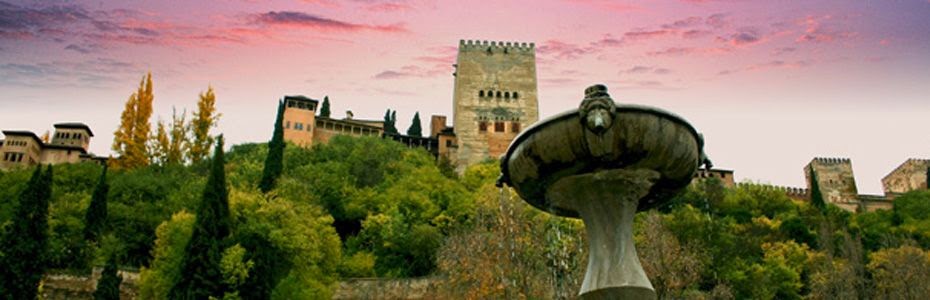

Must see places in Andalusia, Spain

If you are a muslim traveller or an islamic architecture lover those are the 7 things you must see in Granada

Top 10 foods to try in Morocco

One of the great cuisines of the world, Moroccan cooking abounds with subtle spices and intriguing flavour combinations.

Top Five Must See Things in Cordoba, Spain

Cordoba قرطبة in the Andalucia province of southern Spain is a city with more than 2,500 years of developed history.

ChefChaouen, the blue city in Morocco

Located just a few hours by bus from Tangier and far enough off the beaten track to dissuade many tourists, Chefchaouen is quiet enough for those visitors overwhelmed by the busy medinas of Fez and Marrakech, and has just enough of what is quintessentially Moroccan to be of interest to other travelers looking for something a bit more authentic.

Fes, Morocco

The most mystical of Morocco's imperial cities, Fez. Capital and spiritual center of Morocco, this city is situated in a narrow valley against the backdrop of the Middle Atlas

Mostrando entradas con la etiqueta Muslim Spain. Mostrar todas las entradas

lunes, 15 de diciembre de 2014

مدينة الزهراء‎ Madīnat az-Zahrā The city of the flower

When you go to Córdoba, besides visiting the city, you must visit the archeological remains of Medina Azahara, one of the great works of Islamic art in Andalucía.


Medina Azahara (Arabic: مدينة الزهراء‎ Madīnat az-Zahrā: literal meaning "city of the flower") is the ruins of a vast, fortified Arab Muslim medieval palace-city built by Abd-ar-Rahman III al-Nasir, (912–961) Umayyad Caliph of Córdoba, and located on the western outskirts of Córdoba, Spain. It was an Arab Muslim medieval town and the de facto capital of al-Andalus, or Muslim Spain, as the heart of the administration and government was within its walls. Built beginning in 936-940, the city included ceremonial reception halls, mosques, administrative and government offices, gardens, a mint, workshops, barracks, residences, and baths. Water was supplied through aqueducts.

10,000 men worked in its construction using the best materials: precious metals, marble, polychrome stones, etc.

Medinat-al-Zahra was organized in three big terraces surrounded by a wall. In the upper part was the royal palace, with the rooms of the caliph and his family; the middle one was the bureaucratic and administrative area, with the halls and gardens; the lower one was destined for the houses of the people, as well as for the souk and mosque.

Its location in the foothills of Sierra Morena made it possible to design an urban program in which the location and physical relationships between the various constructions were expressive of the role of each in the setting.

The palace was located at a higher level, and staggered its buildings along the side of the mountain in an expression of clear preeminence over the urban hamlets and the Aljama Mosque spread across the plains below.

Following the terraces, the first corresponds to the residential area of the caliph, next comes the official area including the houses of the viziers, the guard-room, administrative offices and gardens.

Next is the city proper, with housing, crafts, and the great mosque of the two lower terraces separated by another wall in order to isolate the upper palace complex. Archaeological research has revealed an urban morphology characterized by the existence of large areas of undeveloped land, which serves to empty the entire southern front of the fortress, ensuring privacy and maintaining an open, idyllic country landscape.

The only spaces built on the lowest level are two broad bands: the western, with an urban management orthogon, and the eastern, with less rigid planning.

Popular legend holds that the Caliph named az-Zahra, or Azahara, after his favorite concubine, and that a statue of a woman stood over the entrance. Others, imagining his demanding lover, say that he built this new city just to please her. The truth, however, has probably more to do with politics than love.

 Abd ar-Rahman III ordered the construction of this city at a time when he had just finished consolidating his political power in the Iberian Peninsula and was entering into conflict with the Fatimid dynasty for the control of North Africa.

 Zahara means 'shining, radiant or blossoming' in Arabic: the name communicates aspirations of power and status, not romantic love. Az-Zahra is the most common title for the daughter of the Prophet Muhammad Fatimah az-Zahra. As such, the Fatimid dynasty of North Africa adorned many buildings and even towns with her name.


viernes, 7 de noviembre de 2014

Documentary in Arabic: The Alhambra, an Andalusi palatine city in Granada (Spain). قصر الحمراء. التراث نظري.


The Alhambra, in Granada, Spain is one of the most evocative buildings I've ever visited in my life. It's an absolute must-visit for any traveller to Andalucia - the biggest province in Southern Spain.
The Alhambra was an Arabic fortress built while the Moors (Muslims from North Africa) still laid claim to this part of Spain - back in the c13th or so.

"Alhambra" is a Spanish rendering of the Arabic words "qa'lat al-Hamra", meaning "red castle". The significance of the "red" part is easy to see, as it comes from the dusty red stone that was used to build the thick walls around the castle.

The entire site has got a magic feeling to it - a raise-the-hairs-on-the-back-of-your-neck kind of buzz that envelops you from the moment you begin the steep climb to its entrance-way.
The Alhambra rustles with incredible Arabic myths, and is filled with the whispers of ghosts from times gone by. It's staggeringly beautiful, and feels like a creation from an old story-book, miraculously brought to life.

The setting is also like something from a picture postcard. The Alhambra stands proudly atop of one of the steep vantage-points of Granada - a hill called La Sabika.

The castle lurks behind blood-red boundary walls, and is framed against the snowy peaks of the Sierra Nevada mountain-range, some distance behind.


martes, 4 de noviembre de 2014

Travel the halal way and discover.... the Sagrada Familia in Barcelona!

The Sagrada Família, Antoni Gaudí's unfinished masterpiece, is one of Barcelona's most popular
tourist attractions. Construction on this church will continue for at least another decade, but it has already become Barcelona's most important landmark.

A New Church

The idea for the construction of a new church was launched by a devout organisation whose goal was to bring an end to the de-christianisation of the Barcelonese, which had started with the industrialization and was caused by the increasing level of education of the Catalan population. 

The organisation purchased a plot of land in the new Eixample district in 1877. The architect Francisco de Paula del Villar designed a neo-Gothic church and led the construction which started in 1882.


Antoni Gaudí's Design

 One year later, the modernist architect Antoni Gaudí took over as lead architect at the age of thirty-one. From that moment on, Gaudí devoted most of his life to the construction of the church.

Instead of sticking to the original plans, Gaudí changed the design drastically. The neo-Gothic style made way for Gaudí's trademark modernist style, which was based on forms found in nature. When he died in 1926 only one facade (the Nativity Facade), one tower, the apse and the crypt were finished.

Because Gaudí was constantly improvising and changing the design while construction was going on, he left few designs and models. And most of these were destroyed in 1936 during the Civil War. 

Eighteen Towers

Still, architects now have a clear idea of what Gaudí had in mind. The last version of his design called for a church 95m/312ft long and 60m/197ft wide. The church will be able to accommodate some thirteen thousand people. When finished, the Sagrada Família will have a total of eighteen towers.

Four towers on each of the three facades represent the twelve apostles. The towers reach a height of 90 to 120 meters (394ft). Another four towers represent the four evangelists. They will surround the largest, 170m/558ft tall tower, dedicated to Jesus Christ. The last tower, dedicated to Virgin Mary, will be built over the apse.

Construction

After Gaudí's death in 1926 construction slowed dramatically due to a lack of funds and the outbreak of the Civil War.

Construction pace started to pick up again in the mid 1950s and now two facades and eight towers have been completed. The main nave was roofed in 2000. At that time construction was expected to last for another hundred years, but modern technology has enabled architects to speed up construction so that the Sagrada Família is now slated for completion in 2026, the centenary of Gaudí's death. 

Facades

The first facade, facing east, is known as the Nativity Facade. It was finished by Gaudí himself and is
ornamented in a Baroque fashion with motifs of animals and plants.

Nativity Facade
Opposite the Nativity Facade is the Passion Facade. Construction started in 1954, but only in 1987 sculptures depicting the crucified Jesus Christ were added. As soon as they were installed, the abstract figures caused a storm of criticism, as the style was very different from Gaudí's.

The third and main facade is the Glory Facade. Construction of this facade - the most monumental of the three - started in 2002 and is still ongoing. This facade, on the south side of the church, will picture life and death. 

Visiting Sagrada Família

Interior Sagrada Familia
Even though the Sagrada Família is far from finished, the remarkable church is well worth a visit. You can visit the crypt were Gaudí is buried as well as the transept and central nave with its giant, tree-like pillars and spectacular vaulting. A museum narrates the history of the church and tells the story of its great architect.

You can also visit the towers. An elevator and a long walk will lead you to the top of a tower from where you have a magnificent view over Barcelona. The climb is not recommended for those with fear of heights or for people with claustrophobia!

Send us a request trip and add this excusion in Barcelona to your travel 


lunes, 3 de noviembre de 2014

Travel the halal way and discover.... Casa Batlló in Barcelona!

The colour and fantasy of the Casa Batlló captivates passers-by on the Passeig de Gràcia (Barcelona). Standing halfway up this elegant boulevard and in a strongly contrasting style to the neighbouring houses, the Casa Amatller and Casa Lleó Morera, Gaudí’s building reveals the splendour of an architect who was able to work on this project with total creative freedom, Antoni Gaudí.

The architect Antoni Gaudí undertook a radical refurbishment of a building in Barcelona’s Passeig de Gràcia dating from 1875 to create one of his boldest works. 


Gaudí’s imaginative efforts were key to the development of the project, as was the decorative work of the artisans who collaborated with him between 1904 and 1906. A simple glance gives rise to myriad interpretations.


The discs of multicoloured glazed-ceramics and broken shards of stained glass, placed with precision, depict flowers and water lilies and play with the reflections of the sunlight. This vast impressionist painting is often interpreted as the surface of the rolling sea in the heart of Passeig de Gràcia.

On the first floor of the Casa Batlló, a long sandstone balcony allows us to look inside the elegant mezzanine, while the other floors have balconies in the shape of masks. And at the top, a scaly ceramic skin and turret crowned by a four-armed cross remind us of the legend of Saint George. Inside the Casa Batlló, you can visit the mezzanine, see the ceramic skylight, the double attic space with its sequence of catenary arches, and the rooftop with its colourful mosaiced chimneys. An explosion of creative freedom where Gaudí spared no effort in creating a functional and modern house.

  
Add this excursion sending your request trip to Alhamratour 

martes, 28 de octubre de 2014

jueves, 23 de octubre de 2014

Travel the halal way and discover... The Santiago Bernabeu Stadium the home of Real Madrid


The route of this visit includes the dugouts, presidential box, press room, changing rooms, player's tunnel and trophy room, and ends in the club shop. 

Add this excursion to your travel! It will be unforgetable.
For more information send us a Request Trip

Travel the halal way and discover.... Camp Nou and the F.C.BARCELONA Museum.

The tour begins at the visiting team changing room from where -and through the tunnel- you will reach the ground. Once there, you will be able to walk on the grass, seat down on the team bench and contemplate the Camp Nou magnificence. 

The tour also includes a visit to the Chapel, the TV Room, the Press Room, the Fundacio Zone and the Presidential Box. Last but not least, you will be offered the possibility to rise the European Champions Cup with your own hands.

Do not miss this fantastic opportunity! Visit the stadium of one of the most important teams in the world. Go into the locker rooms and know the Club’s history at the museum.

Add this excursion to your travel! It will be unforgetable. For more information send us a Request Trip

martes, 2 de septiembre de 2014

Andalusian concert in the Anniversary of The Great Mosque of Granada

Each year, the Great Mosque of Granada celebrate its anniversry. Last weekend was celebrated  the eleventh anniversary of the opening of the Mosque.

Here you have a short video of the concert! 

miércoles, 2 de julio de 2014

ALCAICERÍA, the old silk market in muslim times in GRANADA

Travel the halal way.... and discover ALCAICERÍA, the old silk market in muslim times (GRANADA).

The Alpujarra mountain range, was important for the production of silk, where silkworms feasted on the leaves of the Mulberry trees. The raw material was then transported by mules, to Granada,where the silk threads were woven, then sold, either in bales, or made into clothing etc.

In the centre of Granadas' city, a bazaar was built , consisting of a grid like network of streets, with merchants shops, and inns, for the merchants to sleep, eat and conduct business. (The Corral del Carbon was originally a merchants inn - see my tip for further info).

Arched Gateways led into the bazzar, which were locked at night, while night watchmen guarded the area.

Originally, this bazaar covered the area from Plaza Nueva to Plaza Bib Rambla, and was a very important trading area.

However, on the night of 19th July 1843, a fire started in a shop that made matches, and the entire bazaar was destroyed. The area was soon re-built, but on a smaller scale.

Today, the bazaar still operates as a centre for trading, but mainly goods sold are souvenirs or crafts. It is an interesting place to wander around. Besides looking at the goods for sale, there are some good examples of Islamic architecture, and tiled wall decorations.


miércoles, 4 de junio de 2014

Documentary of the Ancient MegaStructures in Alhambra de Granada (Spain)

The Alhambras's outer walls are made from a mixture of dark red clay, sand and stone found on site and known as the Alhambra conglomerate.

The Hispano-Muslim architects who designed the Alhambra used a unit of measurement from classical architecture called the rashshashid codo.

It is with the use of this that the architects were able to create astounding intricacy and exact geometry to the patterns on the walls to establish effects that have overwhelmed visitors from ancient times


Part 1


Part 2

Part 3

sábado, 14 de diciembre de 2013

Cordoba, where cultures come together

Over the centuries, the different peoples and cultures who settled in Cordoba left a priceless legacy of monuments in the streets of the city. If you come to southern Spain, then make a note to visit this destination. This city in Andalusia had all of Europe in awe during the Middle Ages. When you see its stunning heritage, you will understand why.

Its historic quarter has been declared a World Heritage Site by the UNESCO, although the main protagonist is actually the Great Mosque. It is considered the most important Islamic monument in the West, and is doubtless one of the world's most fascinating works of art. Its "forest" of columns, its two-tone arches and its decor, along with the Gothic, Renaissance and Baroque elements of the Christian cathedral built within it make this a unique, stunning architectural site.

Besides the Great Mosque you will find other magnificent buildings in this city. A gentle stroll around the historic centre will take you to the Alcázar (Palace) of the Christian Monarchs, with its beautiful gardens, its Moorish baths, and the Mosaic Room, where you can see the wonderful collection ofRoman mosaics found beneath Plaza de la Corredera Square. Head for the narrow streets of the Jewish Quarter where you can admire the beautiful plasterwork of its Synagogue. Also worth visiting are the Medina Azahara archaeological site, the typical Cordoba patios at Viana Palace, the Potro Inn, mentioned in "Don Quixote", the Baroque Merced Convent, Calahorra Tower...

In Spain, enjoying art and culture is an unforgettable experience. In Cordoba too: start planning your holiday and come and see for yourself.

sábado, 9 de noviembre de 2013

Travel the halal way.... and discover the ALCÁNTARA القنطرة BRIDGE (Toledo)


The word Alcántara comes from Arabic القنطرة (al-qanţarah), which means "bridge". 

The Alcantara Bridge was part of the defensive enclosure of the city of Toledo. Of Roman origin, around the year 788, is constructed as confluence of roads seeking passage to the city from the east, across the Tajo River. 

It was rebuilt under the leadership of Almanzor and, according to its inscription, was completed in 997 by Alef, his son, governor/alcaide of Toledo. 

From that time only retains the spur opposite side of the city, made of masonry. It still has decorative marbles Visigoths.

Later it was restored several times, one of them, the most important by Alfonso X, who built the Moorish tower of the western end and was later modified by the Catholic Monarchs in 1484. In the west side, the bridge has a fortified gate with battlements at its base and crown, consisting of a semicircular arch which included another horseshoe arch, and decorated with the statue of San Ildefonso and the shield of the Kings Catholics.

On the east side retains the Alcantara door (Bab al Yayl, means Horse's Gate), of Arab origin, built in the tenth century with significant christians interventions.

The bridge rests on two arches, the largest center, under which flows the River Tajo.


If you want to travel here send a request trip to +Alhamra Tour