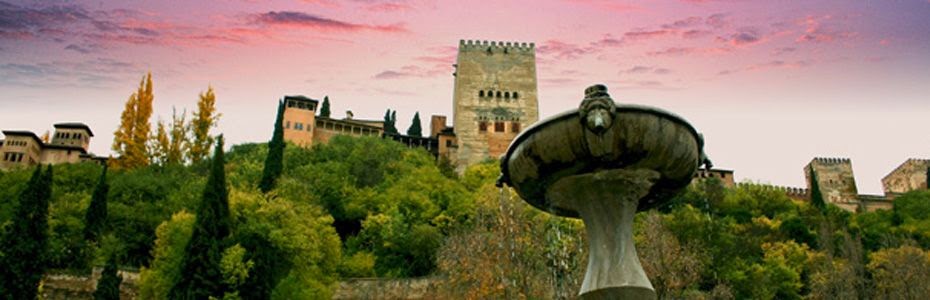

Must see places in Andalusia, Spain

If you are a muslim traveller or an islamic architecture lover those are the 7 things you must see in Granada

Top 10 foods to try in Morocco

One of the great cuisines of the world, Moroccan cooking abounds with subtle spices and intriguing flavour combinations.

Top Five Must See Things in Cordoba, Spain

Cordoba قرطبة in the Andalucia province of southern Spain is a city with more than 2,500 years of developed history.

ChefChaouen, the blue city in Morocco

Located just a few hours by bus from Tangier and far enough off the beaten track to dissuade many tourists, Chefchaouen is quiet enough for those visitors overwhelmed by the busy medinas of Fez and Marrakech, and has just enough of what is quintessentially Moroccan to be of interest to other travelers looking for something a bit more authentic.

Fes, Morocco

The most mystical of Morocco's imperial cities, Fez. Capital and spiritual center of Morocco, this city is situated in a narrow valley against the backdrop of the Middle Atlas

Mostrando entradas con la etiqueta Fes el Bali. Mostrar todas las entradas

lunes, 2 de febrero de 2015

12 Top-Rated Tourist Attractions in Morocco

Morocco is a wondrous, eyes-open taste of the exotic, with snake charmers and conjurers, souks piled high with hordes of treasures and endless glasses of mint tea. It's also an adventure into some of North Africa's most stunning scenery with the desert on its doorstep and the craggy heights of the Atlas Mountains beyond.

Morocco is also a journey into a timeless, tranquil world of cute coastal villages, colourful-painted towns that cling to hillsides and remote outposts defended by fairytale adobe forts. This fascinating country is a merging of the African and Arab worlds, and is steeped in age-old customs. It's no wonder Morocco has been feted by artists and writers for decades and continues to enchant all who visit.

1 Marrakesh Medina

The bustling and vibrant buzz of Marrakesh Medina sums up Morocco for many visitors. The old city is entered from the vast plaza of Djemma el-fna Square where, it seems, half of the city converges throughout the day and into the evening to hang out with the stall vendors, traditional musicians, snake charmers and random acrobats. Once inside the Medina itself, you enter a world of maze-like alleyways and shopkeeper hustle. It's an experience of full of colourful and noisy local life, and not to be missed on your Moroccan sightseeing trails.

2 Hassan II Mosque

Hassan II Mosque

Casablanca's landmark building, the Hassan II Mosque is a lavish symbol not only of the city, but also of Morocco itself. This modern mosque (finished in 1993) doesn't do things by halves. The decoration detail covering every centimetre of the mammoth 2 ha site took 10,000 artisans to complete. Intricately carved marble pieces, vibrant mosaics and zellige tile details pay tribute to traditional Islamic architecture, and yet still manage to feel contemporary.

· Casablanca, the Morocco’s commercial capital 

3 Oudaias Kasbah

Oudaias Kasbah

Rabat's Oudaias Kasbah neighbourhood is a peaceful and perfectly quaint district that feels miles away from the city, yet is right in the heart. Inside the walls of this old fortress are lanes of neat white-and-blue houses rimmed by colourful flowerpots and flapping washing. It's the prettiest corner of the capital.

4 Fes el Bali

Fes el Bali

Along with Marrakesh, Fes is Morocco's other big cultural destination. But unlike its sister Imperial City to the south, Fes hasn't been trussed up for the tourists. Fes el Bali (Old City) is an authentic muddle of a place where it's near impossible to not get lost. The back alleys here with their chipped plaster-work and gorgeous old doors will have you stopping for photos on every corner, while the stinking tanneries are one of Fes el Bali's most popular attractions for those who can handle the smell.

5 Tangier

Tangier

The most European of all Morocco's cities, Tangier has a fascinating and slightly debauched role in 20th century literary history, and this past is what draws many tourists here. This is the city that inspired famous works such as Paul Bowles' "The Sheltering Sky" and William Burroughs' "Naked Lunch". Tangier may have been scrubbed up since their day with the bohemian cafes and louche bars long gone, but you can still catch a whiff of the decadent days gone by.

·Top-Rated Tourist Attractions in طنجةTangier, Morocco

6 Chefchaouen


In the beautiful Rif Mountains, Chefchaouen is a gorgeous labyrinth of blue-on-blue buildings that has an incredibly photogenic glow. There isn't much actual sightseeing to be done and that's one of the town's main attractions. It's simply about wandering the Medina alleys and lapping up all that colourful architecture. It's a peaceful, easygoing town and a great place to recharge if you've been amid the cities for a while.

· The blue city of Morocco, Chefchaouen

7 Volubilis

Volubilis

Morocco's number one Roman ruin is a feast for history-lovers with a clutch of remarkable mosaics still interred where they were unearthed. This site is also full of tumbled columns and temple remnants, standing as reminders that even the greatest empires eventually crumble. The hilltop location allows the ruins to lord over the surrounding countryside, adding to the romantic ambiance of lost glory. This tourist attraction can easily be visited as a day trip from either Meknes or Fes.

8 Bab al-Mansour

Bab al-Mansour

This mammoth gateway (which guards the entrance to Meknes' Imperial City district from the Medina) is noted for its stunning decoration. Meant as a monumental reminder of the sultan's might, the Bab al-Mansour is a magnificent relic of Meknes' glorious era as capital.

9 Ait Ben Haddou

Ait Ben Haddou

This golden adobe kasbah (fortress) thrusts dramatically out of the earth amid scenery that wows all who visit. It's a fairytale place, and the orange-hued turrets have become a favourite film location due to the surreal beauty. If you're heading out into Morocco's inland regions, it should definitely be on your must-visit list.

10 Dades Valley

Dades Valley

Hikers, trekkers and general nature-lovers shouldn't miss a journey into the raw landscapes of Morocco's Dades Valley. With the snow-capped peaks of the High Atlas in the distance, the big-sky country here is the perfect antidote for those who have been getting frazzled nerves amid the souks of Marrakesh and Fes. There are dinky villages galore, exceptional bird spotting opportunities and lush fields stretching as far as you can see.

11 Essaouira

Essaouira

Morocco's most charming seaside village is laid-back Essaouira, an old hippie haunt of the 1970s that has lost none of its authenticity. The colourful fishing boats bobbing on the water, stately old shore-side fort and twisty lanes of the old town make Essa (as it's affectionately known by frequent visitors) a delight to discover.

12 Erg Chebbi

Erg Chebbi

Inland, in Morocco's eastern Sahara region, are the grand and rippling sand dunes of the Erg Chebbi, where would-be explorers and adventure-seekers head to get a dose of desert action. This is prime territory for dune-surfing, four-wheel-drive dune-bashing and the (much more authentic) camel trekking. For those with less of an active nature, just sitting amid the sand dune splendour is worthy enough of the long journey out here.

Article by: www.planetware.com

viernes, 30 de enero de 2015

Fez & its Islamic Attractions: madrasas & mosques

The most mystical of Morocco's imperial cities, Fez was founded in AD 808 by the Moroccan ruler saint Moulay Idris II and under his rule became the capital and spiritual center of Morocco. 
The city is situated in a narrow valley against the backdrop of the Middle Atlas, and positioned on the old crossroads of caravan routes connecting the Saharan empires like Timbuktu and Takrur with the Atlantic and the Mediterranean shipping lanes. 
Due to this, Fez has remained a commercial centre for much of its history. Today it is still considered Morocco's premier religious city by virtue of its Islamic traditions.
In 1250 Fes regained its capital status under the Marinid dynasty. The principal monuments in the medina, the residences and public buildings, date from the Marinid period. The madrasas are a hallmark of Marinid architecture, with its striking blending of Andalusian and Almohad traditions. Between 1271 and 1357 seven madrassas were built in Fes, the style of which has come to be typical of Fassi architecture.

You can visit this city in our tour Spain & Morocco of  10days / nights

Madrasa Bou Inania

he Madrasa Bou Inania was built between 1350 and 1357 by the Merenid sultan Bou Inan. The Madrasa (madrassa - Islamic school of learning) is a sumptuous architectural gem and one of Morocco's most gorgeous buildings. 

Up until the 1960s this was still a functioning theological school and the restoration efforts since that time have restored it to its original beauty. 

The carved woodwork is magnificent and the rooftop offers a spectacular view of Fes.


Madrasa el-Attarine

Another example of fine Merenid architecture, the Madrasa el-Attarine was built in 1325 by Abu Said.

The courtyard here is a wonderful display of the intricate decoration from this period, with elaborate zellige tile-work and cedar woodcarvings.

The upper floor is made up of a warren of cells, which were once home to students of the Qaraouiyine University (now mosque). If you climb up to the rooftop you can get great views of the Qaraouiyine Mosque itself.


Bab Chorfa and Bab Boujiloud

The grand gates of Bab Chorfa and Bab Boujiloud mark the main entry into Fes el Bali (Old City). As you approach, them you get wonderful views of the neighbourhood's famed landmark: the minaret of the Madrasa Bou Inania, which sits just after the Bab Boujiloud gate .


Fes el Bali (Old City)

Fes el Bali is the city's oldest neighbourhood and, within its rambling streets, there are two distinctly different districts divided by a meandering river. 

The left bank is home to the most historic monuments and the majority of the shopping souks, while the right bank may be scruffier but is full of local life and photogenic alleyways. 

The entire Old City is a walker's delight with plenty of opportunities to explore and soak up the atmosphere of Fes life. 

The Old City is thought to be one of the largest surviving of its type in the world.


Qaraouiyine Mosque

Built in 857 AD by Tunisian immigrants from the holy city of Kairouan, the Qaraouiyine Mosque was one of the medieval period's most distinguished universities. 
 Today, in its function as a working mosque, it is one of Morocco's largest centres of worship with a prayer hall that can hold 20,000. 
The library is one of the oldest surviving in the world and contains over 30,000 books. 
Among the collection is a 9th century Qur'an


Souks District and Tanneries

For shoppers, Fes el-Bali is a paradise of local craft-work with colourful Moroccan slippers, leather-work, metalwork, rainbow-glass lamps and tiles all displayed at stalls throughout the district.

The streets just west of the Qaraouiyine Mosque have the greatest concentration of shopping opportunities. This is also where you'll find Fes' famous Chouara tannery.

Here you can watch the traditional dying of animal skins - the first step in making Morocco's many leather products.

Fes el Jedid

The Merenids built this "New City" in the 13th century when they realised that Fes el Bali would be too small to contain their palaces.

 The rather grand Royal Palace takes central stage here, and behind it mosques and medersas fill the host of lanes.

There's a tranquil air to this small section of the city, which sits between bustling Fes el Bali and the European-style Ville Nouvelle, and it makes a welcoming peaceful lull between these two faster-paced worlds.

Bou Jeloud Gardens and Batha Museum

The Boujiloud Gardens is home to the Batha Museum.

Located inside a Hispano-Moorish palace built in the late 19th century, this museum houses traditional Fes art like woodcarvings, wrought-iron work, embroidery, carpets and jewellery.

The centrepiece of the museum is the pottery room, where the famous Fes blue ceramics, coloured with cobalt, are featured.

Mosque of al-Andalusiyyin

Built in 1321, the Al-Andalus Mosque is noted for its prominent green and white minaret, which actually dates back to the 10th century. 

Nearby you'll find a variety of interesting other monuments including an old fondouk (khan or caravanserai) and the crumbling Madrasa al-Sahrij


Madrasa al-Sahrij

Madrasa al-Sahrij is one of two connected madrasas built near the Mosque of al-Andalusiyyin by the Marinid heir to the throne 'Ali b. 'Uthman II, Abu al-Hasan (r. 1331-1348). 

 Madrasa al-Sahrij was finished first in 1321/720 AH, and Madrasa al-Sebai'yin was completed two years later. Madrasa al-Sahrij was first known as al-Madrasa al-Kubra (the Great Madrasa), because it was larger than the other madrasas which were built at the same time. It came to be known later as the Sihrij Madrasa in reference to the large rectangular water basin (Arabic sihrij) that occupies the center of its patio.

The plan follows the ubiquitous model of Marinid madrasas in Fez: a rectangular court is surrounded on its lateral sides by galleries giving onto student rooms, and a wide but shallow prayer hall.

The central courtyard is lavishly decorated with carved stucco, glazed tiles, and carved cedar wood, characteristic of the Marinid translation of Nasrid palatial materials and techniques into a religious context. 

The contrast between sumptuous ornament in the courtyard and the spartan accommodations for the students in all of the Marinid madrasas may reflect the multiple functions of these buildings. 

The madrasas often served as mosques for their respective quarters and as settings for official ceremonies. With the addition of associated charitable functions like guesthouses and waqfs, or endowed properties which supported the madrasa's upkeep, to their primary role as religious schools, the madrasas functioned as important centers of community life. 

The courtyard, as the most public of the spaces within the madrasa, was therefore the focus of the ornament that would highlight the generous image of the madrasa's founder.