





Although Casablanca's tourist sights and attractions may not be as obvious as those elsewhere, you will find some gems if you dig a little deeper. The Medina district is a charming area and much smaller (and easier to navigate) than those elsewhere. And the colossal Hassan II Mosque is top of the list on most sightseeing checklists.
You can visit this city in our tour Spain & Morocco of 10days / nights
1 Hassan II Mosque

Astonishingly intricate decoration covers every centimetre of surface.
The location, situated right on the tip of the rocky bay above the ocean, is thoroughly dramatic. Non-Muslims can visit the mosque on guided tours, which begin at the mosque's western entrance several times per day.
2 Medina

Authentic tradesmen sell their wares to shoppers with the butcher, the baker and candlestick maker all accounted for. It's a rambling and ramshackle neighbourhood with an authentic residential feel, and a great place to feel the pulse of Casablanca life.
There are also a some interesting holy men koubba's (shrines) in the Medina's southern section.
3 Place Mohamed V

4 Corniche

5 Cathedral du Sacre Coeur

It's unfortunately been left to whither in the past few decades, and is now in need of serious restoration.
But even in its current dilapidated state, the structure is still beautiful. Nearby is the Cathedral of Notre Dame de Lourdes, which is lit by a vast stained glass window covering more than 800 sq m.
6 Central Market

Right in the city centre, this is where locals come to buy and sell - be it housewives bartering for vegetables or grocers yelling out their special deals. It's a great opportunity for photographers and great fun for everyone else.
You'll find everything here from plastic bowls to Morocco's famous slippers.
Location: Rue Allal Ben Abdallah
7 Mohammedia

Location: 28 km north of Casablanca
8 Safi

The Portuguese occupied the city in 1508 and added to the architecture by building the stately Dar el Bahar Fortress on the shoreline - now the town's most recognisable monument. Safi is Morocco's most famous ceramic centre and once you've visited the fortress,
Safi's Medina is a great place to spend an afternoon. Pottery Souk and the National Ceramic Museum are the Old Town's star attractions.
Location: 237 km south of Casablanca
9 Oualidia

Oualidia's oyster beds are famed throughout the country. Local restaurant menus list oysters and plenty of other seafood, making the town a highlight for any traveling foodie.
Location: 182 km south of Casablanca
10 Azemmour

The beach is also one of the best along the Atlantic coast - and is a well kept secret. Indeed, half of Azemmour's charm lies in the fact that nobody else seems to stop off here.
Location: 88 km south of Casablanca
11 El Jadida
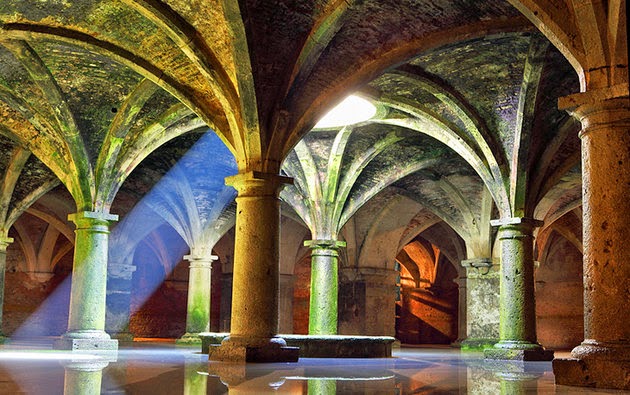
Also in the citadel, look for the atmospheric cisterns which date from the 16th century.
Location: 102 km south of Casablanca
History
The origins of Casablanca can be traced to the medieval town of Anfa, which is now one of the city's suburbs. Anfa became the capital of a Berber principality in the aftermath of the Arab invasions of the 7th and 8th centuries. The Berbers embraced Islam but quickly succumbed to heretical doctrines, setting up their own prophet and a Qur'an in Berber language.The principality was known as Berghouata, and its tribal inhabitants joined a Kharijite rebellion against the Arab governor of Tangier. In the 11th century the Almoravids waged holy war against these heretics who were finally defeated by the Almohad Sultan Abdul Mou'min. The town came under the influence of the Merinids during the 13th century, but eventually became independent as the dynasty weakened. The Portuguese destroyed the town in 1468 in reprisal for piracy. Portugal sent a fleet of 50 vessels and 10,000 soldiers to occupy the town, which was sacked and then abandoned. But piracy soon revived and the Portuguese returned in 1515 and destroyed the town once again.
In 1575 the town was rebuilt, fortified and renamed Casa Branca by the Portuguese in an attempt to establish control over the area. However, the Portuguese rulers fell under constant attack by surrounding Muslim tribes and were finally forced to abandon the town following a terrible earthquake in 1755. Under the reign of Sidi Mohamed ben Abdallah (1757-1790) the town was rebuilt with a mosque, medrassa, hammam and a fort and renamed Dar Al Beida (The White House), which the Spanish eventually translated as Casablanca.
Text shared from http://www.planetware.com
