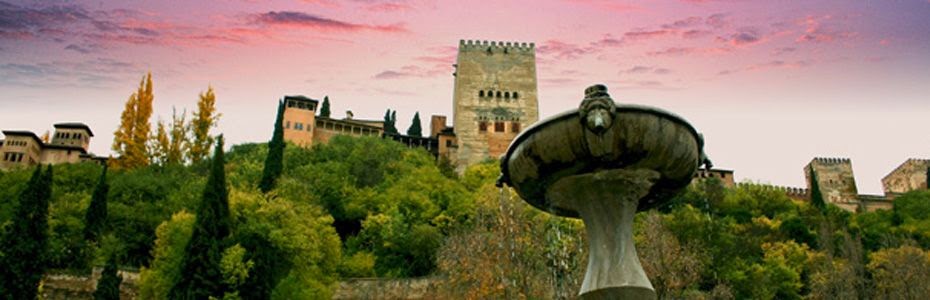

Must see places in Andalusia, Spain

If you are a muslim traveller or an islamic architecture lover those are the 7 things you must see in Granada

Top 10 foods to try in Morocco

One of the great cuisines of the world, Moroccan cooking abounds with subtle spices and intriguing flavour combinations.

Top Five Must See Things in Cordoba, Spain

Cordoba قرطبة in the Andalucia province of southern Spain is a city with more than 2,500 years of developed history.

ChefChaouen, the blue city in Morocco

Located just a few hours by bus from Tangier and far enough off the beaten track to dissuade many tourists, Chefchaouen is quiet enough for those visitors overwhelmed by the busy medinas of Fez and Marrakech, and has just enough of what is quintessentially Moroccan to be of interest to other travelers looking for something a bit more authentic.

Fes, Morocco

The most mystical of Morocco's imperial cities, Fez. Capital and spiritual center of Morocco, this city is situated in a narrow valley against the backdrop of the Middle Atlas

Mostrando entradas con la etiqueta Alpujarras. Mostrar todas las entradas

miércoles, 15 de abril de 2015

Must see places in Andalusia, Spain

malaga-spainThe region of Andalusia stretches over 87 268 km² of land. Andalusia makes up 17% of Spain. This autonomous region has lots to offer to its visitors.

You can visit Andalusia in our tour Spain & Morocco of  10days / nights

Here are some highlights in this fascinating part of Spain.      

The natural beaches of Cabo de Gata, Almeria. This area is named Cabo de Gata after the mineral Agate (agata) which used to be mined in that area. As your drive through this National Park you will see the landscapes vary. From expanses of desert with cactus and prickly pear trees to beautiful rustic beaches. You will discover villages that look like they came straight out of the Wild West. It´s easy to see how this area has attracted so many film producers. Recently Ridley Scott filmed scenes for the film Exodus at Playa de los Genoveses. The bird scene from Indiana Jones and the Last Crusade was also filmed here.


The Alpujarra villages. These small villages extend across a large area in Granada and Almeria provinces. The region is beside the Sierra Nevada mountain range and boasts dramatic landscapes. A day out around the Alpujarras is a unique experience. The locals thrive on the sale of local craftwork and delicious food from that area. This group of villages is currently on the UNESCO waiting list to be added as a World Heritage site. It has a history of Silk production and was once one of the main producers of silk in the world. You will love this area of Andalusia if you enjoy nature, walking, and local crafts. You may like to party in the Alpujarra at one of the local fiestas in the summer months.


 The Alhambra Palace and Generalife. This group of palaces and gardens is a UNESCO World Heritage site. Located in the city of Granada, this site received 2,315,017 visitors last year. (2013 figures) This began as a fortress over 1000 years ago. As the years passed it changed gradually as different monarchs conquered the Kingdom of Al Andalus. A fascinating history lies before any visitor to this spectacular place. The intricate plasterwork on its walls seems unending. The reflective details in the architecture adds symmetry to the Nasrid palaces. As you wander through the Alhambra complex you may think you have travelled back in time.


Cordoba. Yet another UNESCO World Heritage site, the Mezquita of Cordoba is well worth a visit. Building of this impressive mosque began in 786 and took around 200 years to complete. This Cathedral mosuqe is located in the centre of old quarter of Cordoba. The central hall is full of hundreds of columns and arches. Many of these stone columns came from other countries across the empire although at a first glance they look alike. Cordoba is also well known for it´s colourful patio festival. Although it takes place in May you can visit the patios at other times of the year too. The sunset across the roman bridge is stunning. A walk around the old streets after dark is particularly magical.

 
Malaga. Although the coastal towns of Malaga are popular for their beaches and nightlife, the old quarter of Malaga must be included on your visit. The city has it´s own fortress or Alcazaba and the impressive Roman amphitheatre too. The views from the Alcazaba over the coastline and the port are well worth the jaunt up the hill. (take the bus) T. As you walk around the city centre you may see flower sellers with white jasmine flowers for sale. Known locally as biznagas they make an unusual gift to take home. Don´t miss the Calle Larios, the main commercial street or the bar Pimpi, a must see for any visitor to Malaga.

malaga-spain

Ronda is an inland town in the Malaga province. The town is seperated in two by a vast gorge. The two areas of the old town and the newer part where the commercial area is. The surrounding countryside and views from the bridge will make for impressive holiday photos. This bridge puente nuevo inspired Ernest Hemingway in For whom the bell tolls. Ronda´s Plaza de Toros has a museum which displays different aspects of this spanish tradition. Ronda makes a good destination for a day trip if staying along the Costa del Sol or in Marbella.

Ronda, Malaga, Spain

Seville. The city of Seville is famous for its Easter processions and it´s traditional Feria de Abril. If you have chance to visit at Eastertime you will be able to enjoy the intense atmosphere of the Easter processions. The Feria de abril follows after easter and lasts for 10 days. Colourful flamenco dresses and lots of bottles of manzanilla dry wine are enjoyed each year at the fair. Monuments worth visiting in the city are the Cathedral of Seville with the its famous Giralda, the Alcázar and the Archivo General de Indias. The three buildings are UNESCO listed. The Plaza de España, Parque Maria Luisa  and the neighbourhood of Triana are also recommended for any visitor.


Cadiz. This coastal city is still one of the most important seaports in Spain. This city is the oldest in Spain, founded in the 11th century B.C. It´s often called the Tacita de Plata, meaning the silver tea cup. There is something special about Cadiz. The atmosphere of the city and the friendly locals make any visit enjoyable. Go and taste some tapas in the Barrio de La Palma,  just a short walk from the beach.  Take a walk along the fortified walls beside the sea and see the San Esteban Castle. You can also see Cadiz from above at Torre Tavira, using their camara oscura.


Cadiz
The National park of Doñana is a birdwatchers paradise. This park located in Huelva province is yet another UNESCO listed site. With a large number of protected birds in it´s grounds you can enjoy birdwatching in a beautiful natural setting. Flamingos, geese, vultures, kites and many others are here this impressive park. 


Doñana National Park, Andalusia, Spain


martes, 11 de noviembre de 2014

Travel the halal way and discover The Alpujarras, Granada

Granada, Spain is an extraordinary city that invites travelers to explore its rich heritage and scenic attractions. Just south of the city, huddled on the southern hillside of the vast Sierra Nevada Mountain Range, sits the much lesser known magical and charming region of the Alpujarra.

Some fifty villages of varying sizes and common cultural features make up this historic area that spills over both the provinces of Granada and Almería. The villages also share a common topography; they perch along the slopes of two dramatic ravines that extend from the peaks of the Sierra Nevada and cut southeastward to form the basins of the Guadalfeo and the Andaraz Rivers.

The name for this region may come from the Arabic al-buqscharra, which could be translated as “the land of the pastures” given the abundance of water found in this fertile zone. The area is not easy to reach; the steep mountainside landscape has obliged villagers to build a network of terraces and ditches to optimize irrigation. The hilly geography does not facilitate the use of machinery for carrying out agricultural work. While this has posed a historical challenge to agriculturists, it has helped preserve a natural aura that offers observers a peek into a distant age that appears lost in time.

After the fall of the Nasrid Kingdom of Granada in 1492, the Andalusia Muslims were required by law to convert to Catholicism under the Catholic monarchs after 1502. Muslims who refused to leave their Andalusia homes to go to Northern Africa were known as Moriscos.

They remained in this area until 1568, when the Morisco revolt lead by Abén Humeya (whose Christian name of Fernando de Válor) was violently defeated a year later by the Spanish king’s army. After the Castilian victory, by order of the crown, two Morisco families were permitted to continue living in each town to teach new Christian settlers from Castile, Leon, and Galicia how to work the challenging terraced land and maintain the irrigation system so vital to the local agriculture. Unfortunately, the plan proved unsuccessful, and the traditional farming systems were lost in favor of methods adopted from the central and northern regions of the peninsula.


The influence of Northern Africa has been maintained in the region’s architecture, clearly related to the Berbers, with homes that appear stacked or overlapping to form passageway-tunnels called “tinaos”. Houses also have flat roofs called launa, which are covered with gravel, affording residents rooftop terrace spaces. There are no tiles here, and the home’s design takes advantage of every square meter, each one playing a necessary and functional role. Other Northern African elements that have been maintained in the Alpujarra include many cooking traditions, the use of jarapas (carpets made of recycled fabric), and the area’s place names such as Alcolea, Bentarique, La Taha, Ohanes…

Jarapa, traditional carpet from the Alpujarras
The most common way to visit the area is through the town of Lanjarón, one of the Alpujarra’s entry points along with Órgiva. Beyond this spa-town (famous throughout Spain for its mineral water), visitors follow winding mountain roads to cross the historic Tablate Bridge, the scene of the last great battle between Christian soldiers and Alpujarra Moriscos, the confrontation which ended the so-called “Morisco rebellion” in the third quarter of the 16th century.


A few kilometers past the bridge and around a tight curve, the scenic Poqueira River gorge offers fantastic views. The gorge is home to three towns: Capileria, bubión, and Pampaneira, names that may sound Gaelic but which are Arab in origin.

Visitors continuing on their journey may reach Trevélez, peninsular Spain’s highest town, a place famous for its hams. Hams here are cured in the cold, dry air of the Sierra Mountains, which is where the name jamón serrano comes from.


It is not surprising that this region has left an indelible impression on many observers, such as the Granada writer Pedro Antonio de Alarcón, who in 1874 published the book La Alpujarra about this area of the Sierra Nevada Mountains. In 1957, British writer Gerald Brenan published South from Granada, a story that takes place in the Alpujarra town of Yegen and which was made into a movie in 2003 by Fernando Colomo. The former drummer for the music group Genesis, Chris Stewart, who is a resident in the local mountain town of Órgiva, has recently published two enjoyable novels. They narrate the adventures of a cosmopolitan Englishman who decides to move to the seclusion of these mountains with his wife and daughter. Driving Over Lemons: An Optimist in Andalucia and A Parrot In the Pepper Tree are both highly recommendable titles.


The scenic mountain atmosphere of the Alpujarra and its charming villages make for enjoyable and memorable travel experiences. This is a recommended trip for anyone visiting Spain and a must for those going to Granada.

Text by: donquijote.org http://www.donquijote.org/culture/spain/places/cities/la-alpujarra 
Photos by: Vive Alpujarra Proyecto https://www.facebook.com/Vive.Alpujarra