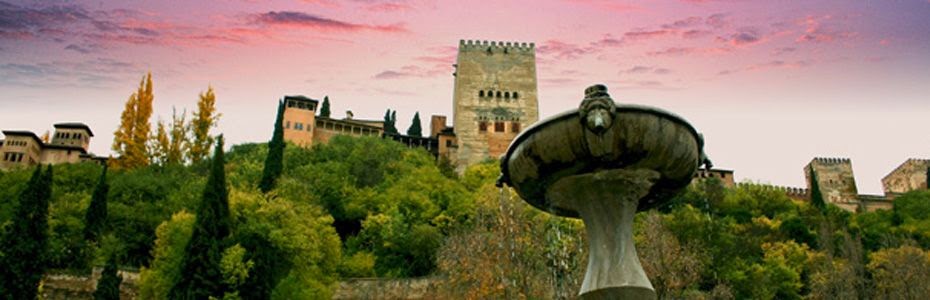

Must see places in Andalusia, Spain

If you are a muslim traveller or an islamic architecture lover those are the 7 things you must see in Granada

Top 10 foods to try in Morocco

One of the great cuisines of the world, Moroccan cooking abounds with subtle spices and intriguing flavour combinations.

Top Five Must See Things in Cordoba, Spain

Cordoba قرطبة in the Andalucia province of southern Spain is a city with more than 2,500 years of developed history.

ChefChaouen, the blue city in Morocco

Located just a few hours by bus from Tangier and far enough off the beaten track to dissuade many tourists, Chefchaouen is quiet enough for those visitors overwhelmed by the busy medinas of Fez and Marrakech, and has just enough of what is quintessentially Moroccan to be of interest to other travelers looking for something a bit more authentic.

Fes, Morocco

The most mystical of Morocco's imperial cities, Fez. Capital and spiritual center of Morocco, this city is situated in a narrow valley against the backdrop of the Middle Atlas

Mostrando entradas con la etiqueta Marbella. Mostrar todas las entradas

miércoles, 15 de abril de 2015

Must see places in Andalusia, Spain

malaga-spainThe region of Andalusia stretches over 87 268 km² of land. Andalusia makes up 17% of Spain. This autonomous region has lots to offer to its visitors.

You can visit Andalusia in our tour Spain & Morocco of  10days / nights

Here are some highlights in this fascinating part of Spain.      

The natural beaches of Cabo de Gata, Almeria. This area is named Cabo de Gata after the mineral Agate (agata) which used to be mined in that area. As your drive through this National Park you will see the landscapes vary. From expanses of desert with cactus and prickly pear trees to beautiful rustic beaches. You will discover villages that look like they came straight out of the Wild West. It´s easy to see how this area has attracted so many film producers. Recently Ridley Scott filmed scenes for the film Exodus at Playa de los Genoveses. The bird scene from Indiana Jones and the Last Crusade was also filmed here.


The Alpujarra villages. These small villages extend across a large area in Granada and Almeria provinces. The region is beside the Sierra Nevada mountain range and boasts dramatic landscapes. A day out around the Alpujarras is a unique experience. The locals thrive on the sale of local craftwork and delicious food from that area. This group of villages is currently on the UNESCO waiting list to be added as a World Heritage site. It has a history of Silk production and was once one of the main producers of silk in the world. You will love this area of Andalusia if you enjoy nature, walking, and local crafts. You may like to party in the Alpujarra at one of the local fiestas in the summer months.


 The Alhambra Palace and Generalife. This group of palaces and gardens is a UNESCO World Heritage site. Located in the city of Granada, this site received 2,315,017 visitors last year. (2013 figures) This began as a fortress over 1000 years ago. As the years passed it changed gradually as different monarchs conquered the Kingdom of Al Andalus. A fascinating history lies before any visitor to this spectacular place. The intricate plasterwork on its walls seems unending. The reflective details in the architecture adds symmetry to the Nasrid palaces. As you wander through the Alhambra complex you may think you have travelled back in time.


Cordoba. Yet another UNESCO World Heritage site, the Mezquita of Cordoba is well worth a visit. Building of this impressive mosque began in 786 and took around 200 years to complete. This Cathedral mosuqe is located in the centre of old quarter of Cordoba. The central hall is full of hundreds of columns and arches. Many of these stone columns came from other countries across the empire although at a first glance they look alike. Cordoba is also well known for it´s colourful patio festival. Although it takes place in May you can visit the patios at other times of the year too. The sunset across the roman bridge is stunning. A walk around the old streets after dark is particularly magical.

 
Malaga. Although the coastal towns of Malaga are popular for their beaches and nightlife, the old quarter of Malaga must be included on your visit. The city has it´s own fortress or Alcazaba and the impressive Roman amphitheatre too. The views from the Alcazaba over the coastline and the port are well worth the jaunt up the hill. (take the bus) T. As you walk around the city centre you may see flower sellers with white jasmine flowers for sale. Known locally as biznagas they make an unusual gift to take home. Don´t miss the Calle Larios, the main commercial street or the bar Pimpi, a must see for any visitor to Malaga.

malaga-spain

Ronda is an inland town in the Malaga province. The town is seperated in two by a vast gorge. The two areas of the old town and the newer part where the commercial area is. The surrounding countryside and views from the bridge will make for impressive holiday photos. This bridge puente nuevo inspired Ernest Hemingway in For whom the bell tolls. Ronda´s Plaza de Toros has a museum which displays different aspects of this spanish tradition. Ronda makes a good destination for a day trip if staying along the Costa del Sol or in Marbella.

Ronda, Malaga, Spain

Seville. The city of Seville is famous for its Easter processions and it´s traditional Feria de Abril. If you have chance to visit at Eastertime you will be able to enjoy the intense atmosphere of the Easter processions. The Feria de abril follows after easter and lasts for 10 days. Colourful flamenco dresses and lots of bottles of manzanilla dry wine are enjoyed each year at the fair. Monuments worth visiting in the city are the Cathedral of Seville with the its famous Giralda, the Alcázar and the Archivo General de Indias. The three buildings are UNESCO listed. The Plaza de España, Parque Maria Luisa  and the neighbourhood of Triana are also recommended for any visitor.


Cadiz. This coastal city is still one of the most important seaports in Spain. This city is the oldest in Spain, founded in the 11th century B.C. It´s often called the Tacita de Plata, meaning the silver tea cup. There is something special about Cadiz. The atmosphere of the city and the friendly locals make any visit enjoyable. Go and taste some tapas in the Barrio de La Palma,  just a short walk from the beach.  Take a walk along the fortified walls beside the sea and see the San Esteban Castle. You can also see Cadiz from above at Torre Tavira, using their camara oscura.


Cadiz
The National park of Doñana is a birdwatchers paradise. This park located in Huelva province is yet another UNESCO listed site. With a large number of protected birds in it´s grounds you can enjoy birdwatching in a beautiful natural setting. Flamingos, geese, vultures, kites and many others are here this impressive park. 


Doñana National Park, Andalusia, Spain


martes, 27 de enero de 2015

Travel the halal way and discover Spain & Morocco in this 9 days tour


Here you have an example tour! You can make your tailor made trip fill in a request trip in our web

Day 1 ARRIVAL TO BARCELONA (L, D)
The group will be received at the airport by a local Muslim Guide. Transfer for Barcelona city tour: starting at Las Ramblas, famous for its shops, restaurants and theatres, continue to Montjuic for a Panoramic view of Barcelona. After lunch, visit Parc Güell and Barcelona Olympic Park.
After dinner at la Bacerloneta neighborhood, transfer to hotel for overnight stay.

Day 2 BARCELONA-MADRID (B, L, D)
After breakfast, we will visit the beautiful work of world famous architect Antonio Gaudi: La Sagrada Familia Cathedral, Casa Batllo and Casa Mila.
After lunch, proceed for transfer to Madrid, the capital of Spain.
Dinner and overnight stay in Madrid. 

Day 3 MADRID (B, L, D)
After breakfast, we will spend a full day visiting Madrid. We’ll introduce you
to the city’s highlights: Gran Via, Puerta del Sol, Real Madrid Santiago Bernabeu Stadium, Cibeles, Palacio Real, etc. Afterwards, we will enter some of the most iconic monuments of the city: Palacio Real and Prado Museum. Lunch and dinner will be served at local restaurants.
Overnight stay in Madrid.

Day 4 MADRID-CORDOBA (B, L, D)
After breakfast, proceed for transfer to Cordoba, the capital of the Caliphate, where you will visit the Great Mosque of Cordoba, the third largest mosque in the world.
You will also visit the old Arab and Jewish quarters where the group will have dinner.
Overnight stay in Cordoba.

Day 5 CORDOBA-GRANADA (B, L, D)
After breakfast, check out from the hotel and proceed for transfer to Madinat az-
Zahra, an enigmatic complex built for Abd Ar-Rahman III. Afterwards, continue our trip to Granada, the last kingdom of Al-Andalus.
After lunch, the group will enjoy a nice walk around the Albayzín, a neighborhood of Al-Andalus origin, ideal for taking pictures. Dinner and Overnight stay in Granada.

Day 6 GRANADA  (B, L, D)
After breakfast, we will enjoy a full day in Granada. The day will start with a visit to the amazing Alhambra palaces, which include the Akasar, the Nazari Palaces and finally the Generalife gardens and summer palace.
After lunch, enjoy some free time for shopping in the city center and the old Arab quarters of el Albayzin.
Dinner and overnight stay in Granada.

Day 7 GRANADA-MARBELLA(COSTA DEL SOL) (B, L, D)
After breakfast, check out from the hotel and head towards Marbella, famous spot in Costa del Sol.
We will visit Malaga´s highlights: Gibralfaro´s Castle, The Alkasar, the Roman Theater and the Cathedral.
After a nice lunch at Torremolinos, continue to Marbella where the group will enjoy some free time for walking around the beach and watch sunset.
Dinner and overnight stay in Marbella.

Day 8 MARBELLA-GIBRALTAR-RABAT (B, L, D)
Early in the morning, we will head towards Gibraltar. We will cross the strait of Gibraltar from Tarifa to Tangier, the city where Tariq Ibn Ziyad served as governor before starting the conquest of the IberianPeninsula. We will continue traveling until we reach

After lunch, proceed for transfer to Casablanca, the economical capital of Morocco. Dinner and overnight stay in Casablanca. the capital of Morocco, Rabat.

Enjoy a quick tour of Rabat. Check-in at the hotel and enjoy a relaxing dinner. Overnight stay in Rabat.

Day 9 RABAT-FES-CASABLANCA (B, L, D)
After breakfast, proceed for transfer to Fes, where after the group will enjoy a walking tour of the old medina with a local guide. The old medina is a beautiful labyrinth of intrinsic narrow streets. We will visit several mosques and madrasas, as well as the world famous leather tanneries.
       
Day 10 CASABLANCA DEPATURE (B)
After breakfast, check out from the hotel. If time permits, we will visit Hassan II Mosque, one of the largest mosques in the World and the group will enjoy some final shopping at Morocco´s mall, the largest of its kind in Africa.

Proceed for transfer to Casablanca airport for departure.

martes, 7 de octubre de 2014

What is Halal Tourism?

The term ” halal tourism ,” which refers to the tourism offerings for practicing Muslims, represents a turnover of € 103 billion worldwide. This is a market that Spain wants to take a bigger share, thanks in particular, to its rich Islamic cultural heritage in Andalusia. Hence the organisation of the first conference on the subject in Granada on 22 and 23 September 2014 , where Alhamratour was present, under the auspices of the Halal Institute Cordoba was held.

SPAIN . The Alhambra in Granada, the Cordoba Mosque , the Giralda in Seville … the list of great monuments of Islamic cultural legacy in Spain is long.  The cultural wealth is mainly concentrated mainly in Andalusia, home to the recent ” halal tourism” International Conference held in Grenada by the London firm Creative Minds Media.


The Halal Institute of Cordoba advocates the development of one of the most promising tourist segments in the city. There are, obviously, quite a few reasons for this. First, because Spain, and, particularly, Andalusia, is a popular destination for Muslim tourists because of its 800-strong history. Second, it is the economic activity related to this type of tourism that justifies the development of a ‘ Halal tourism offering “, ie : a tour offering for practicing Muslims, particularly from clients in the Middle East . These tourists spend twice as much as the average in Spain , according to figures from Turespaña. Tourists from Saudi Arabia, for example, spend a budget of € 2,287 per person on their holiday, against 2,116 for those in the UAE , or € 1,703 for the Egyptian tourist. Compared with the average amount of € 956 per person spending for all holidaymakers in Spain, the amount spent by the Muslim tourists from the oil-rich Gulf states is much larger which can not be ignored.
Alhamratour in the Halal Conference 2014 in Granada (HTC2014)

The ” The Muslim Travel Index 2014″ study, presented in Granada during this international conference halal tourism, reveals another significant figure : aggregate expenditures on Muslim tourists represent a business volume of 103 bn € in the world . A big market where Spain wants to take more space . If the country is the world’s third -largest number of international tourists, it ranks only sixth place ranking Muslim tourists ( including behind France , Italy and Great Britain). Hence the importance for the Spanish tourism industry forward in welcoming Muslim tourists practitioners , representing about 10% of travelers in Andalusia, and an annual turnover estimated at € 387 million. In this sense, the Halal Institute of Cordoba has an important role as a body of recognized certification. Although the number of ” halal ” facilities so far remains very limited in the tourism sector in Spain , with only two restaurants and a hotel in Andalusia.

Muslim tourists visitting and praying in the Granada's Mosque

However, the changes proposed by the Institute of Cordoba formations stir more curiosity hoteliers. Fittingly , the study presented in Granada also shows that tourists from the Middle East are those who spend the most in terms of accommodation in Spain, namely € 129 on average per person per night , in front of the Chinese and Russian ( respectively € 115 and € 91 ) . “This is to recognize that the efforts against Muslim tourists can go beyond food ,” says Muhammad Escudero, director of Halal Certification Institute Cordoba : ” It is often the small details to make considered very important for these customers, as signaling the direction of Mecca , the layout of prayer space , information in Arabic, or absence of alcohol and pork … “

"A guarantee of quality"

Since this summer , Alanda Hotel Marbella is the first certified “halal” Spain hotel. A four star hotel bought by Saudi group Al Fawaz Hokair a year ago, and that has made this certification a marketing argument , as evidenced by the sales manager , Ignacio Gimenez . ” We do not serve alcohol or pork , which attracted obviously Muslims around the world committed to their religion ; but beyond this halal deposit also appeals to a broad customer base that holds the beneficial aspect of the process, especially since the certification involves traceability and therefore guarantees quality.

The absence of alcohol is not a drawback . Sometimes it is an asset for a family , Muslim or not customers looking for a relaxing holiday while enjoying the service and installation of a four-star hotel , the spa or the beach restaurant . In short, the ‘halal’ certification is a further guarantee of attention here that shows this month (September) of 86% occupancy rate. Evidence that the commitment does not interfere with the activity.

"We announce our halal recess policy when making reservations , and we have never been abandoned or even the slightest criticism ; customers may be surprised , but it’s always positive ,"said Ignacio Gimenez . 

These reactions now allow the company to consider an international hotel development with the same positioning ” halal ” .

Article by: halaltimes.com via www.econostrum.info

miércoles, 1 de octubre de 2014

Marbella confirma su liderazgo en el sector del Turismo Halal en España

‘Halal’ es un término que aparece mencionado en el Corán y que significa ‘permitido, saludable y

El Instituto Halal es la entidad que gestiona la Marca de Garantía Halal creada por la Junta Islámica de España, con sede en Córdoba, aplicada a alimentos, productos y servicios que desde empresas y entidades se ofertan a públicos de práctica islámica, tanto en nuestro país y en el ámbito de la UE, como para la exportación a países islámicos.
beneficioso’, referido tanto a alimentación como a conductas.

Cuando un turista musulmán elige destino vacacional lo hace, en la gran mayoría de las veces, pensando en un lugar en el que tenga acceso a establecimientos que ofrezcan servicios acordes a su forma de vida y conforme a la ley islámica. El turismo ‘halal’, todavía por explotar en España es, hoy por hoy, uno de los retos para los empresarios hoteleros y hosteleros del país. Así se ha puesto de manifiesto en el primer Congreso Internacional de Turismo ‘Halal’, un foro pionero en Europa, celebrado hace solo unos días en Granada. Marbella, como tantas otras veces en su historia, se sitúa ya en cabeza de carrera y estuvo representada en este encuentro a través de Alanda Hotel, el primero del país en obtener la certificación oficial.

Desde su compra, hace un año, por parte de la corporación empresarial saudí Fawaz Al Hokair, el Alanda Hotel Marbella –antiguo NH Alanda– ubicado en plena Milla de Oro, y a apenas 60 metros de la Mezquita del Rey Fahd, ha venido trabajando en la consecución de un certificado que cumple uno de los objetivos marcados por la propiedad: convertir el establecimiento en un referente para el turista musulmán. Desde que abrió sus puertas, el hotel mantiene varias normas: no ofrece bebidas alcohólicas en ninguno de sus restaurantes, ni tampoco cerdo y derivados.

Ello, como sostiene el director del Alanda, Fernando Portal, no ha disuadido a un buen número de clientes nacionales o británicos, que siguen siendo mayoritarios.

Desde hace unos días, en la puerta de entrada luce la placa que acredita al hotel ante el turista musulmán. El trabajo para conseguir el certificado ha sido intenso, basado en varias auditorías que han analizado no solo el servicio de restaurante y economato, sino el resto de departamentos «uno a uno». «Hemos tenido que aportar una ficha técnica, emitida por nuestros proveedores, de cada uno de los productos que tenemos en el economato», señala Portal «No cabe duda de que estamos hablando de un concepto nuevo que viene a ampliar la oferta hotelera de la Costa del Sol», resume.

Espacios para el rezo

Habilitar más espacios en los que poder rezar, tener habitaciones orientadas a la Meca o señalizas, preservar un horario distinto de piscina para las mujeres y los hombres son algunos de los puntos en los que deben trabajar los hoteles que optan a la certificación del Instituto Halal de España. De momento, en el establecimiento marbellí no se planten hacer esta última distinción de horarios para el baño. Sí se ha señalizado la Meca en las habitaciones y se ha confeccionado un ‘kit’ que se entrega a los clientes y que contiene alfombrilla para el rezo. Igualmente se restringe la programación televisiva, en la que no se ofrecen programas o películas de contenido violento, erótico o pornográfico.

Del mismo modo, los restaurantes disponen de menús que se adaptan a la estricta dieta musulmana. La filosofía ‘Health’ (sano) se ha convertido en seña de identidad de un establecimiento que ha hecho de sus zumos naturales –tan perseguidos por las ‘celebrities’– en uno de sus principales reclamos durante el verano que acaba de finalizar.

Según las cifras que maneja el Instituto Halal, el turismo islámico deja en Andalucía más de 300 millones de euros año. La búsqueda de nuevos mercados para hacer que el sector turístico de la Comunidad siga creciendo llevará a nuevos hoteles a seguir la senda de Marbella.

Fuente: www.diariosur.es